- BPM
- 90
- Key
- B♭ Minor
- Camelot
- 3A
The Rite of Spring, Part 1: IV. Spring Rounds by Igor Stravinsky, Public Domain, Vasily Petrenko, Royal Liverpool Philharmonic Orchestra Song Details
"The Rite of Spring, Part 1: IV. Spring Rounds" by Igor Stravinsky, Public Domain, Vasily Petrenko, Royal Liverpool Philharmonic Orchestra had its release date on October 20, 2017. With this song being around four minutes long, at 4:05, the duration of this song is pretty average compared to other songs. This track is safe for children and doesn't appear to contain any foul language, since the "Explicit" tag was not present in this track. There are a total of 17 in the song's album "The Rite of Spring". In this album, this song's track order is #7. Furthermore, we believe that the track originated from United Kingdom. In terms of popularity, The Rite of Spring, Part 1: IV. Spring Rounds is currently not that popular. In our opinion, the overall tone is not very danceable and projects negative sounds, such as being sad, depressed, or angry.
BPM and Tempo
With The Rite of Spring, Part 1: IV. Spring Rounds by Igor Stravinsky, Public Domain, Vasily Petrenko, Royal Liverpool Philharmonic Orchestra having a BPM of 90 with a half-time of 45 BPM and a double-time of 180 BPM, we would consider this track to have a Andante (at a walking pace) tempo marking. Because of this, we believe that the song has an overall slow tempo. Looking at the BPM of this song, this song might go great with yoga or pilates. The time signature for this track is 1/4.
Music Key
This song is in the music key of B♭ Minor. Which also means that the camelot key for this song is 3A. So, the perfect camelot match for 3A would be either 3A or 2B. While, a low energy boost can consist of either 3B or 4A. For moderate energy boost, you would use 12A and a high energy boost can either be 5A or 10A. However, if you are looking for a low energy drop, finding a song with a camelot key of 2A would be a great choice. Where 6A would give you a moderate drop, and 1A or 8A would be a high energy drop. Lastly, 6B allows you to change the mood.
Want to find the BPM and music key for other songs? Check out our BPM and Key Finder page!
- Popularity
- 17%
- Loudness
- -20.971 dB
- Acousticness
- 96%
- Danceability
- 13%
- Energy
- 4%
- Instrumentalness
- 95%
- Liveness
- 10%
- Loudness
- 65%
- Speechiness
- 5%
- Valence
- 4%
Recommendations
| Track | Artist | Key | Energy | Camelot | BPM | ||
|---|---|---|---|---|---|---|---|
 | Petrushka: Danse Russe | Robert Groslot, Belgian Radio and Television Philharmonic Orchestra, Igor Stravinsky | D Minor | 5 | 7A | 80 BPM | |
 | Symphony No.2 in C minor - "Resurrection" / 5th Movement: Wieder zurückhaltend | Gustav Mahler, Wiener Philharmoniker, Gilbert Kaplan | F♯ Major | 1 | 2B | 132 BPM | |
 | Études-tableaux, Op. 39: No. 2, Lento assai | Sergei Rachmaninoff, Boris Giltburg | A Minor | 0 | 8A | 65 BPM | |
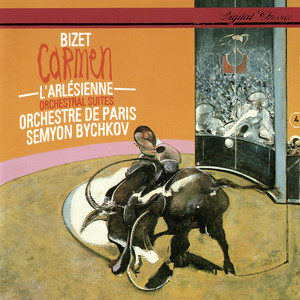 | L'Arlésienne Suite No. 2, WD 28: 1. Pastorale | Georges Bizet, Orchestre de Paris, Semyon Bychkov | A Major | 0 | 11B | 112 BPM | |
 | Les Noces, Première partie, Premier tableau: Chez le marié | Igor Stravinsky, RIAS Kammerchor, Ensemble Musikfabrik, Carolyn Sampson, Susan Parry, Vsevolod Grivnov, Maxim Mikhailov, Daniel Reuss | E♭ Major | 1 | 5B | 131 BPM | |
 | Equus | Eric Whitacre, London Symphony Orchestra | F Minor | 3 | 4A | 109 BPM | |
 | Ruslan and Lyudmila, Op. 5, Overture | Mikhail Glinka, Alexander Vedernikov, Bolshoi Theatre Orchestra | E Minor | 1 | 9A | 151 BPM | |
 | Violin Concerto: 1726 | Jennifer Higdon, Hilary Hahn, Royal Liverpool Philharmonic Orchestra, Vasily Petrenko | F Minor | 1 | 4A | 146 BPM | |
 | Die Meistersinger von Nürnberg, WWV 96: Prelude | Richard Wagner, Wiener Philharmoniker, Sir Georg Solti | C Major | 4 | 8B | 99 BPM | |
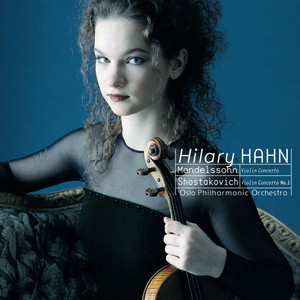 | Violin Concerto No. 1 in A Minor, Op. 77: II. Scherzo. Allegro non troppo | Dmitri Shostakovich, Hilary Hahn, Marek Janowski, Oslo-Filharmonien | B♭ Minor | 3 | 3A | 129 BPM | |
 | Strauss, R: An Alpine Symphony, Op. 64: I. Night | Richard Strauss, Rudolf Kempe, Staatskapelle Dresden | F Major | 1 | 7B | 79 BPM | |
 | Overture to "A Midsummer Night's Dream", Op. 21: Allegro di molto | Felix Mendelssohn, London Symphony Orchestra, John Eliot Gardiner | E Major | 1 | 12B | 137 BPM | |
 | Piano Concerto No. 2 in F Major, Op. 102: I. Allegro | Dmitri Shostakovich, Boris Giltburg, Royal Liverpool Philharmonic Orchestra, Vasily Petrenko | B♭ Major | 3 | 6B | 144 BPM | |
 | Colas Breugnon Overture, Op. 24 | Dmitry Kabalevsky, Kathryn Stott, Vassily Sinaisky, BBC Philharmonic Orchestra, BBC Philharmonic | F Major | 3 | 7B | 136 BPM | |
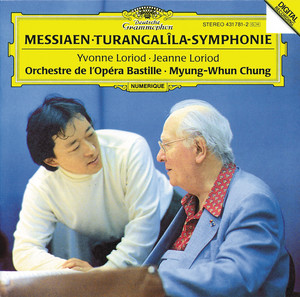 | Turangalîla Symphonie: 1. Introduction | Olivier Messiaen, Yvonne Loriod, Jeanne Loriod, Orchestre de l'Opéra Bastille, Myung-Whun Chung | E♭ Minor | 4 | 2A | 143 BPM | |
 | Lincolnshire Posy: III. Rufford Park Poachers | Percy Grainger, Dallas Wind Symphony, Jerry Junkin | E♭ Major | 2 | 5B | 101 BPM | |
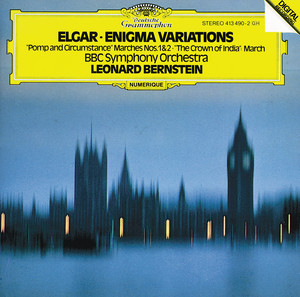 | Variations On An Original Theme, Op.36 "Enigma": 13. Romanza *** (Moderato) | Edward Elgar, BBC Symphony Orchestra, Leonard Bernstein | A♭ Major | 0 | 4B | 87 BPM | |
 | Symphony No. 2 in D Major, Op. 43: III. Vivacissimo | Jean Sibelius, Leonard Bernstein, New York Philharmonic | B♭ Major | 3 | 6B | 98 BPM | |
 | Wine-Dark Sea (Symphony for Band): III. The Attentions of Souls | John Mackey, The University of Texas Wind Ensemble, Jerry Junkin | A Minor | 1 | 8A | 70 BPM | |
 | Tristan und Isolde, Act I: Prelude | Richard Wagner, Staatskapelle Dresden, Carlos Kleiber | A Major | 1 | 11B | 82 BPM | |
 | VI. Lullaby | Igor Stravinsky, Brussels Philharmonic, Ali Rahbari | A♭ Minor | 0 | 1A | 118 BPM | |
 | Symphony No. 2 in C minor - "Resurrection" / 5th Movement: Sehr langsam und gedehnt ("der grosse Appell") | Gustav Mahler, Wiener Philharmoniker, Gilbert Kaplan | D♭ Minor | 0 | 12A | 67 BPM | |
 | Piano Concerto in E Major, Op. 59: IV. Allegro deciso | Moritz Moszkowski, Markus Pawlik, Polish National Radio Symphony Orchestra, Antoni Wit | E Major | 2 | 12B | 84 BPM | |
 | Rachmaninov: Symphony No. 3 in A Minor, Op. 44: II. Adagio ma non troppo - Allegro vivace | Sergei Rachmaninoff, Mariss Jansons, St. Petersburg Philharmonic Orchestra | E♭ Minor | 0 | 2A | 117 BPM | |
 | Concerto for Orchestra, Sz. 116: IV. Intermezzo interrotto. Allegretto | Béla Bartók, Berliner Philharmoniker, Herbert von Karajan | F Major | 0 | 7B | 96 BPM |
- ISRC
- GBPCP1700439
- Label
- L-M Records/RCA Records