- BPM
- 71
- Key
- G Major
- Camelot
- 9B
Second Waltz - Live in Maastricht by Dmitri Shostakovich, André Rieu Song Details
"Second Waltz - Live in Maastricht" by Dmitri Shostakovich, André Rieu had its release date on May 16, 2014. With this song being around four minutes long, at 4:03, the duration of this song is pretty average compared to other songs. This track is safe for children and doesn't appear to contain any foul language, since the "Explicit" tag was not present in this track. The track order of this song in André Rieu's "Live in Brazil (The Fan Edition)" album is number 6 out of 10. On top of that, Germany appears to be the country where this track was created. Second Waltz - Live in Maastricht is not that popular right now. In our opinion, the overall tone is not very danceable and projects negative sounds, such as being sad, depressed, or angry.
BPM and Tempo
We consider the tempo marking of Second Waltz - Live in Maastricht by Dmitri Shostakovich, André Rieu to be Adagio (slowly with great expression) because the track has a tempo of 71 BPM, a half-time of 36BPM, and a double-time of 142 BPM. Based on that, the speed of the song's tempo is slow. The time signature for this track is 4/4.
Music Key
G Major is the music key of this track. This also means that this song has a camelot key of 9B. So, the perfect camelot match for 9B would be either 9B or 10A. While, 10B can give you a low energy boost. For moderate energy boost, you would use 6B and a high energy boost can either be 11B or 4B. Though, if you want a low energy drop, you should looking for songs with either a camelot key of 9A or 8B will give you a low energy drop, 12B would be a moderate one, and 7B or 2B would be a high energy drop. Lastly, 6A allows you to change the mood.
Want to find the BPM and music key for other songs? Check out our BPM and Key Finder page!
- Popularity
- 7%
- Loudness
- -11.037 dB
- Acousticness
- 68%
- Danceability
- 27%
- Energy
- 78%
- Instrumentalness
- 0%
- Liveness
- 91%
- Loudness
- 82%
- Speechiness
- 35%
- Valence
- 18%
Recommendations
| Track | Artist | Key | Energy | Camelot | BPM | ||
|---|---|---|---|---|---|---|---|
 | Dido & Aeneas, Z. 626: When I Am Laid in Earth "Dido's Lament" (Transcr. L. Stokowski) | Henry Purcell, Timothy Walden, Bournemouth Symphony Orchestra, José Serebrier | E Major | 0 | 12B | 76 BPM | |
 | The Planets, Op. 32: 4. Jupiter, the Bringer of Jollity | Gustav Holst, Berliner Philharmoniker, Herbert von Karajan | G Minor | 3 | 6A | 140 BPM | |
 | Three Romances for Violin and Piano, Op. 22: I. Andante molto | Clara Schumann, Esther Abrami, Iyad Sughayer | D♭ Major | 2 | 3B | 81 BPM | |
 | Antar (After N. Rimsky-Korsakov): No. 7, Allegretto | リムスキー=コルサコフ, アンドレ・デュソリエ, フランス国立リヨン管弦楽団, レナード・スラットキン | F Major | 0 | 7B | 138 BPM | |
 | The Barber of Seville: Overture | Gioachino Rossini, Leonard Bernstein, New York Philharmonic | E Major | 2 | 12B | 175 BPM | |
 | Raymonda, Op. 57: Act III - Variation IV | Alexander Glazunov, Moscow Symphony Orchestra, Alexander Anissimov | D Minor | 0 | 7A | 90 BPM | |
 | Lieder ohne Worte, Op. 19b: Lieder ohne Worte (Song without Words) No. 6 in G Minor, Op. 19, No. 6, "Venezianisches Gondellied" [Venetian Gondola Song] | Felix Mendelssohn, Péter Nagy | G Major | 0 | 9B | 101 BPM | |
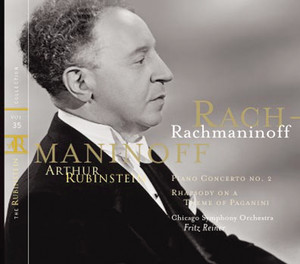 | Piano Concerto No. 2 in C Minor, Op. 18: I. Moderato | Sergei Rachmaninoff, Arthur Rubinstein, Fritz Reiner | C Minor | 1 | 5A | 71 BPM | |
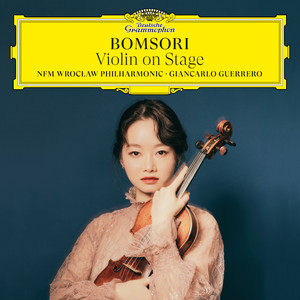 | Thaïs: Méditation | Jules Massenet, Bomsori, NFM Wrocław Philharmonic, Giancarlo Guerrero | D Major | 0 | 10B | 84 BPM | |
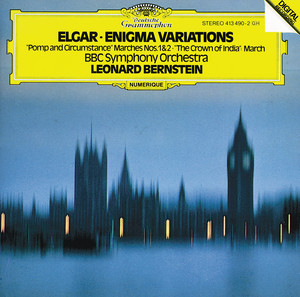 | Enigma Variations, Op. 36: Var. 1. L'istesso tempo "C.A.E." | Edward Elgar, BBC Symphony Orchestra, Leonard Bernstein | G Minor | 0 | 6A | 81 BPM | |
 | Chamber Symphony No. 5 in A-Flat Major, Op. 118a: IV. Allegretto | Dmitri Shostakovich, Yuli Turovsky, I Musici de Montréal | C Minor | 0 | 5A | 121 BPM | |
 | 6 Impromptus, Op. 5: Impromptu V | Jean Sibelius, Leif Ove Andsnes | B Minor | 0 | 10A | 72 BPM | |
 | Warsaw Concerto | Richard Addinsell, Jean-Yves Thibaudet, BBC Symphony Orchestra, Hugh Wolff | B Major | 1 | 1B | 76 BPM | |
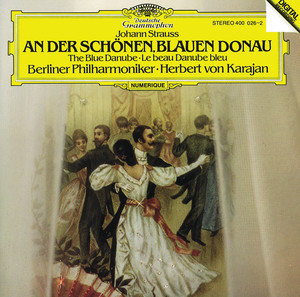 | An der schönen blauen Donau, Waltz, Op. 314 | Johann Strauss II, Berliner Philharmoniker, Herbert von Karajan | D Major | 0 | 10B | 95 BPM | |
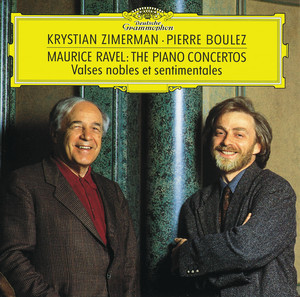 | Piano Concerto in G Major, M. 83: II. Adagio assai | Maurice Ravel, Krystian Zimerman, Cleveland Orchestra, Pierre Boulez | E Major | 0 | 12B | 74 BPM | |
 | Notturno in G Minor | Fanny Mendelssohn, Heather Schmidt | G Minor | 1 | 6A | 125 BPM | |
 | Scheherazade: The princess in a palanquin | Nikolai Rimsky-Korsakov, Lars Hjalmar Joakim | G Major | 1 | 9B | 166 BPM | |
 | Ständchen in D Minor (After Schubert), S. 560 | Franz Liszt, Lise de la Salle | D Major | 0 | 10B | 76 BPM | |
 | 2 Pieces, Op. 12: Dainele: Grave | Slovak Philharmonic, Mikalojus Konstantinas Čiurlionis | E Minor | 0 | 9A | 82 BPM | |
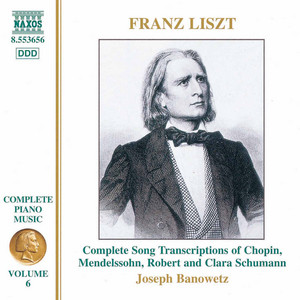 | Chopin - 6 Chants Polonais, S480/R145: No. 2. Fruhling(Wiosna, Spring) | Joseph Banowetz, Franz Liszt | G Major | 1 | 9B | 108 BPM | |
 | Carmen Fantasy, Op. 25: Introduction. Allegro moderato | Pablo de Sarasate, Hilary Hahn, Frankfurt Radio Symphony Orchestra, Andrés Orozco-Estrada | C Major | 3 | 8B | 135 BPM | |
 | Broken Strings | Georgy Apollonovich Gapon, First Separate Exemplary Orchestra of USSR Defense Ministry, Nikolai Nazarov | G Minor | 1 | 6A | 104 BPM | |
 | Serenade for Strings in E Major, Op. 22, B. 52: I. Moderato | Antonín Dvořák, Prague Chamber Orchestra, Petr Skvor | E Major | 1 | 12B | 83 BPM | |
 | Poulenc: Concerto for Two Pianos in D Minor, FP 61: I. Allegro ma non troppo | Francis Poulenc, James Conlon, Rotterdam Philharmonic Orchestra | E♭ Major | 1 | 5B | 103 BPM | |
 | Moscow-Cheryomushki, Op. 105: 2. Waltz | Dmitri Shostakovich, Philadelphia Orchestra, Riccardo Chailly | E Minor | 0 | 9A | 179 BPM |
- ISRC
- DEUM71401784
- Label
- L-M Records/RCA Records