- BPM
- 109
- Key
- B♭ Major
- Camelot
- 6B
2 Portraits: 1. David Layton. Poco presto by Benjamin Britten, Catherine Bullock, Camerata Nordica, Terje Tonnesen Song Details
"2 Portraits: 1. David Layton. Poco presto" by Benjamin Britten, Catherine Bullock, Camerata Nordica, Terje Tonnesen had its release date on November 19, 2013. Since This song is still less than 10 minute long, it is still considered a pretty long duration song compared to the average song length. This song does not appear to be explicit due to the lack of the "E" tag. The song is number 17 out of 19 in Britten: Frank Bridge Variations - Lachrymae - Elegy for Strings - Simple Symphony - Two Portraits by Benjamin Britten, Camerata Nordica, Terje Tonnesen. Going off of the ISRC code of this track, we detected that the origin of this track is from Sweden. In terms of popularity, 2 Portraits: 1. David Layton. Poco presto is currently unknown. In our opinion, the overall tone is not very danceable and projects negative sounds, such as being sad, depressed, or angry.
BPM and Tempo
The tempo marking of 2 Portraits: 1. David Layton. Poco presto by Benjamin Britten, Catherine Bullock, Camerata Nordica, Terje Tonnesen is Moderato (at a moderate speed), since this song has a tempo of 109 BPM. With that information, we can conclude that the song has a moderate tempo. The time signature for this track is 4/4.
Music Key
B♭ Major is the music key of this track. This also means that this song has a camelot key of 6B. So, the perfect camelot match for 6B would be either 6B or 7A. While, 7B can give you a low energy boost. For moderate energy boost, you would use 3B and a high energy boost can either be 8B or 1B. Though, if you want a low energy drop, you should looking for songs with either a camelot key of 6A or 5B will give you a low energy drop, 9B would be a moderate one, and 4B or 11B would be a high energy drop. Lastly, 3A allows you to change the mood.
Want to find the BPM and music key for other songs? Check out our BPM and Key Finder page!
- Popularity
- 0%
- Loudness
- -17.487 dB
- Acousticness
- 90%
- Danceability
- 24%
- Energy
- 17%
- Instrumentalness
- 67%
- Liveness
- 11%
- Loudness
- 71%
- Speechiness
- 4%
- Valence
- 6%
Recommendations
| Track | Artist | Key | Energy | Camelot | BPM | ||
|---|---|---|---|---|---|---|---|
 | Simple Symphony, Op. 4: Frolicsome Finale | Benjamin Britten, Royal Northern Sinfonia, Steuart Bedford | G Major | 2 | 9B | 155 BPM | |
 | Symphony No. 2 in One Movement, Op. 30: III. Andante | Ruth Gipps, Rumon Gamba, BBC National Orchestra Of Wales | F♯ Minor | 0 | 11A | 64 BPM | |
 | Háry János Suite: I. Prelude. The Fairy Tale Begins | Zoltán Kodály, Neeme Järvi, Chicago Symphony Orchestra, Laurence Kaptain | F Major | 1 | 7B | 84 BPM | |
 | La cisconera | Juan Pablo Fernández Ramos | A♭ Major | 0 | 4B | 82 BPM | |
 | Messiaen: Fête des belles eaux: VIII. Feux d'artifice final | Olivier Messiaen, Jeanne Loriod, Sextuor Jeanne Loriod | B Major | 2 | 1B | 172 BPM | |
 | German Requiem, Op. 45: Selig sind die Toten | Johannes Brahms, London Symphony Orchestra, London Symphony Chorus, Valery Gergiev | E♭ Major | 0 | 5B | 98 BPM | |
 | Ives / Orch. Brant: A Concord Symphony: III. The Alcotts | Charles Ives, Henry Brant, San Francisco Symphony, Michael Tilson Thomas | E♭ Major | 1 | 5B | 91 BPM | |
 | Alleluia: III. Night | Valentin Silvestrov, Kārlis Rūtentāls, Latvian Radio Choir, Sigvards Kļava | D Major | 0 | 10B | 84 BPM | |
 | Soir sur la plaine | Lili Boulanger, Antonii Baryshevskyi, Orpheus Vokalensemble, Michael Alber | B Major | 1 | 1B | 134 BPM | |
 | Messe solennelle, Op. 16: I. Kyrie | Louis Vierne, Gloucester Cathedral Choir, Mark Lee, David Briggs | D♭ Minor | 1 | 12A | 73 BPM | |
 | Mass for Double Choir: V. Agnus dei | Frank Martin, Westminster Choir, Joe Miller | D Major | 1 | 10B | 83 BPM | |
 | O magnum mysterium: I. O magnum mysterium | Peter Maxwell Davies, Howard Arman, Bavarian Radio Chorus | F♯ Major | 1 | 2B | 110 BPM | |
 | 4 Motets sur des themes gregoriens, Op. 10: II. Tota pulchra es | Maurice Duruflé, Michel Piquemal Vocal Ensemble, Michel Piquemal | F♯ Minor | 1 | 11A | 77 BPM | |
 | Gandrille: Magnificat, Op. 50: I. Magnificat | Jean-Charles Gandrille, Maitrise Notre-Dame De Paris, Yves Castagnet, Henri Chalet | C Minor | 3 | 5A | 84 BPM | |
 | Petite messe solennelle: VIII. Gloria. Qui tollis | Gioachino Rossini, Giulio Prandi, Sandrine Piau, José Maria Lo Monaco, Francesco Corti, Deniel Perer | A Minor | 1 | 8A | 83 BPM | |
 | 3 Dance Episodes from On the Town: No. 2, Lonely Town | Leonard Bernstein, Bournemouth Symphony Orchestra, Marin Alsop | D Minor | 2 | 7A | 105 BPM | |
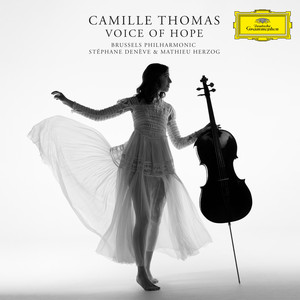 | Dido and Aeneas, Z. 626 / Act III: "When I Am Laid in Earth" Dido's Lamento (Arr. by Mathieu Herzog for Cello and Strings) | Henry Purcell, Camille Thomas, Brussels Philharmonic, Mathieu Herzog | G Minor | 1 | 6A | 77 BPM | |
 | Magnificat in B flat major: Magnificat anima mea | Francesco Durante, Thomas Hengelbrock | A Major | 3 | 11B | 126 BPM | |
 | Requiem in C Minor: I. Introitus | Luigi Cherubini, Filharmonie Brno, Czech Philharmonic Chorus Brno, Petr Fiala | A♭ Major | 0 | 4B | 58 BPM | |
 | Symphony No. 4, Op. 29 "The Inextinguishable": I. Allegro | Carl Nielsen, Danish National Symphony Orchestra, Fabio Luisi | A Major | 2 | 11B | 82 BPM | |
 | A Village Romeo and Juliet: The Walk to the Paradise Garden | Frederick Delius, Royal Scottish National Orchestra, David Lloyd-Jones | E Major | 0 | 12B | 70 BPM | |
 | Mass in E-Flat Major, Op. 109 "Cantus Missae": I. Kyrie | Josef Rheinberger, Kammerchor Stuttgart, Ensemble Stuttgart, Frieder Bernius | E♭ Major | 1 | 5B | 66 BPM | |
 | 4 Gesänge, Op. 17: No. 1, Es tönt ein voller Harfenklang | Johannes Brahms, Gächinger Kantorei Stuttgart, Bach-Collegium Stuttgart, Helmuth Rilling | G Minor | 0 | 6A | 67 BPM | |
 | Korngold: 6 Einfache Lieder, Op. 9: No. 1, Schneeglöckchen | Erich Wolfgang Korngold, Barbara Hendricks, Franz Welser-Möst, Philadelphia Orchestra | F♯ Minor | 2 | 11A | 66 BPM | |
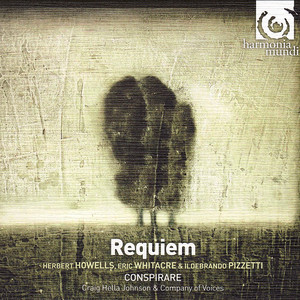 | Requiem: Psalm 121 | Herbert Howells, Conspirare, Craig Hella Johnson | B Minor | 0 | 10A | 65 BPM |
- ISRC
- SEAEV1360170
- Label
- L-M Records/RCA Records