- BPM
- 72
- Key
- B♭ Major
- Camelot
- 6B
Liebeslieder-Walzer, Op.52 - Verses From "Polydora": 3. O die Frauen, o die Frauen by Johannes Brahms, Peter Schreier, Dietrich Fischer-Dieskau, Karl Engel, Wolfgang Sawallisch Song Details
Johannes Brahms, Peter Schreier, Dietrich Fischer-Dieskau, Karl Engel, Wolfgang Sawallisch's 'Liebeslieder-Walzer, Op.52 - Verses From "Polydora": 3. O die Frauen, o die Frauen' had a release date set for January 1, 1983. With This song being less than two minutes long, at 1:15, we are fairly confident that this song is not explicit and is safe for all ages. Based on the duration of this song, this song duration is much smaller than the average song duration. The song is number 3 out of 36 in Brahms: Liebeslieder-Walzer by Johannes Brahms, Edith Mathis, Brigitte Fassbaender, Peter Schreier, Dietrich Fischer-Dieskau. Liebeslieder-Walzer, Op.52 - Verses From "Polydora": 3. O die Frauen, o die Frauen is not that popular right now. In our opinion, the overall tone is not very danceable and projects negative sounds, such as being sad, depressed, or angry.
BPM and Tempo
The tempo marking of Liebeslieder-Walzer, Op.52 - Verses From "Polydora": 3. O die Frauen, o die Frauen by Johannes Brahms, Peter Schreier, Dietrich Fischer-Dieskau, Karl Engel, Wolfgang Sawallisch is Adagio (slowly with great expression), since this song has a tempo of 72 BPM. With that information, we can conclude that the song has a slow tempo. The time signature for this track is 3/4.
Music Key
This song is in the music key of B♭ Major. This also means that this song has a camelot key of 6B. So, the perfect camelot match for 6B would be either 6B or 7A. While, 7B can give you a low energy boost. For moderate energy boost, you would use 3B and a high energy boost can either be 8B or 1B. Though, if you want a low energy drop, you should looking for songs with either a camelot key of 6A or 5B will give you a low energy drop, 9B would be a moderate one, and 4B or 11B would be a high energy drop. Lastly, 3A allows you to change the mood.
Want to find the BPM and music key for other songs? Check out our BPM and Key Finder page!
- Popularity
- 7%
- Loudness
- -24.059 dB
- Acousticness
- 99%
- Danceability
- 32%
- Energy
- 13%
- Instrumentalness
- 0%
- Liveness
- 20%
- Loudness
- 60%
- Speechiness
- 4%
- Valence
- 38%
Recommendations
| Track | Artist | Key | Energy | Camelot | BPM | ||
|---|---|---|---|---|---|---|---|
 | Bruch: Violin Concerto No. 1 in G Minor, Op. 26: I. Prelude. Allegro moderato | Max Bruch, Maxim Vengerov, Kurt Masur, Gewandhausorchester | E♭ Major | 1 | 5B | 113 BPM | |
 | Variations on a Rococo Theme, Op. 33, TH 57: Var: VI. Andante | Pyotr Ilyich Tchaikovsky, Jean-Guihen Queyras, BBC Symphony Orchestra, Jiří Bělohlávek | D Major | 0 | 10B | 114 BPM | |
 | Nocturnes, Op. 27: No. 2 in D-Flat Major | Frédéric Chopin, Arthur Rubinstein | D♭ Major | 0 | 3B | 77 BPM | |
 | Waltz No. 19 in A Minor, KK IVb (Version for Harp in A Flat Minor) | Frédéric Chopin, Magdalena Hoffmann | A♭ Minor | 1 | 1A | 127 BPM | |
 | Piano Sonata No.8 In C Minor, Op.13 -"Pathétique": 3. Rondo (Allegro) | Ludwig van Beethoven, Daniel Barenboim | C Minor | 1 | 5A | 97 BPM | |
 | Vivaldi: The Four Seasons, Violin Concerto in F Minor, Op. 8 No. 4, RV 297 "Winter": II. Largo | Antonio Vivaldi, Itzhak Perlman, Israel Philharmonic Orchestra | B♭ Major | 1 | 6B | 64 BPM | |
 | Schwanengesang, D. 957: Ständchen | Franz Schubert, Mischa Maisky, Daria Hovora | D Minor | 0 | 7A | 179 BPM | |
 | Three Romances for Violin and Piano, Op. 22: I. Andante molto | Clara Schumann, Esther Abrami, Iyad Sughayer | D♭ Major | 2 | 3B | 81 BPM | |
 | Flute and Harp Concerto in C Major, K. 299: II. Andantino | Wolfgang Amadeus Mozart, François Leleux, Emmanuel Pahud, Anneleen Lenaerts, Orchestre de chambre de Paris | F Major | 1 | 7B | 99 BPM | |
 | Fauré: Pavane, Op. 50 | Gabriel Fauré, San Francisco Symphony, Michael Tilson Thomas | F♯ Minor | 0 | 11A | 62 BPM | |
 | Salut d'amour, Op. 12 (version for orchestra) | Edward Elgar, Slovak Radio Symphony Orchestra, Adrian Leaper | B♭ Major | 1 | 6B | 82 BPM | |
 | Pavane, Op. 50 (Version for Piano) | Gabriel Fauré, Jorge Federico Osorio | F♯ Minor | 0 | 11A | 75 BPM | |
 | Rachmaninov: 10 Preludes, Op. 23: No. 5 in G Minor | Sergei Rachmaninoff, Nikolai Lugansky | G Minor | 1 | 6A | 113 BPM | |
 | In the Steppes of Central Asia | Alexander Borodin, Royal Philharmonic Orchestra, Vladimir Ashkenazy | A Major | 0 | 11B | 69 BPM | |
 | Thaïs: Méditation | Jules Massenet, Arabella Steinbacher, Orchestre Philharmonique de Monte-Carlo, Lawrence Foster | D Major | 0 | 10B | 91 BPM | |
 | La lisonjera, Op. 50 | Cécile Chaminade, Péter Nagy | D♭ Major | 1 | 3B | 132 BPM | |
 | Souvenir d'un lieu cher, Op. 42: III. Mélodie (Ed. Herrmann) | Pyotr Ilyich Tchaikovsky, Daniel Lozakovich, Stanislav Soloviev | E♭ Major | 1 | 5B | 178 BPM | |
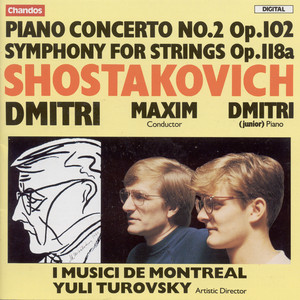 | Piano Concerto No. 2 in F Major, Op. 102: I. Allegro | Dmitri Shostakovich, I Musici de Montréal, Maxim Shostakovich | B♭ Major | 3 | 6B | 160 BPM | |
 | 21 Hungarian Dances, WoO 1 (arr. J. Joachim for violin and piano): No. 9 in E Minor | Joseph Joachim, Johannes Brahms, Marat Bisengaliev, John Lenehan | B Minor | 1 | 10A | 106 BPM | |
 | Pavane in F-Sharp Minor, Op. 50 | Gabriel Fauré, Lucas Debargue | F♯ Minor | 0 | 11A | 163 BPM | |
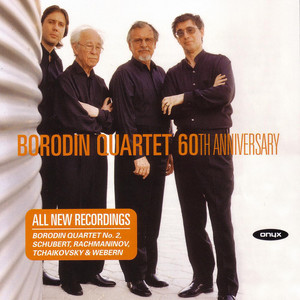 | Borodin - String Quartet No.2 in D major: Notturno: Andante | Alexander Borodin, Borodin Quartet | A Major | 2 | 11B | 74 BPM | |
 | Haydn: Cello Concerto No. 1 in C Major, Hob. VIIb, 1: I. Moderato (Cadenza by Britten) | Franz Joseph Haydn, Mstislav Rostropovich, Academy of St. Martin in the Fields | C Major | 1 | 8B | 68 BPM | |
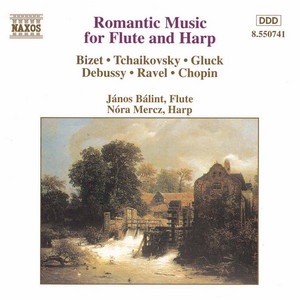 | Sadko: Hindu Song (arr. N. Mercz): Hindu Song from the Opera 'Sadko' | Nora Mercz, Nikolai Rimsky-Korsakov, Janos Balint | F Major | 0 | 7B | 65 BPM | |
| Haydn: Cello Concerto No. 1 in C Major, Hob. VIIb, 1: II. Adagio (Cadenza by Britten) | Franz Joseph Haydn, Mstislav Rostropovich, Academy of St. Martin in the Fields | F Major | 1 | 7B | 124 BPM | |
 | Violin Concerto No. 1 in A minor, BWV 1041: I. (Allegro moderato) | Johann Sebastian Bach, Daniel Lozakovich, Chamber Orchestra of the Bavarian Radio, Radoslaw Szulc, Olga Watts | A Minor | 4 | 8A | 91 BPM |
- ISRC
- This song does not have an ISRC.
- Label
- L-M Records/RCA Records