- BPM
- 82
- Key
- E♭ Major
- Camelot
- 5B
Fauré: Requiem, Op. 48: VII. In Paradisum by Gabriel Fauré, Choir of King's College, Cambridge, English Chamber Orchestra, José-Luis Garcia, Peter Barley, Stephen Cleobury Song Details
"Fauré: Requiem, Op. 48: VII. In Paradisum" by Gabriel Fauré, Choir of King's College, Cambridge, English Chamber Orchestra, José-Luis Garcia, Peter Barley, Stephen Cleobury had its release date on February 14, 2025. The duration of This song is about 3 minutes long, at 3:28. Based on our data, This song appears to be safe for all ages and is not considered explicit. This track is about the average length of a typical track. The song is number 40 out of 70 in All We Need Is Love (& Classical Music) - A Valentine's Day Collection by Wolfgang Amadeus Mozart, Alexander Borodin, Antonio Vivaldi, Camille Saint-Saëns, Christoph Willibald Gluck, Claude Debussy, Dmitri Shostakovich, Edvard Grieg, Emmanuel Chabrier, Erik Satie, Felix Mendelssohn, Francis Poulenc, Franz Liszt, Franz Schubert, François Couperin, Frédéric Chopin, Gabriel Fauré, George Frideric Handel, George Gershwin, Giuseppe Verdi, Heitor Villa-Lobos, Jacques Offenbach, Jean Sibelius, Jean-Philippe Rameau, Johann Sebastian Bach, Johann Strauss II, John Dowland, Jules Massenet, Ludwig van Beethoven, Léo Delibes, Maurice Ravel, Pyotr Ilyich Tchaikovsky, Robert Schumann, Sergei Prokofiev, Sergei Rachmaninoff, Edward Elgar. Going off of the ISRC code of this track, we detected that the origin of this track is from United Kingdom. Fauré: Requiem, Op. 48: VII. In Paradisum is unknown right now. In our opinion, the overall tone is not very danceable and projects negative sounds, such as being sad, depressed, or angry.
BPM and Tempo
The tempo marking of Fauré: Requiem, Op. 48: VII. In Paradisum by Gabriel Fauré, Choir of King's College, Cambridge, English Chamber Orchestra, José-Luis Garcia, Peter Barley, Stephen Cleobury is Andante (at a walking pace), since this song has a tempo of 82 BPM. With that information, we can conclude that the song has a slow tempo. The time signature for this track is 3/4.
Music Key
This song is in the music key of E♭ Major. This also means that this song has a camelot key of 5B. So, the perfect camelot match for 5B would be either 5B or 6A. While, 6B can give you a low energy boost. For moderate energy boost, you would use 2B and a high energy boost can either be 7B or 12B. Though, if you want a low energy drop, you should looking for songs with either a camelot key of 5A or 4B will give you a low energy drop, 8B would be a moderate one, and 3B or 10B would be a high energy drop. Lastly, 2A allows you to change the mood.
Want to find the BPM and music key for other songs? Check out our BPM and Key Finder page!
- Popularity
- 0%
- Loudness
- -24.179 dB
- Acousticness
- 94%
- Danceability
- 8%
- Energy
- 5%
- Instrumentalness
- 82%
- Liveness
- 8%
- Loudness
- 60%
- Speechiness
- 4%
- Valence
- 3%
Recommendations
| Track | Artist | Key | Energy | Camelot | BPM | ||
|---|---|---|---|---|---|---|---|
 | Satie: Gnossiennes: IV. Lent | Erik Satie, Hélène Grimaud | C Major | 0 | 8B | 96 BPM | |
 | Elgar: Mina | Edward Elgar, Northern Sinfonia Orchestra, Sir Neville Marriner | B♭ Major | 1 | 6B | 85 BPM | |
 | Rinaldo, HWV 7: Lascia ch'io pianga (Arr. for Piano) | George Frideric Handel, Martin Stadtfeld | F Major | 0 | 7B | 68 BPM | |
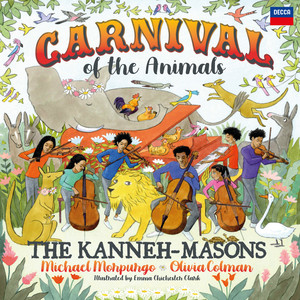 | The Seal Lullaby (Arr. Parkin) | Eric Whitacre, Isata Kanneh-Mason, Jeneba Kanneh-Mason, Braimah Kanneh-Mason, Konya Kanneh-Mason, Aminata Kanneh-Mason, Sheku Kanneh-Mason, Mariatu Kanneh-Mason | D♭ Major | 0 | 3B | 81 BPM | |
 | 3 Romances, Op. 22: 1. Andante molto | Clara Schumann, Janine Jansen, Antonio Pappano | D♭ Major | 1 | 3B | 74 BPM | |
 | From the Bohemian Forest, Op. 68, B. 133: V. Silent Woods (Arr. Niefind & Ribke For Solo Cello and Cello Ensemble) | Antonín Dvořák, Kian Soltani, Staatskapelle Berlin, Cellists | D♭ Major | 0 | 3B | 85 BPM | |
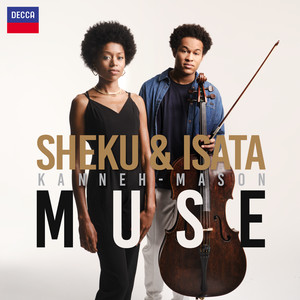 | Sure on This Shining Night, Op. 13 No. 3 (Arr. Parkin for Cello and Piano) | Samuel Barber, Sheku Kanneh-Mason, Isata Kanneh-Mason | B♭ Major | 0 | 6B | 113 BPM | |
 | Cello Sonata in G Minor, Op. 65: III. Largo | Frédéric Chopin, Emmanuelle Bertrand, Pascal Amoyel | B♭ Major | 0 | 6B | 89 BPM | |
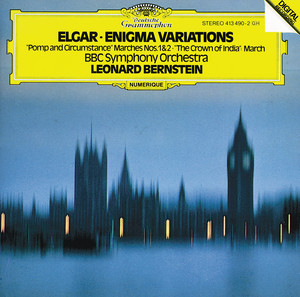 | Enigma Variations, Op. 36: Var. 9. Adagio "Nimrod" | Edward Elgar, BBC Symphony Orchestra, Leonard Bernstein | E♭ Major | 0 | 5B | 79 BPM | |
 | Sospiri, Op. 70 (Arr. Violin and Piano) | Edward Elgar, Nicola Benedetti, Petr Limonov | D Minor | 0 | 7A | 93 BPM | |
 | Crisantemi | Brodsky Quartet | F♯ Minor | 0 | 11A | 75 BPM | |
 | Bagatelles I-XIII: Bagatelle III | Valentin Silvestrov, Hélène Grimaud | C Minor | 0 | 5A | 94 BPM | |
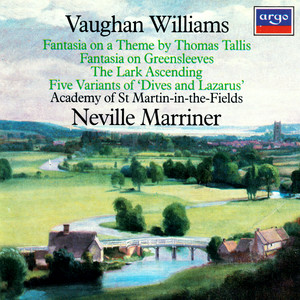 | Fantasia on Greensleeves | Ralph Vaughan Williams, Academy of St. Martin in the Fields, Sir Neville Marriner | C Minor | 1 | 5A | 89 BPM | |
 | Nisi Dominus, RV 608 - Arr. Cello: 4. Cum dederit dilectis suis (Arr. Cello) | Antonio Vivaldi, Harriet Krijgh, Amsterdam Sinfonietta, Candida Thompson | G Minor | 0 | 6A | 106 BPM | |
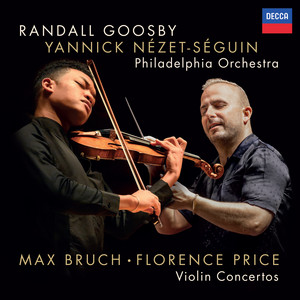 | Adoration (Arr. Gray for Violin & Orchestra) | Florence Beatrice Price, Randall Goosby, Philadelphia Orchestra, Yannick Nézet-Séguin | D Major | 3 | 10B | 74 BPM | |
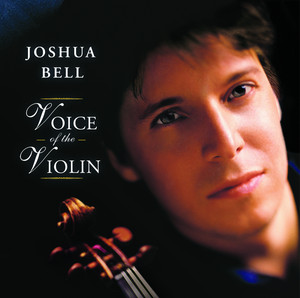 | Rusalka, Op. 114: Song to the Moon (Arranged for Violin & Orchestra by Joshua Bell) | Antonín Dvořák, Joshua Bell, Michael Stern, Orchestra of St. Luke's | F♯ Major | 1 | 2B | 137 BPM | |
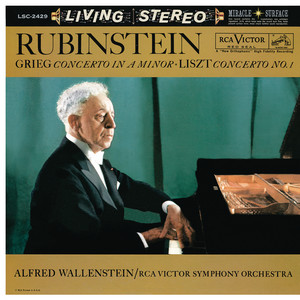 | Piano Concerto in A Minor, Op. 16: II. Adagio - Remastered | Edvard Grieg, Arthur Rubinstein, RCA Victor Symphony Orchestra, Alfred Wallenstein | D♭ Major | 0 | 3B | 86 BPM | |
 | Nocturne No. 2 in C Minor, H. 25 | John Field, Alice Sara Ott | F Major | 0 | 7B | 67 BPM | |
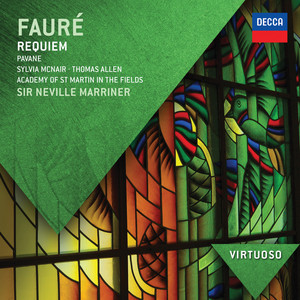 | Requiem in D Minor, Op.48: 7. In paradisum | Gabriel Fauré, Academy of St Martin in the Fields Chorus, Academy of St. Martin in the Fields, John Birch, Sir Neville Marriner | D Major | 0 | 10B | 72 BPM | |
| Symphony No. 9 in E Minor, Op. 95, B. 178, "From the New World": IV. Largo. Goin' Home (Arr. Koncz For Solo Cello and Cello Ensemble) | Antonín Dvořák, Kian Soltani, Staatskapelle Berlin, Cellists | D♭ Major | 0 | 3B | 94 BPM | |
 | Les noces de Jeanette: Air du rossignol (Arr. Pierre for Flute & Orchestra) | Victor Massé, Patrick Gallois, Richard Friedman, Fabrice Pierre, London Festival Orchestra, Ross Pople | A♭ Major | 1 | 4B | 135 BPM | |
 | Widmung, Op. 25 No. 1 (Arr. Franz Liszt) | Robert Schumann, Martin James Bartlett | A♭ Major | 0 | 4B | 74 BPM | |
 | Gluck / Arr Siloti: Orphée et Eurydice, Wq. 41, Act I: Dance of the Blessed Spirits | Christoph Willibald Gluck, Alexandre Tharaud | B♭ Minor | 0 | 3A | 77 BPM | |
 | Prelude in G Major | Víkingur Ólafsson | G Major | 0 | 9B | 102 BPM | |
 | 3 Romanzen, Op. 28: No. 2 in F-Sharp Major (Einfach) | Robert Schumann, Benjamin Grosvenor | E♭ Major | 0 | 5B | 99 BPM |
- ISRC
- GBAYD8800085
- Label
- L-M Records/RCA Records