- BPM
- 93
- Key
- E♭ Minor
- Camelot
- 2A
The Joy of Earth (Orchestrated by Roderick Williams) by Ina Boyle, Hallé, Sir Mark Elder, Roderick Williams Song Details
"The Joy of Earth (Orchestrated by Roderick Williams)" by Ina Boyle, Hallé, Sir Mark Elder, Roderick Williams had its release date on November 4, 2022. With This song being less than two minutes long, at 1:58, we are fairly confident that this song is not explicit and is safe for all ages. Based on the duration of this song, this song duration is much smaller than the average song duration. The song is number 3 out of 21 in A Shropshire Lad: English Songs Orchestrated by Roderick Williams by Hallé, Sir Mark Elder, Roderick Williams. Going off of the ISRC code of this track, we detected that the origin of this track is from United Kingdom. In terms of popularity, The Joy of Earth (Orchestrated by Roderick Williams) is currently not that popular. In our opinion, the overall tone is not very danceable and projects negative sounds, such as being sad, depressed, or angry.
BPM and Tempo
The tempo marking of The Joy of Earth (Orchestrated by Roderick Williams) by Ina Boyle, Hallé, Sir Mark Elder, Roderick Williams is Andante (at a walking pace), since this song has a tempo of 93 BPM. With that information, we can conclude that the song has a slow tempo. This song can go great with yoga or pilates. The time signature for this track is 4/4.
Music Key
This song is in the music key of E♭ Minor. Because this track belongs in the E♭ Minor key, the camelot key is 2A. So, the perfect camelot match for 2A would be either 2A or 1B. While, a low energy boost can consist of either 2B or 3A. For moderate energy boost, you would use 11A and a high energy boost can either be 4A or 9A. However, if you are looking for a low energy drop, finding a song with a camelot key of 1A would be a great choice. Where 5A would give you a moderate drop, and 12A or 7A would be a high energy drop. Lastly, 5B allows you to change the mood.
Want to find the BPM and music key for other songs? Check out our BPM and Key Finder page!
- Popularity
- 4%
- Loudness
- -26.205 dB
- Acousticness
- 97%
- Danceability
- 19%
- Energy
- 5%
- Instrumentalness
- 2%
- Liveness
- 9%
- Loudness
- 56%
- Speechiness
- 4%
- Valence
- 5%
Recommendations
| Track | Artist | Key | Energy | Camelot | BPM | ||
|---|---|---|---|---|---|---|---|
 | The Stolen Child | Ina Boyle, Iain Burnside, Robin Tritschler | E♭ Major | 1 | 5B | 121 BPM | |
 | Carmen Fantasy, Op. 25: Introduction. Allegro moderato | Pablo de Sarasate, Hilary Hahn, Frankfurt Radio Symphony Orchestra, Andrés Orozco-Estrada | C Major | 3 | 8B | 135 BPM | |
 | Zigeunerweisen, Op. 20: III. Un peu plus lent | Pablo de Sarasate, Anne-Sophie Mutter, Wiener Philharmoniker, James Levine | C Minor | 0 | 5A | 88 BPM | |
 | Reflection No. 5 (With Surprises) | Camille Thomas, Julien Brocal | F Major | 1 | 7B | 80 BPM | |
 | Masquerade | Anna Clyne, BBC Symphony Orchestra, Marin Alsop | G Major | 4 | 9B | 116 BPM | |
 | Mademoiselle de Paris (Arr. Goss for Guitar & String Ensemble) | Paul Durand, Alexandra Whittingham, Carducci String Quartet, Thea Sayer | D Major | 3 | 10B | 180 BPM | |
 | Theme from “Schindler’s List” | Cocomi, 東 亮汰, 田原綾子, Haruma Sato | D Minor | 0 | 7A | 92 BPM | |
 | Concerto for Clarinet and Orchestra in A Major, K. 622: II. Adagio | Wolfgang Amadeus Mozart, Berliner Philharmoniker, Alan Gilbert, Wenzel Fuchs | D Major | 0 | 10B | 91 BPM | |
 | Cello Concerto No. 2 in D Major, Hob. VIIb: II. Adagio | Joseph Haydn, Alisa Weilerstein, TrondheimSolistene | G Major | 0 | 9B | 70 BPM | |
 | Consolation No. 3, S. 172/3 (Arr. Cooper for Saxophone & Ensemble) | Franz Liszt, Jess Gillam, Jess Gillam Ensemble | F♯ Major | 2 | 2B | 136 BPM | |
 | Flight (feat. Jess Gillam) | Rachel Portman, Anna Lapwood, Jess Gillam | D Minor | 0 | 7A | 71 BPM | |
 | Concerto for Violin and Orchestra (To the memory of my mother): I. Lento, ma non troppo | Ina Boyle, Esther Abrami, Vienna Radio Symphony Orchestra, Irene Delgado-Jiménez | A Minor | 2 | 8A | 80 BPM | |
 | 5 Pieces in Folk Style, Op. 102: I. Mit Humor | Robert Schumann, Midori, Özgür Aydın | C Major | 2 | 8B | 90 BPM | |
 | 6 Lieder, Op. 1: No. 1, Schwanenlied (Arr. Lidström for Cello & Piano) | Fanny Mendelssohn, Mats Lidström, Leif Kaner-Lidström | D Minor | 0 | 7A | 71 BPM | |
| Looking Back: I. Carrowdore | Ina Boyle, Iain Burnside, Paula Murrihy | E♭ Major | 1 | 5B | 121 BPM | |
 | Requiem, Op. 48: VII. In Paradisum (Arr. for Piano by Émile Naoumoff) | Gabriel Fauré, Lucas Debargue | C Major | 3 | 8B | 84 BPM | |
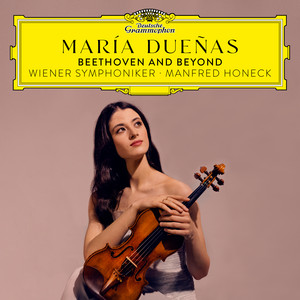 | Havanaise, Op. 83, R. 202 | Camille Saint-Saëns, María Dueñas, Wiener Symphoniker, Manfred Honeck | A Major | 1 | 11B | 83 BPM | |
 | Pavane pour une infante défunte, M. 19 (Arr. for Wind Ensemble by Guy du Cheyron) | Maurice Ravel, Ensemble Ouranos | C Major | 2 | 8B | 90 BPM | |
 | Cello Sonata No. 2, Op. 58/MWV Q 32: III. Adagio | Felix Mendelssohn, Sol Gabetta, Bertrand Chamayou | G Major | 2 | 9B | 84 BPM | |
 | Piano Concerto in One Movement: Andantino | Florence Beatrice Price, Jeneba Kanneh-Mason, Chineke! Orchestra, Leslie Suganandarajah | D Minor | 1 | 7A | 129 BPM | |
 | Montgomery Variations: IV. Dawn in Dixie | Margaret Bonds, Kellen Gray, Royal Scottish National Orchestra | D Minor | 0 | 7A | 168 BPM | |
 | Sur le lac du Bourget | Gabriela Montero, Gautier Capuçon, Frank Braley | G Major | 2 | 9B | 178 BPM | |
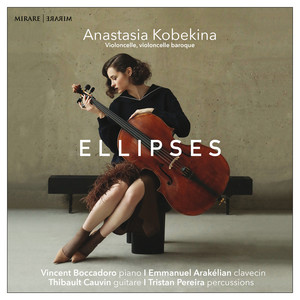 | Sicilienne (Transcribed for Cello & Piano) | Maria Theresia von Paradis, Anastasia Kobekina, Vincent Boccadoro | D Minor | 2 | 7A | 182 BPM | |
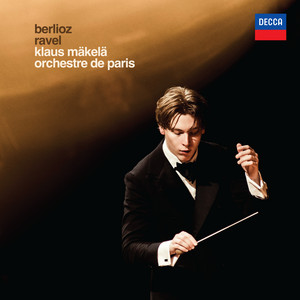 | Symphonie fantastique, H. 48: II. Un bal. Valse | Hector Berlioz, Orchestre de Paris, Klaus Mäkelä | A Major | 1 | 11B | 100 BPM | |
 | Saint-Saëns: Danse macabre, Op. 40 | Camille Saint-Saëns, Delirium Musicum, Étienne Gara | G Minor | 2 | 6A | 107 BPM |
- ISRC
- GBXSY2200011
- Label
- L-M Records/RCA Records