- BPM
- 89
- Key
- F Major
- Camelot
- 7B
5 Folksongs in Counterpoint for String Quartet: No. 1, Calvary by Florence Beatrice Price, Catalyst Quartet Song Details
Florence Beatrice Price, Catalyst Quartet's ' "5 Folksongs in Counterpoint for String Quartet: No. 1, Calvary" was released on its scheduled release date, February 4, 2022. With this song being about 5 minutes long, at This song is fairly a long song compared to the average song length. This song does not have an "Explicit" tag, making it safe for all ages. There are a total of 22 in the song's album "Uncovered, Vol. 2: Florence B. Price". In this album, this song's track order is #13. Furthermore, we believe that the track originated from United States. 5 Folksongs in Counterpoint for String Quartet: No. 1, Calvary is not that popular right now. The overall mood can be danceable to some, especially with it's high amount of postive energy.
BPM and Tempo
With 5 Folksongs in Counterpoint for String Quartet: No. 1, Calvary by Florence Beatrice Price, Catalyst Quartet having a BPM of 89 with a half-time of 44 BPM and a double-time of 178 BPM, we would consider this track to have a Andante (at a walking pace) tempo marking. Because of this, we believe that the song has an overall slow tempo. Looking at the BPM of this song, this song might go great with yoga or pilates. The time signature for this track is 1/4.
Music Key
F Major is the music key of this track. Or for those who are familiar with the camelot wheel, this song has a camelot key of 7B. So, the perfect camelot match for 7B would be either 7B or 8A. While, 8B can give you a low energy boost. For moderate energy boost, you would use 4B and a high energy boost can either be 9B or 2B. Though, if you want a low energy drop, you should looking for songs with either a camelot key of 7A or 6B will give you a low energy drop, 10B would be a moderate one, and 5B or 12B would be a high energy drop. Lastly, 4A allows you to change the mood.
Want to find the BPM and music key for other songs? Check out our BPM and Key Finder page!
- Popularity
- 4%
- Loudness
- -21.015 dB
- Acousticness
- 98%
- Danceability
- 44%
- Energy
- 20%
- Instrumentalness
- 6%
- Liveness
- 16%
- Loudness
- 65%
- Speechiness
- 6%
- Valence
- 73%
Recommendations
| Track | Artist | Key | Energy | Camelot | BPM | ||
|---|---|---|---|---|---|---|---|
 | Spohr: Symphonie Concertante for Violin, Harp and Orchestra in G Major, WoO 13 - II. Adagio | Louis Spohr, María Dueñas, Volker Kempf, Wiener Symphoniker, Manfred Honeck | G Major | 0 | 9B | 92 BPM | |
 | Beau soir, CD 84 (Performed on Harp & Saxophone) | Claude Debussy, Alis Huws, Jess Gillam | F♯ Minor | 0 | 11A | 88 BPM | |
 | Where the Rainbow Ends Suite (version for orchestra): No. 1a Rainbow Land | Roger Quilter, Slovak Radio Symphony Orchestra, Adrian Leaper | A Major | 0 | 11B | 69 BPM | |
![Etudes symphoniques (Symphonic Etudes), Op. 13, Adagio and Allegro brillante: Variation 11 [arr. P.I. Tchaikovsky for orchestra] by Robert Schumann, Seattle Symphony Orchestra, Gerard Schwarz](https://i.scdn.co/image/ab67616d00001e029057c124b554163ef1edd618) | Etudes symphoniques (Symphonic Etudes), Op. 13, Adagio and Allegro brillante: Variation 11 [arr. P.I. Tchaikovsky for orchestra] | Robert Schumann, Seattle Symphony Orchestra, Gerard Schwarz | A Minor | 0 | 8A | 104 BPM | |
 | Mélodie in Ab Major - arr. for orchestra | Louise Farrenc, Prague Metropolitan Orchestra, Shea Lolin | A♭ Major | 1 | 4B | 64 BPM | |
 | Indigo und die vierzig Räuber: Ouvertüre | Johann Strauss II, Wiener Philharmoniker, Yannick Nézet-Séguin | D Major | 1 | 10B | 141 BPM | |
 | 12 Romances, Op. 21: No. 7, How Fair This Spot (Arr. Sheku Kanneh-Mason for Cello and Piano) | Sergei Rachmaninoff, Sheku Kanneh-Mason, Isata Kanneh-Mason | A Major | 1 | 11B | 89 BPM | |
| Rainbow Waltz (Arr. for Orchestra by Wolfgang Dörner) | Florence Beatrice Price, Wiener Philharmoniker, Yannick Nézet-Séguin | D Major | 1 | 10B | 141 BPM | |
 | 3 Songs, Op. 7: I. Après un rêve (Version for Violin and Piano) | Gabriel Fauré, María Dueñas, Itamar Golan | D Major | 1 | 10B | 87 BPM | |
 | Symphony No. 4 in D Minor: III. Juba. Allegro | Florence Beatrice Price, Philadelphia Orchestra, Yannick Nézet-Séguin | A Minor | 1 | 8A | 87 BPM | |
 | 6 Piano Pieces, Op. 118: No. 2: Intermezzo in A Major | Johannes Brahms, Igor Levit | F♯ Minor | 0 | 11A | 78 BPM | |
 | Symphony No. 2 in D Major, Op. 73: III. Allegretto grazioso (Quasi andantino) - Presto ma non assai | Johannes Brahms, Chamber Orchestra of Europe, Yannick Nézet-Séguin | E Minor | 1 | 9A | 108 BPM | |
 | 6 Pieces for Piano, P. 44: No. 3. Notturno. Lento (Version for Harp) | Ottorino Respighi, Magdalena Hoffmann | F♯ Major | 0 | 2B | 88 BPM | |
 | A Moorside Suite, H. 173: Nocturne | Gustav Holst, Royal Northern Sinfonia, David Lloyd-Jones | B Minor | 0 | 10A | 80 BPM | |
 | Adoration | Florence Beatrice Price, Philippe Quint, Andrew Litton | G Major | 1 | 9B | 111 BPM | |
 | Capriol Suite: 5. Pied-en- l'air | Peter Warlock, Academy of St. Martin in the Fields, Nicholas Kraemer, Sir Neville Marriner | G Major | 1 | 9B | 113 BPM | |
 | Elgar: Chanson de matin, Op. 15 No. 2 | Edward Elgar, Andrew Davis, BBC Symphony Orchestra | G Major | 1 | 9B | 92 BPM | |
| English Suite: Meditation | Paul Lewis, Royal Northern Sinfonia, David Lloyd-Jones | A Minor | 0 | 8A | 61 BPM | |
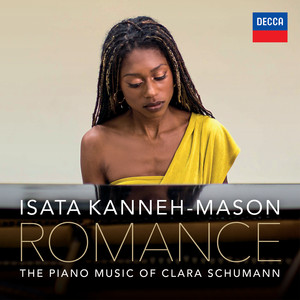 | 3 Romances, Op. 11: No. 1, Andante | Clara Schumann, Isata Kanneh-Mason | E♭ Minor | 0 | 2A | 127 BPM | |
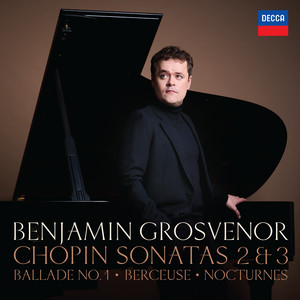 | Piano Sonata No. 3 in B Minor, Op. 58: II. Scherzo. Molto vivace | Frédéric Chopin, Benjamin Grosvenor | B Major | 2 | 1B | 122 BPM | |
 | Kol Nidrei - Adagio For Cello, Opus 47 | Max Bruch, Alisa Weilerstein, Staatskapelle Berlin, Daniel Barenboim | D Major | 1 | 10B | 81 BPM | |
 | Sibelius: Symphony No. 5 in E-Flat Major, Op. 82: I. Tempo molto moderato | Jean Sibelius, Sakari Oramo, City Of Birmingham Symphony Orchestra | E♭ Major | 1 | 5B | 83 BPM | |
 | The Tempest: Suite No. 2, Op. 109: VI. Miranda | Jean Sibelius, Iceland Symphony Orchestra, Petri Sakari | C Major | 1 | 8B | 70 BPM | |
 | Pictures at an Exhibition (Orch. Ravel): Promenade I | Modest Mussorgsky, Wiener Philharmoniker, Gustavo Dudamel | F Major | 0 | 7B | 88 BPM | |
 | 4 Lieder, Op. 82, B. 157: I. Lasst mich allein. Andante (Arr. Soltani For Solo Cello and Cello Ensemble) | Antonín Dvořák, Kian Soltani, Staatskapelle Berlin, Cellists, Otto Tolonen | B Major | 0 | 1B | 140 BPM |
- ISRC
- USSF61800352
- Label
- L-M Records/RCA Records