- BPM
- 111
- Key
- E Major
- Camelot
- 12B
Gloria all'Egitto, ad Iside by Giuseppe Verdi, André Rieu, Limburgische Blaskapelle Song Details
Giuseppe Verdi, André Rieu, Limburgische Blaskapelle's 'Gloria all'Egitto, ad Iside' had a release date set for January 1, 2012. The duration of This song is about 3 minutes long, at 3:12. Based on our data, This song appears to be safe for all ages and is not considered explicit. This track is about the average length of a typical track. The track order of this song in André Rieu's "In Love with Maastricht - A Tribute to My Hometown" album is number 2 out of 19. On top of that, Germany appears to be the country where this track was created. In terms of popularity, Gloria all'Egitto, ad Iside is currently not that popular. In our opinion, the overall tone is not very danceable and projects negative sounds, such as being sad, depressed, or angry.
BPM and Tempo
We consider the tempo marking of Gloria all'Egitto, ad Iside by Giuseppe Verdi, André Rieu, Limburgische Blaskapelle to be Moderato (at a moderate speed) because the track has a tempo of 111 BPM, a half-time of 56BPM, and a double-time of 222 BPM. Based on that, the speed of the song's tempo is moderate. The time signature for this track is 4/4.
Music Key
This song is in the music key of E Major. This also means that this song has a camelot key of 12B. So, the perfect camelot match for 12B would be either 12B or 1A. While, 1B can give you a low energy boost. For moderate energy boost, you would use 9B and a high energy boost can either be 2B or 7B. Though, if you want a low energy drop, you should looking for songs with either a camelot key of 12A or 11B will give you a low energy drop, 3B would be a moderate one, and 10B or 5B would be a high energy drop. Lastly, 9A allows you to change the mood.
Want to find the BPM and music key for other songs? Check out our BPM and Key Finder page!
- Popularity
- 12%
- Loudness
- -7.321 dB
- Acousticness
- 61%
- Danceability
- 28%
- Energy
- 59%
- Instrumentalness
- 0%
- Liveness
- 96%
- Loudness
- 88%
- Speechiness
- 7%
- Valence
- 33%
Recommendations
| Track | Artist | Key | Energy | Camelot | BPM | ||
|---|---|---|---|---|---|---|---|
 | Don Pasquale: Tornami a dir che m'ami | Angela Gheorghiu, Richard Armstrong, Roberto Alagna | A Major | 0 | 11B | 90 BPM | |
 | Die Csárdásfürstin · Operette in 3 Akten (1988 Digital Remaster), Erster Akt: Heia, heia, in den Bergen ist mein Heimatland (Sylva - Boni - Feri - Chor) | Emmerich Kálmán, Anneliese Rothenberger, Willy Mattes, Symphonie-Orchester Graunke | C Minor | 5 | 5A | 91 BPM | |
 | Solveig's song | Edvard Grieg, Anna Netrebko | A Minor | 1 | 8A | 173 BPM | |
 | Le veau d'or - from Faust | Charles Gounod, Erwin Schrott, Daniele Rustioni | C Minor | 5 | 5A | 121 BPM | |
 | Pagliacci / Prologue: Prelude..."Si può? Signore! Signori!" | Ruggero Leoncavallo, Ingvar Wixell, National Philharmonic Orchestra, Giuseppe Patanè | G Major | 2 | 9B | 79 BPM | |
 | Die Forelle, D. 550 | Franz Schubert, Dietrich Fischer-Dieskau, Gerald Moore | E♭ Major | 1 | 5B | 102 BPM | |
 | Requiem, K. 626: IIIa. Dies irae | Wolfgang Amadeus Mozart, Wiener Singverein, Wiener Philharmoniker, Herbert von Karajan | B♭ Major | 6 | 6B | 152 BPM | |
 | Chorus Of The Hebrew Slaves (Nabucco) | Choir and Orchestra of the Budapest State Opera, Josif Conta, Consortium Musicum Ljubjlana | D♭ Major | 0 | 3B | 142 BPM | |
 | Barcarolle: Schöne Nacht, du Liebesnacht - Hoffmanns Erzählungen | Jacques Offenbach, Jesús López-Cobos, Hei-Kyung Hong, Jennifer Larmore, Munich Radio Orchestra | D Major | 2 | 10B | 81 BPM | |
 | Carmina Burana / Fortuna Imperatrix Mundi: "Fortune plango vulnera" | Carl Orff, Brighton Festival Chorus, Royal Philharmonic Orchestra, Antal Doráti | D Minor | 2 | 7A | 123 BPM | |
 | La Bohème / Act I: "Quando Me'n Vò" | Giacomo Puccini, Anna Netrebko, Wiener Philharmoniker, Gianandrea Noseda | F♯ Minor | 2 | 11A | 135 BPM | |
 | Handel / Orch. Hale: Keyboard Suite No. 4 in D Minor, HWV 437: III. Sarabande | George Frideric Handel, Alexander Briger, Academy of St. Martin in the Fields | D Minor | 0 | 7A | 116 BPM | |
 | Carmina Burana: V. Ecce gratum | Carl Orff, Chor der Deutschen Oper Berlin, Orchester der Deutschen Oper Berlin, Eugen Jochum | B♭ Major | 4 | 6B | 139 BPM | |
 | Mozart: Don Giovanni, K. 527, Act 2 Scene 15: "Don Giovanni, a cenar teco … Da qual tremore insolito" (Il Commendatore, Don Giovanni, Chorus, Leporello) | Wolfgang Amadeus Mozart, Riccardo Muti, Wiener Philharmoniker | B♭ Major | 2 | 6B | 75 BPM | |
 | La Gioconda / Act 1: Feste! Pane! Feste! | Amilcare Ponchielli, Sherrill Milnes, The London Opera Chorus, National Philharmonic Orchestra, Bruno Bartoletti | B♭ Major | 4 | 6B | 67 BPM | |
 | Il Trovatore / Act 1: "All'erta! all'erta!" | Giuseppe Verdi, Nicolai Ghiaurov, The London Opera Chorus, National Philharmonic Orchestra, Richard Bonynge | E Major | 1 | 12B | 80 BPM | |
 | Don Giovanni, ossia Il dissoluto punito, K.527 / Act 2: "Don Giovanni, a cenar teco m'invitasti" | Wolfgang Amadeus Mozart, Vitalij Kowaljow, Ildebrando D'Arcangelo, Luca Pisaroni, Mahler Chamber Orchestra, Yannick Nézet-Séguin, Vocalensemble Rastatt | C Minor | 2 | 5A | 99 BPM | |
 | Donizetti: L'elisir d'amore, Act 2: "Una furtiva lagrima" (Nemorino) | Gaetano Donizetti, Marcello Viotti, English Chamber Orchestra, Roberto Alagna | A♭ Major | 0 | 4B | 181 BPM | |
 | Le nozze di Figaro, K. 492, Act I: No. 10, Non più andrai | Wolfgang Amadeus Mozart, Bryn Terfel, Scottish Chamber Orchestra, Sir Charles Mackerras | G Major | 2 | 9B | 134 BPM | |
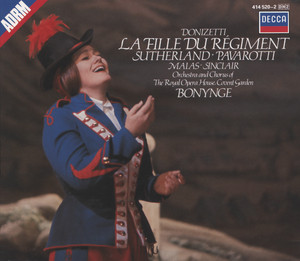 | La fille du régiment / Act 1: Ah! mes amis, quel jour de fête! | Gaetano Donizetti, Luciano Pavarotti, Orchestra of the Royal Opera House, Covent Garden, Richard Bonynge | E♭ Major | 3 | 5B | 82 BPM | |
 | Voices of Spring Waltz, Op. 410 | Orchestra of the Viennese Volksoper & Alfred Scholz | C Minor | 1 | 5A | 99 BPM | |
 | Tosca, Act III: E lucevan le stelle | Giacomo Puccini, Luciano Pavarotti, National Philharmonic Orchestra, Nicola Rescigno | B Minor | 2 | 10A | 80 BPM | |
 | Verdi: Messa da Requiem: III. Tuba mirum | Giuseppe Verdi, Riccardo Muti, Coro Del Teatro Alla Scala Di Milano, Orchestra Del Teatro Alla Scala, Milano | C Major | 2 | 8B | 114 BPM | |
 | Nessun Dorma! | Mario del Monaco | B♭ Major | 3 | 6B | 134 BPM | |
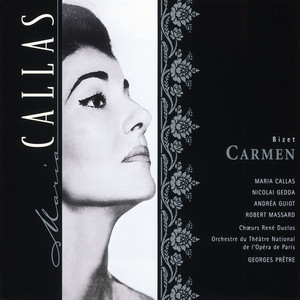 | Bizet: Carmen, WD 31, Act 1 Scene 4: No. 5, Havanaise, "L'amour est un oiseau rebelle" (Carmen, Chorus) | Georges Bizet, Maria Callas, Orchestre de l'Opéra National de Paris, Georges Prêtre, Orchestre du Théâtre National de l'Opéra Paris | D Major | 1 | 10B | 134 BPM |
- ISRC
- DEUM71203312
- Label
- L-M Records/RCA Records