- BPM
- 119
- Key
- D Minor
- Camelot
- 7A
Suite No. 4 In D: 2. Galliarde by Johann Hermann Schein, Collegium Terpsichore, Fritz Neumeyer Song Details
Johann Hermann Schein, Collegium Terpsichore, Fritz Neumeyer's ' "Suite No. 4 In D: 2. Galliarde" was released on its scheduled release date, January 1, 2005. With This song being less than two minutes long, at 1:56, we are fairly confident that this song is not explicit and is safe for all ages. Based on the duration of this song, this song duration is much smaller than the average song duration. The song is number 13 out of 35 in Danses de la Renaissance by Fritz Neumeyer. Going off of the ISRC code of this track, we detected that the origin of this track is from Germany. In terms of popularity, Suite No. 4 In D: 2. Galliarde is currently unknown. Since there is more of a neutral sound being played, this makes the track somewhat danceable.
BPM and Tempo
The tempo marking of Suite No. 4 In D: 2. Galliarde by Johann Hermann Schein, Collegium Terpsichore, Fritz Neumeyer is Moderato (at a moderate speed), since this song has a tempo of 119 BPM. With that information, we can conclude that the song has a moderate tempo. This song can go great with walking. The time signature for this track is 4/4.
Music Key
This song is in the music key of D Minor. Because this track belongs in the D Minor key, the camelot key is 7A. So, the perfect camelot match for 7A would be either 7A or 6B. While, a low energy boost can consist of either 7B or 8A. For moderate energy boost, you would use 4A and a high energy boost can either be 9A or 2A. However, if you are looking for a low energy drop, finding a song with a camelot key of 6A would be a great choice. Where 10A would give you a moderate drop, and 5A or 12A would be a high energy drop. Lastly, 10B allows you to change the mood.
Want to find the BPM and music key for other songs? Check out our BPM and Key Finder page!
- Popularity
- 0%
- Loudness
- -21.21 dB
- Acousticness
- 94%
- Danceability
- 58%
- Energy
- 9%
- Instrumentalness
- 14%
- Liveness
- 12%
- Loudness
- 65%
- Speechiness
- 4%
- Valence
- 43%
Recommendations
| Track | Artist | Key | Energy | Camelot | BPM | ||
|---|---|---|---|---|---|---|---|
 | Messe de Minuit, H. 9: Sanctus | Marc-Antoine Charpentier, Sébastien Daucé, Ensemble Corrrespondances, Jordan Mouaïssia, Etienne Bazola | C Major | 2 | 8B | 94 BPM | |
 | Sonata Sesta in F Major: II. Allemande | Philipp Heinrich Erlebach, L'Achéron, François Joubert-Caillet | F♯ Major | 2 | 2B | 116 BPM | |
 | Surrexit Christus hodie | Samuel Scheidt, Vox Luminis, Lionel Meunier | G Minor | 1 | 6A | 79 BPM | |
 | Magnificat in D Major, BWV 243: VI. Aria (Duetto) "Et misericordia" | Johann Sebastian Bach, Vox Luminis, Lionel Meunier, Jan Kullmann, Philippe Froeliger | A♭ Minor | 1 | 1A | 114 BPM | |
 | Sonata a tre, Op. 22 (Passacaglio in G minor): Introduzione - Parte I - Parte II - Parte III - Finale | Biagio Marini, Musica Antiqua Köln, Reinhard Goebel | F♯ Minor | 0 | 11A | 159 BPM | |
 | Musikalische Exequien, Op. 7, SWV 279-281: III. Canticum B. Simeonis "Herr, nun lässest Du Deinen Diener" | Heinrich Schütz, La Chapelle Royale, Philippe Herreweghe | G Minor | 1 | 6A | 78 BPM | |
 | Membra Jesu Nostri, BuxWV 75, Ad faciem: Aria "Salve, caput cruentatum" | Dietrich Buxtehude, Mena Guillon Ricercar Consort, Philippe Pierlot, Carlos Mena, Jeffrey Thompson, Matthias Vieweg | C Minor | 2 | 5A | 90 BPM | |
 | Il primo libro de madrigali a due, tre, quattro, e cinque voci, Op. 1: No. 9, Godere, e tacere - Instrumental Version | Barbara Strozzi, Accademia dell'Annunciata, Riccardo Doni | B Major | 1 | 1B | 170 BPM | |
 | Vater unser im Himmelreich | Samuel Eccard, Clematis | D♭ Minor | 0 | 12A | 113 BPM | |
 | Selig sind, die da geistlich arm sind | Johann Hermann Schein, Vox Luminis, Lionel Meunier | G Minor | 1 | 6A | 81 BPM | |
 | Non Somnos Requiem | Piffaro | D Major | 1 | 10B | 154 BPM | |
 | In Nomine No. 14, 'Reporte' | Christopher Tye, The Rose Consort Of Viols | D♭ Minor | 0 | 12A | 86 BPM | |
 | Jesu, meine Freude, BuxWV 60: II. Jesu, meine Freude | Dietrich Buxtehude, Vox Luminis, Lionel Meunier, Ensemble Masques, Olivier Fortin | E Minor | 1 | 9A | 77 BPM | |
 | Missa pro defunctis: VI. Agnus Dei | Johann Caspar Kerll, Vox Luminis, Lionel Meunier, L'Achéron | F Major | 1 | 7B | 169 BPM | |
 | Hymnen, Op. 140: IV. Ave Regina | Josef Rheinberger, Kammerchor Stuttgart, Ensemble Stuttgart, Frieder Bernius | D♭ Major | 1 | 3B | 69 BPM | |
 | Ich liege und schlafe | Athesinus Consort Berlin, Klaus-Martin Bresgott | A Major | 0 | 11B | 77 BPM | |
 | The Funeralls | Anthony Holborne, L'Achéron, François Joubert-Caillet | D Major | 0 | 10B | 84 BPM | |
 | Byrd: Mass for Four Voices - 04. Credo | William Byrd, Peter Phillips, The Tallis Scholars | F Minor | 2 | 4A | 88 BPM | |
 | Telemann: Tafelmusik, Pt. 3: Ouverture-Suite in B-Flat Major, TWV 55:B1: III. Allégresse. Vite - Meno mosso | Georg Philipp Telemann, Amsterdam Baroque Orchestra, Ton Koopman, Ku Ebbinge, Michel Henry, Monica Huggett, Alison Bury | F♯ Minor | 2 | 11A | 113 BPM | |
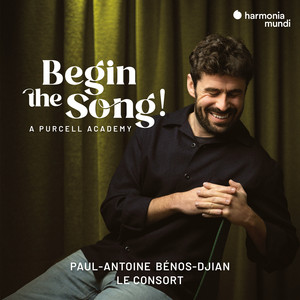 | Fly, Bold Rebellion, Z. 324: No. 7, Be welcome then, great Sir | Henry Purcell, Paul-Antoine Benos-Djian, Le Consort | D♭ Major | 2 | 3B | 109 BPM | |
 | Stuck: Les Festes bolonnoises (from "Cantates françaises et italiennes", Book 4, No. 5): No. 1, Prélude | Jean-Baptiste Stuck, Gérard Lesne, Il Seminario Musicale | A♭ Major | 1 | 4B | 119 BPM | |
 | Amantissime Jesu (Sinfonia) | Pascuale Carrozza, Cappella Mediterranea, Leonardo García-Alarcón | B♭ Minor | 0 | 3A | 110 BPM | |
 | Lamentations: 10. O vos omnes | Tomás Luis de Victoria, Michael Noone, Ensemble Plus Ultra | A Minor | 1 | 8A | 138 BPM | |
 | Vidimus Stellam: III. Hodie Christus Natus Est | Kevin Siegfried, The Byrd Ensemble, Markdavin Obenza | D Major | 1 | 10B | 69 BPM | |
 | Christ lag in Todesbanden, BWV 4: I. Sinfonia | Johann Sebastian Bach, Sébastien Daucé, Ensemble Correspondances | E Minor | 2 | 9A | 178 BPM |
- ISRC
- DEF056000452
- Label
- L-M Records/RCA Records