- BPM
- 58
- Key
- G Major
- Camelot
- 9B
Strauss, R: Aus Italien, Op. 16: I. Auf der Campagna by Richard Strauss, Rudolf Kempe, Staatskapelle Dresden Song Details
"Strauss, R: Aus Italien, Op. 16: I. Auf der Campagna" by Richard Strauss, Rudolf Kempe, Staatskapelle Dresden had its release date on January 1, 2013. Since This song is still less than 10 minute long, it is still considered a pretty long duration song compared to the average song length. This song does not appear to be explicit due to the lack of the "E" tag. There are a total of 103 in the song's album "Strauss: Complete Orchestral Works". In this album, this song's track order is #64. Furthermore, we believe that the track originated from United Kingdom. Strauss, R: Aus Italien, Op. 16: I. Auf der Campagna is not that popular right now. In our opinion, the overall tone is not very danceable and projects negative sounds, such as being sad, depressed, or angry.
BPM and Tempo
With Strauss, R: Aus Italien, Op. 16: I. Auf der Campagna by Richard Strauss, Rudolf Kempe, Staatskapelle Dresden having a BPM of 58 with a half-time of 29 BPM and a double-time of 116 BPM, we would consider this track to have a Lento (slowly) tempo marking. Because of this, we believe that the song has an overall slow tempo. The time signature for this track is 4/4.
Music Key
This song has a musical key of G Major. Or for those who are familiar with the camelot wheel, this song has a camelot key of 9B. So, the perfect camelot match for 9B would be either 9B or 10A. While, 10B can give you a low energy boost. For moderate energy boost, you would use 6B and a high energy boost can either be 11B or 4B. Though, if you want a low energy drop, you should looking for songs with either a camelot key of 9A or 8B will give you a low energy drop, 12B would be a moderate one, and 7B or 2B would be a high energy drop. Lastly, 6A allows you to change the mood.
Want to find the BPM and music key for other songs? Check out our BPM and Key Finder page!
- Popularity
- 1%
- Loudness
- -16.823 dB
- Acousticness
- 95%
- Danceability
- 6%
- Energy
- 13%
- Instrumentalness
- 91%
- Liveness
- 12%
- Loudness
- 72%
- Speechiness
- 4%
- Valence
- 3%
Recommendations
| Track | Artist | Key | Energy | Camelot | BPM | ||
|---|---|---|---|---|---|---|---|
 | Die Frau ohne Schatten, Op. 65, TrV 234, Act I: Licht überm See (Live) | Richard Strauss, Frankfurter Opern- und Museumsorchester, Tanja Ariane Baumgartner, Dietrich Volle, Sebastian Weigle | B Major | 2 | 1B | 132 BPM | |
 | Salome, Op.54 / Scene 4: "Ah! Ich habe deinen Mund geküsst, Jochanaan" | Richard Strauss, Cheryl Studer, Horst Hiestermann, Orchester der Deutschen Oper Berlin, Giuseppe Sinopoli | D♭ Major | 1 | 3B | 85 BPM | |
 | String Quartet No. 2 in D Major: III. Notturno: Andante | Alexander Borodin, Budapest Haydn Quartet | A Major | 1 | 11B | 89 BPM | |
 | Tríptico | Gabriel Andrés Gallegos | G Major | 2 | 9B | 140 BPM | |
 | 3 Pieces in Old Style: No. 1, Aria | Krzysztof Penderecki, Warsaw Philharmonic Chamber Orchestra, Antoni Wit | B♭ Major | 0 | 6B | 75 BPM | |
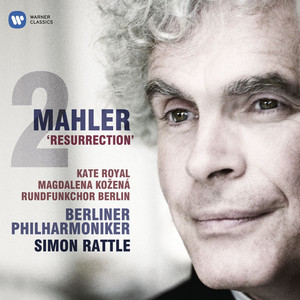 | Mahler: Symphony No. 2 in C Minor "Resurrection": V. (g) Mit Aufschwung aber nicht eilen. "O Schmerz !" | Gustav Mahler, Sir Simon Rattle, Kate Royal, Magdalena Kozená, Rundfunkchor Berlin, Berliner Philharmoniker | E♭ Major | 4 | 5B | 80 BPM | |
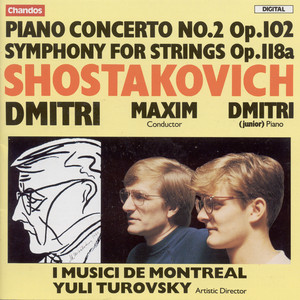 | Piano Concerto No. 2 in F Major, Op. 102: III. Allegro | Dmitri Shostakovich, I Musici de Montréal, Maxim Shostakovich | F Major | 3 | 7B | 164 BPM | |
 | Vier letzte Lieder, TrV 296: 2. September | Richard Strauss, Jessye Norman, Gewandhausorchester, Kurt Masur | D Major | 1 | 10B | 153 BPM | |
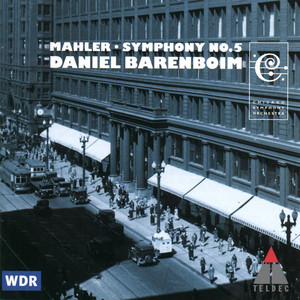 | Mahler: Symphony No. 5 in C-Sharp Minor: IV. Adagietto. Sehr langsam | Gustav Mahler, Daniel Barenboim, Chicago Symphony Orchestra | F Major | 1 | 7B | 82 BPM | |
 | Pavane pour une infante défunte | Maurice Ravel, Richard Sebring, Boston Pops Orchestra, John Williams | G Major | 1 | 9B | 93 BPM | |
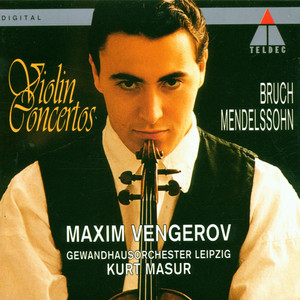 | Mendelssohn: Violin Concerto in E Minor, Op. 64, MWV O14: II. Andante | Felix Mendelssohn, Maxim Vengerov, Kurt Masur, Gewandhausorchester | C Major | 1 | 8B | 96 BPM | |
 | Symphony No.8 In G, Op.88, B. 163: 4. Allegro ma non troppo | Antonín Dvořák, Berliner Philharmoniker, Rafael Kubelík | G Major | 2 | 9B | 141 BPM | |
 | Carmen Suite No. 1: 3. Intermezzo | Georges Bizet, Orchestre de Paris, Semyon Bychkov | B♭ Major | 0 | 6B | 74 BPM | |
 | Cäcilie, Op. 27 No. 2 (Version with Orchestra) | Richard Strauss, Jessye Norman, Gewandhausorchester, Kurt Masur | E♭ Minor | 3 | 2A | 97 BPM | |
 | Poulenc: Concerto for Two Pianos in D Minor, FP 61: I. Allegro ma non troppo | Francis Poulenc, James Conlon, Rotterdam Philharmonic Orchestra | E♭ Major | 1 | 5B | 103 BPM | |
 | Elektra: Ii. Allein! Weh, ganz allein | Hugo von Hofmannsthal, Richard Strauss, Laila Andersson-palme, Royal Swedish Opera Orchestra, Siegfried Köhler | D♭ Major | 5 | 3B | 118 BPM | |
 | Götterdämmerung, WWV 86D, Prologue: Vorspiel | Richard Wagner, Hong Kong Philharmonic Orchestra, Jaap Van Zweden | B Major | 0 | 1B | 69 BPM | |
 | The Music Makers, Op. 69: II. We Are the music makers | Edward Elgar, Sarah Connolly, Greg Beardsell, Bournemouth Symphony Chorus, Bournemouth Symphony Orchestra, Simon Wright | B♭ Minor | 0 | 3A | 79 BPM | |
 | Nabucco: Overture | Giuseppe Verdi, Berliner Philharmoniker, Claudio Abbado | F Major | 2 | 7B | 100 BPM | |
| Ruhe, meine Seele, Op. 27 No. 1 (Version with Orchestra) | Richard Strauss, Jessye Norman, Gewandhausorchester, Kurt Masur | D Minor | 0 | 7A | 90 BPM | |
![Etudes symphoniques (Symphonic Etudes), Op. 13, Adagio and Allegro brillante: Variation 11 [arr. P.I. Tchaikovsky for orchestra] by Robert Schumann, Seattle Symphony Orchestra, Gerard Schwarz](https://i.scdn.co/image/ab67616d00001e029057c124b554163ef1edd618) | Etudes symphoniques (Symphonic Etudes), Op. 13, Adagio and Allegro brillante: Variation 11 [arr. P.I. Tchaikovsky for orchestra] | Robert Schumann, Seattle Symphony Orchestra, Gerard Schwarz | A Minor | 0 | 8A | 104 BPM | |
 | Symphony No. 3 in F Major, Op. 90: III. Poco allegretto | Johannes Brahms, Berliner Philharmoniker, Claudio Abbado | C Minor | 0 | 5A | 101 BPM | |
 | Concerto for Oboe and Small Orchestra in D Major, Op. 144: I. Allegro moderato | Richard Strauss, François Leleux, Swedish Radio Symphony Orchestra, Daniel Harding | D Major | 2 | 10B | 133 BPM | |
 | Notturno for Strings and Harp | Arnold Schoenberg, Daniel Hope, Zürcher Kammerorchester, Jane Berthe | A♭ Major | 1 | 4B | 75 BPM | |
 | Tchaikovsky: Symphony No. 5 in E Minor, Op. 64: III. Valse. Allegro moderato | Pyotr Ilyich Tchaikovsky, Daniel Barenboim, Chicago Symphony Orchestra | A Major | 1 | 11B | 146 BPM |
- ISRC
- GBAYC1201732
- Label
- L-M Records/RCA Records