- BPM
- 80
- Key
- E Minor
- Camelot
- 9A
Norfolk Rhapsody No. 1 in E minor by Ralph Vaughan Williams, New Queen's Hall Orchestra, Barry Wordsworth Song Details
"Norfolk Rhapsody No. 1 in E minor" by Ralph Vaughan Williams, New Queen's Hall Orchestra, Barry Wordsworth had its release date on January 1, 1994. This song appears to be safe for all ages as it is not explicit. This song is part of Vaughan Williams: Fantasia on a Theme by Thomas Tallis/The Lark Ascending etc. by Ralph Vaughan Williams, Hagai Shaham, New Queen's Hall Orchestra, Barry Wordsworth. The song's track number on the album is #2 out of 6 tracks. Based on our data, United Kingdom was the country where this track was produced or recorded. Norfolk Rhapsody No. 1 in E minor is below average in popularity right now. In our opinion, the overall tone is not very danceable and projects negative sounds, such as being sad, depressed, or angry.
BPM and Tempo
Since Norfolk Rhapsody No. 1 in E minor by Ralph Vaughan Williams, New Queen's Hall Orchestra, Barry Wordsworth has a tempo of 80 beats per a minute, the tempo markings of this song would be Andante (at a walking pace). With Norfolk Rhapsody No. 1 in E minor being at 80 BPM, the half-time would be 40 BPM with a double-time of 160 BPM.In addition, we consider the tempo speed to be pretty slow for this song. The time signature for this track is 4/4.
Music Key
This song has a musical key of E Minor. Which also means that the camelot key for this song is 9A. So, the perfect camelot match for 9A would be either 9A or 8B. While, a low energy boost can consist of either 9B or 10A. For moderate energy boost, you would use 6A and a high energy boost can either be 11A or 4A. However, if you are looking for a low energy drop, finding a song with a camelot key of 8A would be a great choice. Where 12A would give you a moderate drop, and 7A or 2A would be a high energy drop. Lastly, 12B allows you to change the mood.
Want to find the BPM and music key for other songs? Check out our BPM and Key Finder page!
- Popularity
- 25%
- Loudness
- -25.837 dB
- Acousticness
- 92%
- Danceability
- 8%
- Energy
- 4%
- Instrumentalness
- 67%
- Liveness
- 32%
- Loudness
- 57%
- Speechiness
- 4%
- Valence
- 4%
Recommendations
| Track | Artist | Key | Energy | Camelot | BPM | ||
|---|---|---|---|---|---|---|---|
 | Handel in the Strand, RMTB 2a | Percy Grainger, Richard Hickox, BBC Philharmonic | G Major | 1 | 9B | 112 BPM | |
 | Prelude and Fugue in D Major, P. 158: Fugue. Allegro (After J.S. Bach's BWV 532) | Ottorino Respighi, Seattle Symphony Orchestra, Gerard Schwarz | D Major | 1 | 10B | 99 BPM | |
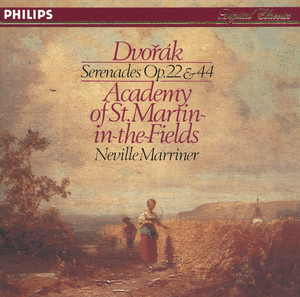 | Serenade for Strings, Op. 22, B. 52: I. Moderato | Antonín Dvořák, Academy of St. Martin in the Fields, Sir Neville Marriner | C Major | 0 | 8B | 126 BPM | |
 | Capriol Suite: 1. Basse-danse | Peter Warlock, Academy of St. Martin in the Fields, Nicholas Kraemer, Sir Neville Marriner | D Minor | 2 | 7A | 133 BPM | |
 | Scottish Fantasy for Violin and Orchestra, Op. 46: II. Scherzo: Allegro | Max Bruch, Joshua Bell, Academy of St. Martin in the Fields | G Major | 2 | 9B | 115 BPM | |
 | 3 Portraits From England Of Elizabeth: Poet | RTE Concert Orchestra, Ralph Vaughan Williams | A Minor | 0 | 8A | 87 BPM | |
 | Piano Concerto in A Minor, Op. 17: II. Romanza: Andante | Ignacy Jan Paderewski, Janina Fialkowska, Polish National Radio Symphony Orchestra, Antoni Wit | C Major | 0 | 8B | 111 BPM | |
 | Symphony No. 4 in D Minor: II. Andante cantabile | Florence Beatrice Price, Philadelphia Orchestra, Yannick Nézet-Séguin | B♭ Major | 0 | 6B | 63 BPM | |
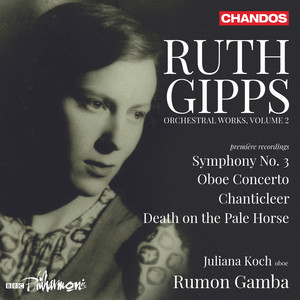 | Oboe Concerto, Op. 20: II. Andante | Ruth Gipps, Juliana Koch, BBC Philharmonic, Rumon Gamba | F Minor | 0 | 4A | 67 BPM | |
 | String Symphony No. 5 in B-Flat Major, MWV N5: II. Andante | Felix Mendelssohn, English String Orchestra, William Boughton | G Major | 0 | 9B | 83 BPM | |
 | Serenade for Strings in E Minor, Op. 20: 1. Allegro piacevole | Edward Elgar, Academy of St. Martin in the Fields, Sir Neville Marriner | E Minor | 1 | 9A | 83 BPM | |
 | Suk: Serenade for Strings in E-Flat Major, Op. 6: IV. Allegro giocoso ma non troppo presto | Josef Suk, Christopher Warren-Green, Andrew Shulman, Lyn Fletcher, Roger Chase, Nigel Warren-Green, London Chamber Orchestra | B♭ Major | 2 | 6B | 106 BPM | |
 | Sospiri, Op. 70 | Edward Elgar, English Chamber Orchestra, Osian Ellis, Paul Goodwin | F Major | 0 | 7B | 113 BPM | |
 | Brook Green Suite: II. Air | Gustav Holst, English Sinfonia, Howard Griffiths | E♭ Major | 0 | 5B | 128 BPM | |
 | Symphony No. 5 in D Major: III. Romanza: Lento | Ralph Vaughan Williams, Bournemouth Symphony Orchestra, Kees Bakels | D♭ Minor | 1 | 12A | 92 BPM | |
 | Suite No. 1, Op. 13: III. Nocturne | New Zealand Symphony Orchestra, Jules Massenet | A♭ Major | 0 | 4B | 85 BPM | |
 | V. Pieds-en-l'air | Peter Warlock, Metamorphosen Berlin, Wolfgang Emanuel Schmidt | G Major | 0 | 9B | 85 BPM | |
 | Serenade for Strings: II. Romance | William Lloyd Webber, Richard Hickox, City of London Sinfonia | D Major | 1 | 10B | 83 BPM | |
 | Danses for Harp & Strings, L. 103: Danse profane | Claude Debussy, Xavier De Maistre, Wiener Philharmoniker | D Major | 1 | 10B | 113 BPM | |
 | The Planets, Op. 32: III. Mercury, the Winged Messenger | Gustav Holst, Orchestre Symphonique de Montréal, Charles Dutoit | G Major | 0 | 9B | 76 BPM | |
 | Pelleas and Melisande Suite, Op. 46, JS 147: V. Pastorale | Jean Sibelius, Turku Philharmonic Orchestra, Leif Segerstam | A♭ Major | 0 | 4B | 94 BPM | |
 | Suite bergamasque, L. 75 (Arr. for Orchestra): I. Prélude | Claude Debussy, フランス国立リヨン管弦楽団, 準・メルクル | F Major | 1 | 7B | 90 BPM | |
 | L'Horloge de Flore: 3h - Galant de jour | Jean Françaix, Albrecht Mayer, Academy of St. Martin in the Fields, Mathias Mönius | A Minor | 1 | 8A | 90 BPM | |
 | Mississippi, "A Journey in Tones": III Old Creole Days | Ferde Grofé, Bournemouth Symphony Orchestra, William Stromberg | A♭ Major | 0 | 4B | 98 BPM | |
 | Petite suite de concert, Op. 77: II. Demande et reponse | Samuel Coleridge-Taylor, Chicago Sinfonietta, Paul Freeman | G Major | 0 | 9B | 90 BPM |
- ISRC
- GBF079211062
- Label
- L-M Records/RCA Records