- BPM
- 89
- Key
- C Minor
- Camelot
- 5A
Funeral Sentences For Queen Mary: Funeral March by Timothy Brown, Ron Bryans, Tim Handley, Nicholas Parker, Marshall Marcus, Nicholas Parker, Tim Handley, Choir of Clare College, Cambridge, Robert Howes, Liz Kenny, Andrew Manze, Jonathan Brown, Jenny Ward-Clarke, Henry Purcell, Crispian Steele-Perkins, William Carter, Mark Bennet, Keri Dexter, Jan Schlapp, Micheal Laird, Baroque Brass Of London Song Details
"Funeral Sentences For Queen Mary: Funeral March" by Timothy Brown, Ron Bryans, Tim Handley, Nicholas Parker, Marshall Marcus, Nicholas Parker, Tim Handley, Choir of Clare College, Cambridge, Robert Howes, Liz Kenny, Andrew Manze, Jonathan Brown, Jenny Ward-Clarke, Henry Purcell, Crispian Steele-Perkins, William Carter, Mark Bennet, Keri Dexter, Jan Schlapp, Micheal Laird, Baroque Brass Of London had its release date on December 20, 2006. The duration of This song is about two minutes long, specifically at 2:05. This song does not appear to have any foul language. Funeral Sentences For Queen Mary: Funeral March's duration is considered a little bit shorter than the average duration of a typical track. There are a total of 13 in the song's album "Sacred Music, Dioclesian Songs Part: 1". In this album, this song's track order is #8. Furthermore, we believe that the track originated from Netherlands. Funeral Sentences For Queen Mary: Funeral March is not that popular right now. In our opinion, the overall tone is not very danceable and projects negative sounds, such as being sad, depressed, or angry.
BPM and Tempo
With Funeral Sentences For Queen Mary: Funeral March by Timothy Brown, Ron Bryans, Tim Handley, Nicholas Parker, Marshall Marcus, Nicholas Parker, Tim Handley, Choir of Clare College, Cambridge, Robert Howes, Liz Kenny, Andrew Manze, Jonathan Brown, Jenny Ward-Clarke, Henry Purcell, Crispian Steele-Perkins, William Carter, Mark Bennet, Keri Dexter, Jan Schlapp, Micheal Laird, Baroque Brass Of London having a BPM of 89 with a half-time of 44 BPM and a double-time of 178 BPM, we would consider this track to have a Andante (at a walking pace) tempo marking. Because of this, we believe that the song has an overall slow tempo. Looking at the BPM of this song, this song might go great with yoga or pilates. The time signature for this track is 4/4.
Music Key
This song has a musical key of C Minor. Which also means that the camelot key for this song is 5A. So, the perfect camelot match for 5A would be either 5A or 4B. While, a low energy boost can consist of either 5B or 6A. For moderate energy boost, you would use 2A and a high energy boost can either be 7A or 12A. However, if you are looking for a low energy drop, finding a song with a camelot key of 4A would be a great choice. Where 8A would give you a moderate drop, and 3A or 10A would be a high energy drop. Lastly, 8B allows you to change the mood.
Want to find the BPM and music key for other songs? Check out our BPM and Key Finder page!
- Popularity
- 14%
- Loudness
- -25.601 dB
- Acousticness
- 95%
- Danceability
- 30%
- Energy
- 16%
- Instrumentalness
- 96%
- Liveness
- 10%
- Loudness
- 57%
- Speechiness
- 5%
- Valence
- 11%
Recommendations
| Track | Artist | Key | Energy | Camelot | BPM | ||
|---|---|---|---|---|---|---|---|
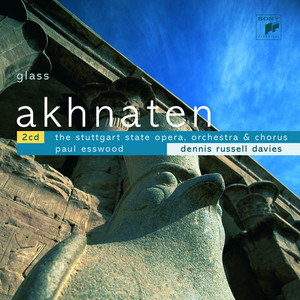 | Akhnaten: Act I, Scene 1: Funeral of Amenhotep III | Philip Glass, Cornelius Hauptmann, Paul Esswood, Dennis Russell Davies, Stuttgart State Opera Orchestra, Chor der Staatsoper Stuttgart, Helmut Holzapfel | D♭ Minor | 5 | 12A | 178 BPM | |
 | Fantasia Upon One Note | Jordi Savall, Henry Purcell | D♭ Major | 1 | 3B | 136 BPM | |
 | Romeo and Juliet, Op. 64, Act I: No. 13, Dance of the Knights | Sergei Prokofiev, Orchestre Symphonique de Montréal, Charles Dutoit | A Minor | 1 | 8A | 95 BPM | |
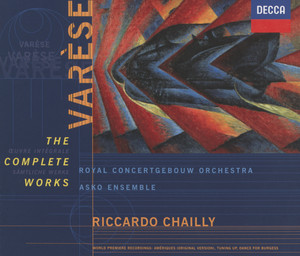 | Poème Electronique | Edgard Varèse | A♭ Major | 0 | 4B | 70 BPM | |
 | VII. Finale | Igor Stravinsky, Brussels Philharmonic, Alexander Rahbari | D♭ Minor | 3 | 12A | 81 BPM | |
| Akhnaten: Act I, Prelude: Refrain - Verse 1 - Verse 2 | Philip Glass, Dennis Russell Davies | F Major | 1 | 7B | 101 BPM | |
 | Symphony No. 7 in C Major, Op. 105: Adagio - | Jean Sibelius, BBC Symphony Orchestra, Serge Koussevitzky | C Major | 1 | 8B | 88 BPM | |
 | Miserere | Timothy Brown, Andrew Manze, Tim Handley, Liz Kenny, Gregorio Allegri, William Carter, Choir of Clare College, Cambridge, Jonathan Brown, Marshall Marcus, Jan Schlapp, Nicholas Parker, Jenny Ward-Clarke | G Minor | 0 | 6A | 77 BPM | |
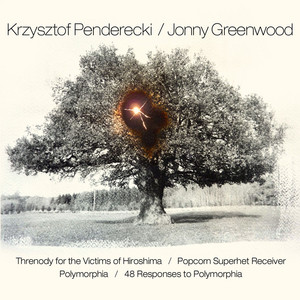 | Penderecki: Threnody for the Victims of Hiroshima | Krzysztof Penderecki, Jonny Greenwood, AUKSO Orchestra | F Minor | 2 | 4A | 85 BPM | |
 | Don Giovanni, K.527 / Act 2: "Don Giovanni, a cenar teco m'invitasti" | Wolfgang Amadeus Mozart, Robert Lloyd, Thomas Allen, Simone Alaimo, Ambrosian Opera Chorus, Academy of St. Martin in the Fields, Sir Neville Marriner | B♭ Major | 3 | 6B | 78 BPM | |
 | Second livre de pièces de clavecin, Ordre VI: No. 5, Les baricades mistérieuses | François Couperin, Blandine Verlet | A Major | 3 | 11B | 86 BPM | |
 | Funeral Sentences for the death of Queen Mary II: The Queen's Funeral March (Procession) | Henry Purcell, Baroque Brass Of London, David Hill | B♭ Minor | 2 | 3A | 85 BPM | |
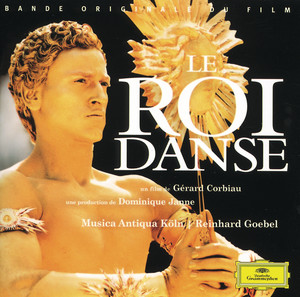 | Les Folies d'Espagne | Jean-Baptiste Lully, Musica Antiqua Köln, Reinhard Goebel | D♭ Minor | 0 | 12A | 108 BPM | |
 | Funeral Sentences For Queen Mary: In The Midst Of Life | Timothy Brown, William Carter, Baroque Brass Of London, Jan Schlapp, Mark Bennet, Keri Dexter, Tim Handley, Nicholas Parker, Marshall Marcus, Ron Bryans, Robert Howes, Andrew Manze, Liz Kenny, Micheal Laird, Jonathan Brown, Choir of Clare College, Cambridge, Nicholas Parker, Tim Handley, Jenny Ward-Clarke, Henry Purcell, Crispian Steele-Perkins | C Minor | 0 | 5A | 88 BPM | |
 | Metropolis, Op. 29, Act I "Auftakt": Metropolis Thema | Gottfried Huppertz, Deutsches Symphonie-Orchester Berlin, Frank Strobel | D♭ Major | 1 | 3B | 177 BPM | |
 | The Libertine, or The Force of Love, Z.600: Prelude | Henry Purcell, Academy of Ancient Music, Christopher Hogwood | F Major | 2 | 7B | 120 BPM | |
 | 5 Military Marches, Op. 39, "Pomp and Circumstance": Military March No. 4 in G Major, Op. 39, "Pomp and Circumstance" | Edward Elgar, Slovak Radio Symphony Orchestra, Adrian Leaper | F Major | 1 | 7B | 77 BPM | |
 | War Requiem, Op. 66: i. Requiem Aeternam - Requiem aeternam | Benjamin Britten, Gianandrea Noseda, London Symphony Chorus, London Symphony Orchestra | F Major | 0 | 7B | 133 BPM | |
 | Stravinsky: The Rite of Spring, Pt. 1 "Adoration of the Earth": Introduction - Augurs of Spring - Dances of the Young Girls - Ritual of Abduction | Igor Stravinsky, Sir Simon Rattle, City Of Birmingham Symphony Orchestra | A Major | 1 | 11B | 103 BPM | |
![Il barbiere di Siviglia (the Barber of Seville), Act I: Cavatina. Saper bramate [Count Almaviva, Rosina] by Giovanni Paisiello, Dénes Gulyás, Krisztina Laki, József Gregor, Istvan Gati, Sandor Sòlyom-Nagy, Csaba Reti, Miklos Mersei, Gabor Vaghelyi, Attila Fulop, Hungarian State Orchestra, Ádám Fischer](https://i.scdn.co/image/ab67616d00001e02046586fc1e779d701e531127) | Il barbiere di Siviglia (the Barber of Seville), Act I: Cavatina. Saper bramate [Count Almaviva, Rosina] | Giovanni Paisiello, Dénes Gulyás, Krisztina Laki, József Gregor, Istvan Gati, Sandor Sòlyom-Nagy, Csaba Reti, Miklos Mersei, Gabor Vaghelyi, Attila Fulop, Hungarian State Orchestra, Ádám Fischer | B♭ Major | 1 | 6B | 102 BPM | |
 | Symphony No. 2 "Resurrection": Ia. Allegro maestoso - Live | Gustav Mahler, New York Philharmonic, Leonard Bernstein | C Minor | 1 | 5A | 85 BPM | |
 | Requiem, K. 626 (Ed. Beyer/Levin): IIIc. Rex tremendae - Live | Wolfgang Amadeus Mozart, Berliner Philharmoniker, Claudio Abbado, Swedish Radio Choir, Kay Johannsen | G Minor | 3 | 6A | 108 BPM | |
 | Symphony No. 5: IV. Adagietto. Sehr langsam | Gustav Mahler, Wiener Philharmoniker, Pierre Boulez | F Major | 0 | 7B | 87 BPM | |
 | Armide: Passacaille | Jean-Baptiste Lully, Véronique Gens/Les Talens Lyriques/Christophe Rousset, Christophe Rousset, Les Talens Lyriques | F Minor | 1 | 4A | 122 BPM | |
 | The East Wind (A) | Steve Davies, William McGillivray, Barbara Courtney-King, Robert Howes | E♭ Major | 4 | 5B | 101 BPM |
- ISRC
- NLN580519607
- Label
- L-M Records/RCA Records