- BPM
- 121
- Key
- D Major
- Camelot
- 10B
Les Contes d'Hoffmann / Act 4: Entr'acte (Barcarolle) by Jacques Offenbach, Staatskapelle Dresden, Silvio Varviso Song Details
"Les Contes d'Hoffmann / Act 4: Entr'acte (Barcarolle)" by Jacques Offenbach, Staatskapelle Dresden, Silvio Varviso had its release date on March 12, 1985. With this song being around four minutes long, at 3:50, the duration of this song is pretty average compared to other songs. This track is safe for children and doesn't appear to contain any foul language, since the "Explicit" tag was not present in this track. There are a total of 9 in the song's album "Overtures & Intermezzi". In this album, this song's track order is #9. Furthermore, we believe that the track originated from Netherlands. Based on our statistics, Les Contes d'Hoffmann / Act 4: Entr'acte (Barcarolle)'s popularity is average in popularity right now. In our opinion, the overall tone is not very danceable and projects negative sounds, such as being sad, depressed, or angry.
BPM and Tempo
With Les Contes d'Hoffmann / Act 4: Entr'acte (Barcarolle) by Jacques Offenbach, Staatskapelle Dresden, Silvio Varviso having a BPM of 121 with a half-time of 60 BPM and a double-time of 242 BPM, we would consider this track to have a Allegro (fast, quick, and bright) tempo marking. Because of this, we believe that the song has an overall fast tempo. Looking at the BPM of this song, this song might go great with walking. The time signature for this track is 5/4.
Music Key
This song is in the music key of D Major. Or for those who are familiar with the camelot wheel, this song has a camelot key of 10B. So, the perfect camelot match for 10B would be either 10B or 11A. While, 11B can give you a low energy boost. For moderate energy boost, you would use 7B and a high energy boost can either be 12B or 5B. Though, if you want a low energy drop, you should looking for songs with either a camelot key of 10A or 9B will give you a low energy drop, 1B would be a moderate one, and 8B or 3B would be a high energy drop. Lastly, 7A allows you to change the mood.
Want to find the BPM and music key for other songs? Check out our BPM and Key Finder page!
- Popularity
- 41%
- Loudness
- -33.161 dB
- Acousticness
- 90%
- Danceability
- 18%
- Energy
- 2%
- Instrumentalness
- 15%
- Liveness
- 12%
- Loudness
- 45%
- Speechiness
- 4%
- Valence
- 6%
Recommendations
| Track | Artist | Key | Energy | Camelot | BPM | ||
|---|---|---|---|---|---|---|---|
 | The Carnival of the Animals, R. 125: XIII. The Swan | Camille Saint-Saëns, Sol Gabetta, Irène Timacheff-Gabetta | D♭ Major | 0 | 3B | 71 BPM | |
 | Carmen, Opera Suite No. 2: IV. Chanson du Toreador (Act 2) | London Festival Orchestra, Alfred Scholz | F Major | 1 | 7B | 113 BPM | |
 | Dvořák: 7 Gipsy Melodies, Op. 55, B. 104: No. 4, Als die alte Mutter (Transcr. for Trumpet and Orchestra) | Antonín Dvořák, Tine Thing Helseth, Eivind Aadland, Royal Liverpool Philharmonic Orchestra | D Major | 1 | 10B | 92 BPM | |
 | Sheep May Safely Graze | Johann Sebastian Bach, Leon Fleisher | B♭ Major | 0 | 6B | 98 BPM | |
 | Nabucco / Act 3: "Va, pensiero, sull'ali dorate" | Giuseppe Verdi, Chor der Staatsoper Dresden, Staatskapelle Dresden, Silvio Varviso | D♭ Major | 1 | 3B | 77 BPM | |
 | Peer Gynt Suite No.2 op. 55 Abduction and Ingrid's Lament Allegro furioso-Andante doloroso) | Academy of St. Martin in the Fields | G Minor | 0 | 6A | 133 BPM | |
 | Bruch: Scottish Fantasy, Op. 46: I. (b) Adagio cantabile | Max Bruch, Itzhak Perlman, Jesús López-Cobos, New Philharmonia Orchestra | E♭ Minor | 0 | 2A | 59 BPM | |
 | Serse, HWV 40: Largo "Ombra mai fu" | George Frideric Handel, Eugene Ormandy, Philadelphia Orchestra | G Major | 1 | 9B | 82 BPM | |
 | Mozart: Piano Concerto No. 21 in C Major, K. 467: II. Andante | Wolfgang Amadeus Mozart, Jonathan Biss, Orpheus Chamber Orchestra | F Major | 0 | 7B | 183 BPM | |
 | Valse triste, Op. 44 No. 1 | Jean Sibelius, Gothenburg Symphony Orchestra, Neeme Järvi | D♭ Major | 0 | 3B | 67 BPM | |
 | Cello Sonata in G Minor, Op. 65: III. Largo | Frédéric Chopin, Emmanuelle Bertrand, Pascal Amoyel | B♭ Major | 0 | 6B | 89 BPM | |
 | Shostakovich / Arr. Atovmyan: Suite from the Gadfly, Op. 97a: VIII. Romance | Dmitri Shostakovich, Tasmin Little, Piers Lane | C Major | 1 | 8B | 175 BPM | |
 | Gaîté parisienne (Arr. Rosenthal): No. 23, Barcarolle (From Les contes d'Hoffmann) | Jacques Offenbach, Berliner Philharmoniker, Herbert von Karajan | D Major | 1 | 10B | 116 BPM | |
 | Rosas del sur, Op. 388 | Orquesta De Conciertos Vienesa, Alfred Scholz | F Major | 4 | 7B | 189 BPM | |
 | Après un rêve, Op. 7, No. 1 | Gabriel Fauré, Yo-Yo Ma | F Minor | 0 | 4A | 115 BPM | |
 | Offenbach: Les contes d'Hoffmann, Act 4: Barcarolle. "Belle nuit, ô nuit d'amour" (Version for Two Trumpets & Orchestra) | Jacques Offenbach, Lucienne Renaudin Vary, Erik Truffaz, Roberto Rizzi Brignoli, Orchestre National de Lille | D Major | 1 | 10B | 84 BPM | |
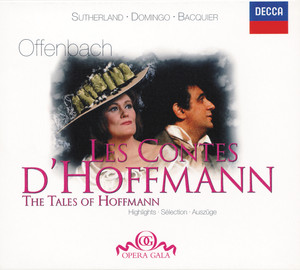 | Les Contes d'Hoffmann / Act 2: "Belle nuit, ô nuit d'amour" | Jacques Offenbach, Dame Joan Sutherland, Huguette Tourangeau, Chorus Pro Arte Lausanne Du Brassus, Radio Suisse Romande Chorus, Orchestre de la Suisse Romande, Richard Bonynge | D Major | 1 | 10B | 82 BPM | |
 | Ancient Airs & Dances, Suite III, P. 172: I. Italiana (Anonymous) | Ottorino Respighi, Filarmonica della Scala, Riccardo Chailly | B♭ Major | 1 | 6B | 172 BPM | |
 | Estudiantina, Op. 191 | Émile Waldteufel, Slovak State Philharmonic Orchestra, Alfred Walter | D Major | 2 | 10B | 99 BPM | |
 | L’arlésienne Suite No. 2 (Arr. E. Guiraud): III. Menuet | Georges Bizet, Orquestra Simfònica de Barcelona i Nacional de Catalunya, Pablo González | E♭ Major | 0 | 5B | 79 BPM | |
 | Brahms: 16 Waltzes, Op. 39: No. 15 in A-Flat Major | Johannes Brahms, Moura Lympany | A♭ Major | 1 | 4B | 102 BPM | |
 | Peer Gynt Suite No. 1, Op. 46. Incidental music to Peer Gynt by Ibsen: I. Morning Mood | Edvard Grieg, WDR Sinfonieorchester Köln, Eivind Aadland | B♭ Major | 0 | 6B | 68 BPM | |
 | El bello Danubio azul, Op. 314 | Orquesta De Conciertos Vienesa, Alfred Scholz | D Major | 2 | 10B | 95 BPM | |
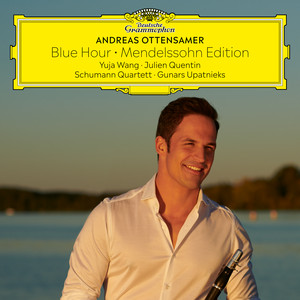 | Lieder ohne Worte, Op. 62: No. 6 Allegretto grazioso "Frühlingslied" (Arr. Ottensamer for Clarinet and Strings) | Felix Mendelssohn, Andreas Ottensamer, Schumann Quartett, Gunars Upatnieks | A Major | 1 | 11B | 99 BPM | |
 | Serenade No. 13 in G Major, K. 525, "Eine kleine Nachtmusik": II. Romance | Wolfgang Amadeus Mozart, Capella Istropolitana, Wolfgang Sobotka | C Major | 0 | 8B | 143 BPM |
- ISRC
- NLA508330109
- Label
- L-M Records/RCA Records