- BPM
- 66
- Key
- A Major
- Camelot
- 11B
It was a Lover and his Lass by Ralph Vaughan Williams, Anthony Rolfe Johnson, Simon Keenlyside, Graham Johnson, Duke Quartet Song Details
Ralph Vaughan Williams, Anthony Rolfe Johnson, Simon Keenlyside, Graham Johnson, Duke Quartet's 'It was a Lover and his Lass' had a release date set for January 16, 2003. With This song being less than two minutes long, at 1:56, we are fairly confident that this song is not explicit and is safe for all ages. Based on the duration of this song, this song duration is much smaller than the average song duration. This song is part of Vaughan Williams: On Wenlock Edge / Five Mystical Songs (English Song, Vol. 3) by Ralph Vaughan Williams, Simon Keenlyside, Anthony Rolfe Johnson. The song's track number on the album is #1 out of 23 tracks. Based on our data, Hong Kong was the country where this track was produced or recorded. It was a Lover and his Lass is not that popular right now. Although the tone can be danceable to some, this track does projects more of a negative sound rather than a postive one.
BPM and Tempo
Since It was a Lover and his Lass by Ralph Vaughan Williams, Anthony Rolfe Johnson, Simon Keenlyside, Graham Johnson, Duke Quartet has a tempo of 66 beats per a minute, the tempo markings of this song would be Larghetto (rather broadly). With It was a Lover and his Lass being at 66 BPM, the half-time would be 33 BPM with a double-time of 132 BPM.In addition, we consider the tempo speed to be pretty slow for this song. The time signature for this track is 4/4.
Music Key
This song has a musical key of A Major. Or for those who are familiar with the camelot wheel, this song has a camelot key of 11B. So, the perfect camelot match for 11B would be either 11B or 12A. While, 12B can give you a low energy boost. For moderate energy boost, you would use 8B and a high energy boost can either be 1B or 6B. Though, if you want a low energy drop, you should looking for songs with either a camelot key of 11A or 10B will give you a low energy drop, 2B would be a moderate one, and 9B or 4B would be a high energy drop. Lastly, 8A allows you to change the mood.
Want to find the BPM and music key for other songs? Check out our BPM and Key Finder page!
- Popularity
- 9%
- Loudness
- -27.141 dB
- Acousticness
- 100%
- Danceability
- 40%
- Energy
- 3%
- Instrumentalness
- 1%
- Liveness
- 8%
- Loudness
- 55%
- Speechiness
- 5%
- Valence
- 37%
Recommendations
| Track | Artist | Key | Energy | Camelot | BPM | ||
|---|---|---|---|---|---|---|---|
 | Woodland Suite: III. Moon-Fairy | George Dyson, BBC Symphony Orchestra, Richard Hickox | A Major | 0 | 11B | 74 BPM | |
 | Serenade for String Orchestra, Op. 11: I. Preludium: Allegro molto | Dag Wirén, Bournemouth Sinfonietta, Richard Studt | C Major | 1 | 8B | 129 BPM | |
 | II. Carol | Ralph Vaughan Williams, Helen Callus, New Zealand Symphony Orchestra, Marc Decio Taddei | C Minor | 0 | 5A | 128 BPM | |
 | Fantasia Gaelach No. 1 | Archibald James Potter, RTÉ National Symphony Orchestra, Robert Houlihan | A♭ Major | 0 | 4B | 89 BPM | |
 | Scottish Fantasy for Violin and Orchestra, Op. 46: IV. Finale: Allegro guerriero | Max Bruch, Joshua Bell, Academy of St. Martin in the Fields | E♭ Major | 2 | 5B | 97 BPM | |
 | Piano Concerto No. 1 in C Major, Op. 11, J. 98: II. Adagio | Carl Maria von Weber, Benjamin Frith, RTE Sinfonietta, Proinnsias O'Duinn | A♭ Major | 0 | 4B | 95 BPM | |
 | Karelia Suite, Op. 11: II. Ballade (Tempo di menuetto) | Jean Sibelius, Gothenburg Symphony Orchestra, Neeme Järvi | A Minor | 0 | 8A | 87 BPM | |
 | Capriol Suite: 6. Mattachins (Sword Dance) | Peter Warlock, Academy of St. Martin in the Fields, Nicholas Kraemer, Sir Neville Marriner | F Major | 3 | 7B | 82 BPM | |
 | Rosa Mundi | Paul Lewis, Royal Ballet Sinfonia, Gavin Sutherland | E Major | 0 | 12B | 81 BPM | |
 | Dvořák: Symphony No. 9 in E Minor, Op. 95, B. 178 "From the New World": II. Largo | Antonín Dvořák, Mariss Jansons, Oslo Philharmonic Orchestra | D♭ Major | 0 | 3B | 73 BPM | |
 | Dvořák: Serenade for Strings in E Major, Op. 22, B. 52: I. Moderato | Antonín Dvořák, London Chamber Orchestra, Christopher Warren-Green | E Major | 1 | 12B | 82 BPM | |
 | Lieder ohne Worte (Songs without Words), Book 2, Op. 30: No. 7 in E-Flat Major, Op. 30, No. 1, MWV U103 | Felix Mendelssohn, Péter Nagy | E♭ Major | 0 | 5B | 65 BPM | |
 | Symphony No. 5: IV. Adagietto. Sehr langsam | Gustav Mahler, Berliner Philharmoniker, Claudio Abbado | F Major | 0 | 7B | 91 BPM | |
 | Scheherazade: Calm at Sea | Nikolai Rimsky-Korsakov, Lars Hjalmar Joakim | E Major | 2 | 12B | 84 BPM | |
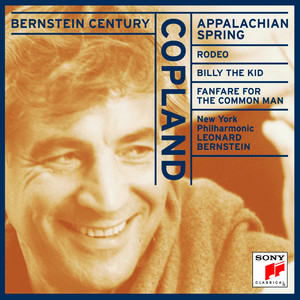 | Appalachian Spring: VIII. Coda. Moderato | Aaron Copland, Leonard Bernstein, New York Philharmonic | C Major | 0 | 8B | 106 BPM | |
| Scheherazade: The Sea & Sinbad's Ship | Nikolai Rimsky-Korsakov, Lars Hjalmar Joakim | E Major | 1 | 12B | 82 BPM | |
 | Symphony No. 3, "Pastoral Symphony": II. Lento moderato | Ralph Vaughan Williams, Brendan O'Brien, Patricia Rozario, Bournemouth Symphony Orchestra, Kees Bakels | G Minor | 0 | 6A | 88 BPM | |
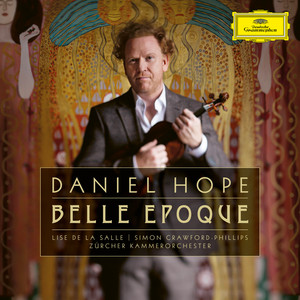 | Notturno for Strings and Harp | Arnold Schoenberg, Daniel Hope, Zürcher Kammerorchester, Jane Berthe | A♭ Major | 1 | 4B | 75 BPM | |
 | Gli uccelli (The Birds), P. 154: V. Il cucu. Allegro | Ottorino Respighi, Chamber Orchestra of New York, Salvatore Di Vittorio | A Major | 1 | 11B | 181 BPM | |
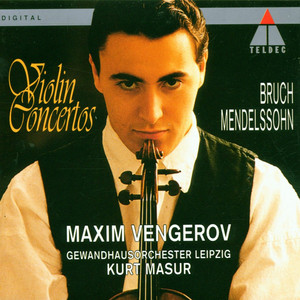 | Bruch: Violin Concerto No. 1 in G Minor, Op. 26: I. Prelude. Allegro moderato | Max Bruch, Maxim Vengerov, Kurt Masur, Gewandhausorchester | E♭ Major | 1 | 5B | 113 BPM | |
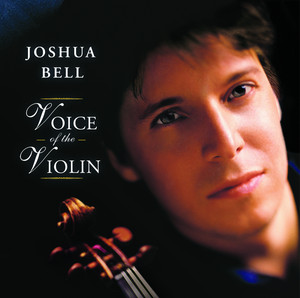 | Rusalka, Op. 114: Song to the Moon (Arranged for Violin & Orchestra by Joshua Bell) | Antonín Dvořák, Joshua Bell, Michael Stern, Orchestra of St. Luke's | F♯ Major | 1 | 2B | 137 BPM | |
 | Elgar: Introduction and Allegro, Op. 47: I. Moderato | Edward Elgar, Sir John Barbirolli, Allegri String Quartet, Sinfonia Of London | G Major | 6 | 9B | 100 BPM | |
 | Mors et Vita: Judex | Charles Gounod, Richard Hickox Orchestra, Richard Hickox | C Minor | 1 | 5A | 95 BPM | |
 | Suite No. 3, P. 172: I. Italiana: Andantino | Ottorino Respighi, RTÉ National Symphony Orchestra | B♭ Major | 1 | 6B | 94 BPM | |
 | The House of Life: No. 2, Silent Noon | Ralph Vaughan Williams, Anthony Rolfe Johnson, Graham Johnson, Simon Keenlyside, Duke Quartet | F Major | 3 | 7B | 150 BPM |
- ISRC
- HKI190225501
- Label
- L-M Records/RCA Records