- BPM
- 94
- Key
- E♭ Minor
- Camelot
- 2A
Puccini: Turandot, Act 1: "Ah! per l'ultima volta!" (Timur, Liù, Coro, Calaf, Ping) by Giacomo Puccini, Francesco Molinari-Pradelli, Bonaldo Giaiotti, Coro Del Teatro Dell'Opera Di Roma, Franco Corelli, Franco Ricciardi, Giuseppe Morresi, Guido Mazzini, Piero de Palma, Renata Scotto, Orchestra Del Teatro Dell'Opera Di Roma Song Details
Giacomo Puccini, Francesco Molinari-Pradelli, Bonaldo Giaiotti, Coro Del Teatro Dell'Opera Di Roma, Franco Corelli, Franco Ricciardi, Giuseppe Morresi, Guido Mazzini, Piero de Palma, Renata Scotto, Orchestra Del Teatro Dell'Opera Di Roma's 'Puccini: Turandot, Act 1: "Ah! per l'ultima volta!" (Timur, Liù, Coro, Calaf, Ping)' had a release date set for 1966. The duration of This song is about two minutes long, specifically at 2:34. This song does not appear to have any foul language. Puccini: Turandot, Act 1: "Ah! per l'ultima volta!" (Timur, Liù, Coro, Calaf, Ping)'s duration is considered a little bit shorter than the average duration of a typical track. There are a total of 45 in the song's album "Puccini: Turandot". In this album, this song's track order is #15. Furthermore, we believe that the track originated from United Kingdom. In terms of popularity, Puccini: Turandot, Act 1: "Ah! per l'ultima volta!" (Timur, Liù, Coro, Calaf, Ping) is currently not that popular. In our opinion, the overall tone is not very danceable and projects negative sounds, such as being sad, depressed, or angry.
BPM and Tempo
With Puccini: Turandot, Act 1: "Ah! per l'ultima volta!" (Timur, Liù, Coro, Calaf, Ping) by Giacomo Puccini, Francesco Molinari-Pradelli, Bonaldo Giaiotti, Coro Del Teatro Dell'Opera Di Roma, Franco Corelli, Franco Ricciardi, Giuseppe Morresi, Guido Mazzini, Piero de Palma, Renata Scotto, Orchestra Del Teatro Dell'Opera Di Roma having a BPM of 94 with a half-time of 47 BPM and a double-time of 188 BPM, we would consider this track to have a Andante (at a walking pace) tempo marking. Because of this, we believe that the song has an overall slow tempo. Looking at the BPM of this song, this song might go great with yoga or pilates. The time signature for this track is 3/4.
Music Key
This song is in the music key of E♭ Minor. Which also means that the camelot key for this song is 2A. So, the perfect camelot match for 2A would be either 2A or 1B. While, a low energy boost can consist of either 2B or 3A. For moderate energy boost, you would use 11A and a high energy boost can either be 4A or 9A. However, if you are looking for a low energy drop, finding a song with a camelot key of 1A would be a great choice. Where 5A would give you a moderate drop, and 12A or 7A would be a high energy drop. Lastly, 5B allows you to change the mood.
Want to find the BPM and music key for other songs? Check out our BPM and Key Finder page!
- Popularity
- 9%
- Loudness
- -11.897 dB
- Acousticness
- 72%
- Danceability
- 26%
- Energy
- 52%
- Instrumentalness
- 0%
- Liveness
- 6%
- Loudness
- 80%
- Speechiness
- 4%
- Valence
- 39%
Recommendations
| Track | Artist | Key | Energy | Camelot | BPM | ||
|---|---|---|---|---|---|---|---|
 | Vocalise, Op. 34, No. 14 - Remastered | Sergei Rachmaninoff, Anna Moffo, American Symphony Orchestra, Leopold Stokowski | D Major | 1 | 10B | 100 BPM | |
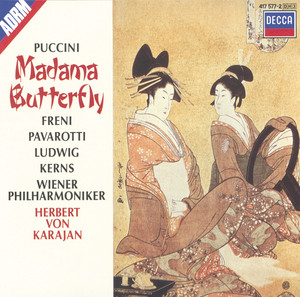 | Madama Butterfly, Act I: Introduction – E soffitto e pareti | Giacomo Puccini, Luciano Pavarotti, Michel Sénéchal, Wiener Philharmoniker, Herbert von Karajan | E♭ Major | 2 | 5B | 132 BPM | |
 | The Marriage of Figaro - Duettino-Sull'aria (Shawshank Redemption) | Opera Divas | A♭ Major | 1 | 4B | 79 BPM | |
 | Madama Butterfly / Act I: Bimba dagli occhi pieni di malia | Giacomo Puccini, Mirella Freni, José Carreras, Philharmonia Orchestra, Giuseppe Sinopoli | F Major | 2 | 7B | 82 BPM | |
 | Agnus Dei (based on ADAGIO for Strings) | John Barry, Samuel Barber | B♭ Minor | 0 | 3A | 71 BPM | |
 | Suor Angelica: O sorelle in pio lavoro | Giacomo Puccini, Isobel Buchanan, Dame Joan Sutherland, Elizabeth Connell, Miriam Bowen, National Philharmonic Orchestra, Richard Bonynge | D♭ Major | 1 | 3B | 91 BPM | |
 | Tristan und Isolde, WWV 90: Prelude To Act I | Richard Wagner, Gewandhausorchester Leipzig, Andris Nelsons | A Minor | 1 | 8A | 79 BPM | |
 | Orfeo ed Euridice, Wq. 30 / Act 3: "Che farò senza Euridice?" | Christoph Willibald Gluck, Teresa Berganza, Orchestra of the Royal Opera House, Covent Garden, Sir Alexander Gibson | C Major | 1 | 8B | 77 BPM | |
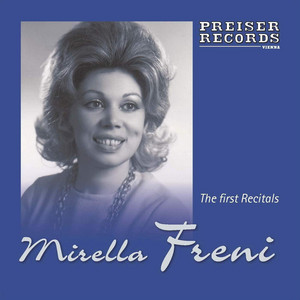 | Turandot: Tu, che di gel sei cinta | Mirella Freni, Vienna Volksoper Orchestra, Argeo Quadri | B Major | 2 | 1B | 87 BPM | |
 | Als die alte Mutter | Victoria de los Ángeles | D Major | 2 | 10B | 81 BPM | |
 | II. Adagio cantabile from Piano Sonata No. 8 in C minor, Op. 13 "Pathetique" - Instrumental | Ludwig van Beethoven, Murray Perahia | A♭ Major | 0 | 4B | 62 BPM | |
 | Lakmé: 'Flower Duet' | Léo Delibes, Carl Davis, Royal Liverpool Philharmonic Orchestra and Choir, Janice Watson, Ruby Philogene | B Major | 1 | 1B | 81 BPM | |
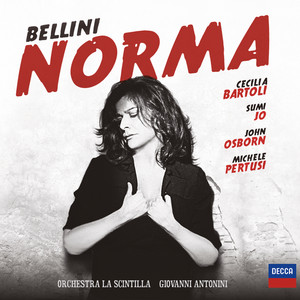 | Norma (Ed. Biondi & Minasi), Act I Scene 1: Casta Diva | Vincenzo Bellini, Cecilia Bartoli, International Chamber Vocalists, Orchestra La Scintilla, Giovanni Antonini | F Major | 1 | 7B | 176 BPM | |
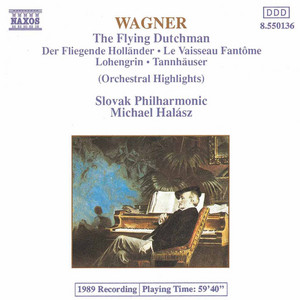 | Lohengrin: Prelude | Richard Wagner, Slovak Philharmonic Orchestra, Michael Halasz | A Major | 0 | 11B | 65 BPM | |
 | Don Giovanni, ossia Il dissoluto punito, K.527 / Act 1: "Là ci darem la mano" | Wolfgang Amadeus Mozart, Ildebrando D'Arcangelo, Mojca Erdmann, Mahler Chamber Orchestra, Yannick Nézet-Séguin | B Minor | 9 | 10A | 180 BPM | |
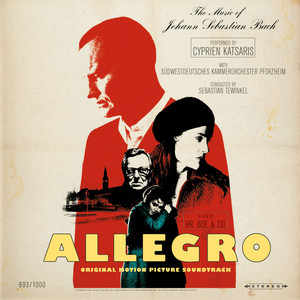 | Harpsichord Concerto No. 5 in F Minor, BWV 1056: II. Largo | Johann Sebastian Bach, Südwestdeutsches Kammerorchester Pforzheim, Sebastian Tewinkel, Cyprien Katsaris | F Minor | 0 | 4A | 119 BPM | |
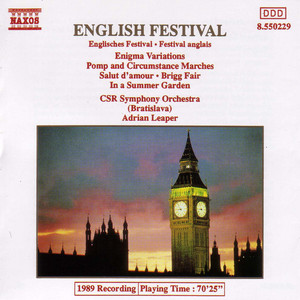 | Salut d'amour, Op. 12 (version for orchestra) | Edward Elgar, Slovak Radio Symphony Orchestra, Adrian Leaper | B♭ Major | 1 | 6B | 82 BPM | |
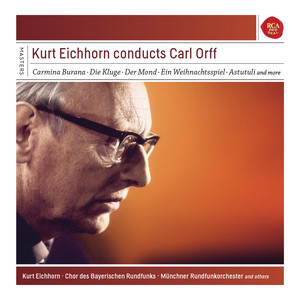 | Carmina Burana: In trutina | Carl Orff, Lucia Popp, Kurt Eichhorn | E♭ Minor | 1 | 2A | 62 BPM | |
 | Piano Concerto No. 5 in E-Flat Major, Op. 73 "Emperor": 2. Adagio un poco mosso | Ludwig van Beethoven, Alfred Brendel, Wiener Philharmoniker, Sir Simon Rattle | B Major | 0 | 1B | 85 BPM | |
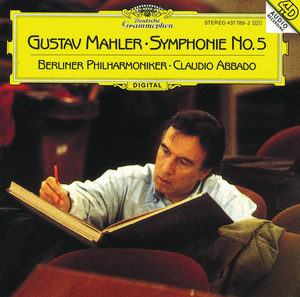 | Symphony No. 5: IV. Adagietto. Sehr langsam | Gustav Mahler, Berliner Philharmoniker, Claudio Abbado | F Major | 0 | 7B | 91 BPM | |
 | Gianni Schicchi: Aria "O mio babbino caro" | Giacomo Puccini, Royal Philharmonic Orchestra, Charles Dutoit, Deborah Norman | A♭ Major | 2 | 4B | 174 BPM | |
 | Madama Butterfly, SC 74: Un bel dì vedremo | Giacomo Puccini, Anna Netrebko, Orchestra Del Teatro Alla Scala, Milano, Riccardo Chailly | D♭ Major | 2 | 3B | 64 BPM | |
 | Offenbach: Les Contes d'Hoffmann, Act 4: No. 13, Barcarolle "Belle nuit, ô nuit d'amour" (Orchestral Version) | Jacques Offenbach, Studio 2 Symphony Orchestra, Vilem Tausky | D Major | 0 | 10B | 116 BPM | |
 | Nessun Dorma! | Mario del Monaco | D Major | 2 | 10B | 88 BPM | |
 | Strauss, R: 4 Letzte Lieder: No. 4, Im Abendrot | Richard Strauss, Elisabeth Schwarzkopf, George Szell, Deutsches Symphonie-Orchester Berlin | B♭ Major | 1 | 6B | 82 BPM |
- ISRC
- GBAYC8800910
- Label
- L-M Records/RCA Records