- BPM
- 113
- Key
- A Major
- Camelot
- 11B
Variations on a Rococo Theme, Op. 33, TH 57: Variazione I: Tempo del Tema by Pyotr Ilyich Tchaikovsky, Mischa Maisky, Orpheus Chamber Orchestra Song Details
Pyotr Ilyich Tchaikovsky, Mischa Maisky, Orpheus Chamber Orchestra's ' "Variations on a Rococo Theme, Op. 33, TH 57: Variazione I: Tempo del Tema" was released on its scheduled release date, January 1, 1997. With This song being less than a minute long, we are pretty confident that this song does not contain any foul language. That being said, this song is pretty short compared to other songs. There are a total of 17 in the song's album "Tchaikovsky: Rococo Variations; Souvenir de Florence; Lensky's Aria From "Eugen Onegin"; Nocturne In D Minor (From Op. 19, No. 4); Andante Cantabile, Op. 11". In this album, this song's track order is #3. Furthermore, we believe that the track originated from Germany. In terms of popularity, Variations on a Rococo Theme, Op. 33, TH 57: Variazione I: Tempo del Tema is currently not that popular. Based on the vibe, this track doesn't seem to be that danceable, however its valence properties can make this some somewhat danceable.
BPM and Tempo
With Variations on a Rococo Theme, Op. 33, TH 57: Variazione I: Tempo del Tema by Pyotr Ilyich Tchaikovsky, Mischa Maisky, Orpheus Chamber Orchestra having a BPM of 113 with a half-time of 56 BPM and a double-time of 226 BPM, we would consider this track to have a Moderato (at a moderate speed) tempo marking. Because of this, we believe that the song has an overall moderate tempo. The time signature for this track is 3/4.
Music Key
This song has a musical key of A Major. Or for those who are familiar with the camelot wheel, this song has a camelot key of 11B. So, the perfect camelot match for 11B would be either 11B or 12A. While, 12B can give you a low energy boost. For moderate energy boost, you would use 8B and a high energy boost can either be 1B or 6B. Though, if you want a low energy drop, you should looking for songs with either a camelot key of 11A or 10B will give you a low energy drop, 2B would be a moderate one, and 9B or 4B would be a high energy drop. Lastly, 8A allows you to change the mood.
Want to find the BPM and music key for other songs? Check out our BPM and Key Finder page!
- Popularity
- 8%
- Loudness
- -25.767 dB
- Acousticness
- 99%
- Danceability
- 37%
- Energy
- 12%
- Instrumentalness
- 95%
- Liveness
- 19%
- Loudness
- 57%
- Speechiness
- 6%
- Valence
- 46%
Recommendations
| Track | Artist | Key | Energy | Camelot | BPM | ||
|---|---|---|---|---|---|---|---|
 | The Firebird (Original Version): No. 20, Lullaby | Igor Stravinsky, City Of Birmingham Symphony Orchestra, Andris Nelsons | E♭ Minor | 0 | 2A | 172 BPM | |
 | Preghiera (Arr. by Fritz Kreisler from Piano Concerto No. 2 in C Minor, Op. 18, 2nd Movement) | Sergei Rachmaninoff, Gidon Kremer, Daniil Trifonov | C Major | 1 | 8B | 104 BPM | |
 | 6 Consolations, S. 172: No. 3 in D-Flat Major (Lento, placido) | Franz Liszt, Daniel Barenboim | D♭ Major | 0 | 3B | 69 BPM | |
 | Scheherazade: The princess in a palanquin | Nikolai Rimsky-Korsakov, Lars Hjalmar Joakim | G Major | 1 | 9B | 166 BPM | |
 | Beethoven: Symphony No. 6 in F Major, Op. 68 "Pastoral": III. Lustiges Zusammensein der Landleute. Allegro | Ludwig van Beethoven, Philadelphia Orchestra, Riccardo Muti | D Minor | 3 | 7A | 107 BPM | |
 | Don Quixote: Act I: Quiteria and Basilio | Ludwig Minkus, Sofia National Opera Orchestra, Nayden Todorov | E Minor | 0 | 9A | 178 BPM | |
 | Carmen Fantasy, Op. 25: I. Moderato | Pablo de Sarasate, Hilary Hahn, Frankfurt Radio Symphony Orchestra, Andrés Orozco-Estrada | D Major | 1 | 10B | 89 BPM | |
 | Warsaw Concerto | Richard Addinsell, Jean-Yves Thibaudet, BBC Symphony Orchestra, Hugh Wolff | B Major | 1 | 1B | 76 BPM | |
 | Giselle, Act 2: No. 18 Pas de Deux - second half (Alternative Version) | Adolphe Adam, Tasmanian Symphony Orchestra, Nicolette Fraillon | A♭ Major | 1 | 4B | 129 BPM | |
 | Symphony No. 40 in G Minor, K. 550: I. Allegro molto | Wolfgang Amadeus Mozart, Capella Istropolitana, Barry Wordsworth | D Minor | 2 | 7A | 122 BPM | |
 | Requiem In D Minor, K. 626: Sequence: VI. Lacrimosa Dies Illa | Slovak Philharmonic, Jaroslava Horska, Vladimir Ruso, Peter Mikulas, Stefan Klimo, Slovak Philharmonic Chorus, Jozef Kundlák, Magdaléna Hajóssyová, Wolfgang Amadeus Mozart | D Minor | 1 | 7A | 180 BPM | |
 | Salut d'Amour, Op. 12 | Edward Elgar, Yo-Yo Ma, Kathryn Stott | D Major | 0 | 10B | 73 BPM | |
 | Zdes' khorosho ('How Fair This Spot'), Op. 21, No. 7 | Sergei Rachmaninoff, Pablo Ferrandez, Denis Kozhukhin | A Major | 0 | 11B | 87 BPM | |
 | Carmen Suite No. 1: 2. Aragonaise | Georges Bizet, Orchestre de Paris, Semyon Bychkov | D Minor | 0 | 7A | 120 BPM | |
 | Elfentanz, Op. 39 - Dance of the Elves | David Popper, Metamorphose String Orchestra, Pavel Lyubomudrov, Mikael Samsonov | G Major | 4 | 9B | 96 BPM | |
 | Carnival of the Animals: The Swan | Camille Saint-Saëns, Isata Kanneh-Mason, Jeneba Kanneh-Mason, Sheku Kanneh-Mason | G Major | 1 | 9B | 65 BPM | |
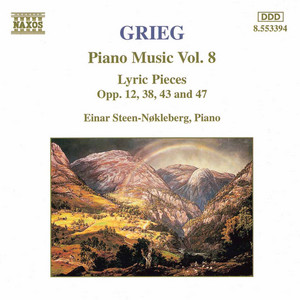 | Lyric Pieces, Book 1, Op. 12: Arietta | Edvard Grieg, Einar Steen-Nøkleberg | E♭ Major | 0 | 5B | 111 BPM | |
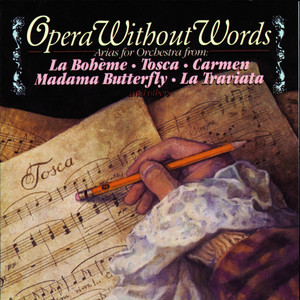 | Carmen: Habanera - Instrumental | Andre Kostelanetz, New York Philharmonic | D Major | 2 | 10B | 136 BPM | |
 | Serenade for Strings in E-Flat Major, Op. 6: I. Andante con moto | Josef Suk, Alexej Svjatlovskij, Igor Makarow, Sergej Belesow, European New Philharmonic Orchestra, Volker Hartung | B♭ Major | 1 | 6B | 109 BPM | |
 | L’arlésienne Suite No. 2 (Arr. E. Guiraud): IV. Farandole | Georges Bizet, Orquestra Simfònica de Barcelona i Nacional de Catalunya, Pablo González | D Major | 3 | 10B | 91 BPM | |
![Die Flamme von Paris (Flames of Paris), Act IV: Coda [arr. March] by Boris Vladimirovich Asafiev, Sofia National Opera Orchestra, Boris Spassov](https://i.scdn.co/image/ab67616d00001e020d73d1173789e937d83fa6c9) | Die Flamme von Paris (Flames of Paris), Act IV: Coda [arr. March] | Boris Vladimirovich Asafiev, Sofia National Opera Orchestra, Boris Spassov | C Major | 4 | 8B | 135 BPM | |
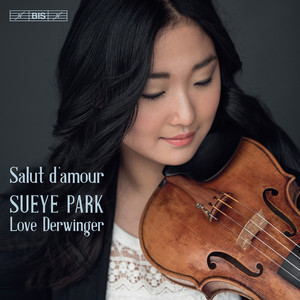 | Salut d'amour, Op. 12 | Edward Elgar, Sueye Park, Love Derwinger | E Major | 1 | 12B | 83 BPM | |
 | Spartacus: Adagio of Spartacus and Phrygia | Aram Khachaturian, Wiener Philharmoniker | A♭ Major | 1 | 4B | 129 BPM | |
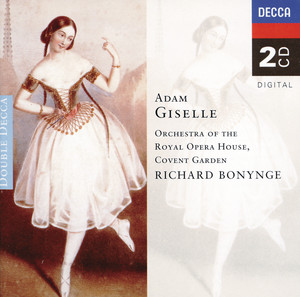 | Giselle / Act 2: Grand pas de deux: Adage | Adolphe Adam, Orchestra of the Royal Opera House, Covent Garden, Richard Bonynge | E♭ Major | 0 | 5B | 73 BPM | |
 | Jazz Suite No. 2: VII. Dance 2 | Dmitri Shostakovich, Russian State Symphony Orchestra, Dmitry Yablonsky | A Major | 2 | 11B | 109 BPM |
- ISRC
- DEF059630003
- Label
- L-M Records/RCA Records