- BPM
- 124
- Key
- F Major
- Camelot
- 7B
Overture No. 2 in F Major: V. Gigue by Francesco Maria Veracini, Accademia I Filarmonici, Alberto Martini Song Details
Francesco Maria Veracini, Accademia I Filarmonici, Alberto Martini's ' "Overture No. 2 in F Major: V. Gigue" was released on its scheduled release date, June 30, 1995. With this song being around four minutes long, at 3:50, the duration of this song is pretty average compared to other songs. This track is safe for children and doesn't appear to contain any foul language, since the "Explicit" tag was not present in this track. This song is part of Veracini: Overtures and Concertos, Vol. 1 by Francesco Maria Veracini. The song's track number on the album is #10 out of 25 tracks. Based on our statistics, Overture No. 2 in F Major: V. Gigue's popularity is not that popular right now. Since there is more of a neutral sound being played, this makes the track somewhat danceable.
BPM and Tempo
Since Overture No. 2 in F Major: V. Gigue by Francesco Maria Veracini, Accademia I Filarmonici, Alberto Martini has a tempo of 124 beats per a minute, the tempo markings of this song would be Allegro (fast, quick, and bright). With Overture No. 2 in F Major: V. Gigue being at 124 BPM, the half-time would be 62 BPM with a double-time of 248 BPM.In addition, we consider the tempo speed to be pretty fast for this song. This makes this song perfect for activities such as, walking. The time signature for this track is 4/4.
Music Key
F Major is the music key of this track. Or for those who are familiar with the camelot wheel, this song has a camelot key of 7B. So, the perfect camelot match for 7B would be either 7B or 8A. While, 8B can give you a low energy boost. For moderate energy boost, you would use 4B and a high energy boost can either be 9B or 2B. Though, if you want a low energy drop, you should looking for songs with either a camelot key of 7A or 6B will give you a low energy drop, 10B would be a moderate one, and 5B or 12B would be a high energy drop. Lastly, 4A allows you to change the mood.
Want to find the BPM and music key for other songs? Check out our BPM and Key Finder page!
- Popularity
- 1%
- Loudness
- -12.482 dB
- Acousticness
- 99%
- Danceability
- 50%
- Energy
- 34%
- Instrumentalness
- 88%
- Liveness
- 14%
- Loudness
- 79%
- Speechiness
- 4%
- Valence
- 53%
Recommendations
| Track | Artist | Key | Energy | Camelot | BPM | ||
|---|---|---|---|---|---|---|---|
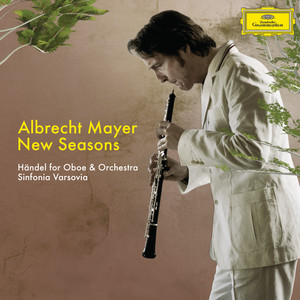 | Concerto for Flute, English Horn, Strings and B.c. "Amabile baltà": Allegro ma non troppo ("Più amabile beltà" from Opera 'Giulio Cesare', HWV 17) | George Frideric Handel, Albrecht Mayer, Sinfonia Varsovia, Matthieu Gauci-Ancelin, Jakub Haufa, Monika Razynska | D♭ Major | 2 | 3B | 122 BPM | |
 | Venus y Adonis (Arr. by Alberto Miguélez Rouco), Sinfonia in F Major: II. Andante | José de Nebra, Los Elementos, Alberto Miguélez Rouco | D♭ Major | 4 | 3B | 100 BPM | |
 | Concerto Armonico No. 5 in F Minor: Da capella | Unico Wilhelm van Wassenaer, Aradia Ensemble, Kevin Mallon | B Minor | 1 | 10A | 132 BPM | |
 | Sinfonia No. 6 in G Minor, Op. 5: III. Allegro | Johann Adolf Hasse, Le Concert de l'Hostel Dieu, Franck-Emmanuel Comte | D♭ Major | 3 | 3B | 120 BPM | |
 | Concerto Grosso in A Minor, Op. 3, No. 2: I. Presto: Adagio | Francesco Onofrio Manfredini, Capella Istropolitana, Jaroslav Krcek | C Major | 2 | 8B | 141 BPM | |
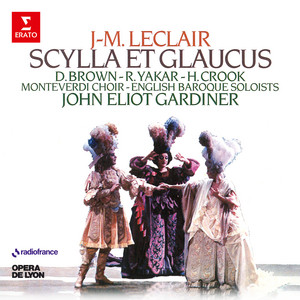 | Leclair: Scylla et Glaucus, Op. 11, Prologue: Air gracieux | Jean-Marie Leclair, John Eliot Gardiner, English Baroque Soloists | A♭ Minor | 0 | 1A | 68 BPM | |
 | Symphony No. 4 in C Major: III. Allegro | Franz Xaver Richter, Helsinki Baroque Orchestra, Aapo Häkkinen | F♯ Major | 2 | 2B | 186 BPM | |
 | Himmelskönig, sei willkommen, BWV 182: Sonata | Johann Sebastian Bach, Regine Jurda, Maximilian Kiener, Franz Schlecht, Arcis-Vocalisten Munich, L'arpa Festante, Thomas Gropper | F♯ Major | 0 | 2B | 96 BPM | |
 | Violin Sonata in E-flat Major: III. Allegro assai | Franz Benda, Georg Kallweit, Berliner Barock Compagney | F♯ Major | 1 | 2B | 139 BPM | |
 | Overture in B-Flat Major, Op. 8, No. 1: II. Andante | Samuel Arnold, Toronto Chamber Orchestra, Kevin Mallon | B♭ Major | 0 | 6B | 85 BPM | |
 | Concerto a cinque No. 11, Op. 9: I. Allegro | Tomaso Albinoni, Paul Dombrecht, Il Fondamento | A Major | 4 | 11B | 107 BPM | |
 | Concerto in D Major, Op. 6 No. 6: III. Adagio | Charles Avison, Café Zimmermann | F Major | 5 | 7B | 107 BPM | |
 | Concerto grosso No. 1 in A Major: IV. Allegro (After D. Scarlatti) | Charles Avison, Avison Ensemble, Pavlo Beznosiuk | D♭ Major | 2 | 3B | 92 BPM | |
 | Symphony No. 8 in D Minor, Op. 2, "Worcester Overture": I. Pomposo - Allegro | William Boyce, Aradia Ensemble, Kevin Mallon | A♭ Major | 1 | 4B | 72 BPM | |
 | Sonates à violon ou flûte seule avec basse continue, Op. 14, Sonata 4: I. Allegro | Jean-Baptiste Quentin, Anna Besson, Myriam Rignol, Jean Rondeau | A♭ Major | 2 | 4B | 99 BPM | |
 | Oboe Concerto in G Minor: Largo | Giovanni Benedetto Platti, Anthony Camden, City of London Sinfonia, Nicholas Ward | D Minor | 1 | 7A | 82 BPM | |
 | Handel: Trio Sonata in B Minor, Op. 2/1, HWV 386b: III. Largo | George Frideric Handel, Emmanuelle Haïm, Le Concert d'Astrée | D♭ Major | 0 | 3B | 95 BPM | |
 | Trio Sonata in C Major, BuxWV 256: V. Adagio - Allegro | Dietrich Buxtehude, Ensemble Mélero | A Major | 3 | 11B | 103 BPM | |
 | Symphony in D Major, J-C 16: I. Alla breve | Giovanni Battista Sammartini, Aradia Ensemble, Kevin Mallon | F♯ Major | 1 | 2B | 137 BPM | |
 | Flute Concerto in A Minor, QV 5:238: II. Arioso ma non troppo | Johann Joachim Quantz, Mary Oleskiewicz, Concerto Armonico Budapest, Miklós Spányi | A♭ Major | 1 | 4B | 81 BPM | |
 | Ouverture in E Minor: VII. Gavotte en rondeau | Johann Bernhard Bach, L'Achéron, François Joubert-Caillet | D Minor | 2 | 7A | 98 BPM | |
 | Concerto Grosso in G Minor, Op. 1, No. 12: III. Sarabanda | Pietro Locatelli, Capella Istropolitana, Jaroslav Krcek | B Major | 2 | 1B | 181 BPM | |
 | J.S. Bach: Goldberg Variations, BWV 988 (Arr. for Chamber Orchestra by Alexander Vittal): Aria | Johann Sebastian Bach, Baroque Chamber Orchestra of Colorado, Cynthia Miller Freivogel | F♯ Major | 1 | 2B | 126 BPM | |
 | Symphony in G Major, Op. 1, No. 5 (Callen 5): I. Allegro | Franz Ignaz Beck, New Zealand Chamber Orchestra, Donald Armstrong | D Major | 2 | 10B | 139 BPM | |
 | Concerto a 7 in G Major - 2 Oboes, 2 Violins, 2 Violas & B.C., Seibel 214: Allegro (1) | Johann David Heinichen, Il Fondamento, Paul Dombrecht | F♯ Major | 3 | 2B | 116 BPM |
- ISRC
- This song does not have an ISRC.
- Label
- L-M Records/RCA Records