- BPM
- 64
- Key
- A♭ Major
- Camelot
- 4B
Vaughan Williams: Symphony No. 5 in D Major: I. Preludio. Moderato by Ralph Vaughan Williams, Bernard Haitink, London Philharmonic Orchestra Song Details
"Vaughan Williams: Symphony No. 5 in D Major: I. Preludio. Moderato" by Ralph Vaughan Williams, Bernard Haitink, London Philharmonic Orchestra had its release date on January 10, 1995. This song appears to be safe for all ages as it is not explicit. This song is part of Vaughan Williams: Symphony No. 5, Norfolk Rhapsody No. 1 & The Lark Ascending by Ralph Vaughan Williams, Bernard Haitink, London Philharmonic Orchestra. The song's track number on the album is #1 out of 6 tracks. Based on our data, United Kingdom was the country where this track was produced or recorded. Vaughan Williams: Symphony No. 5 in D Major: I. Preludio. Moderato is not that popular right now. In our opinion, the overall tone is not very danceable and projects negative sounds, such as being sad, depressed, or angry.
BPM and Tempo
Since Vaughan Williams: Symphony No. 5 in D Major: I. Preludio. Moderato by Ralph Vaughan Williams, Bernard Haitink, London Philharmonic Orchestra has a tempo of 64 beats per a minute, the tempo markings of this song would be Larghetto (rather broadly). With Vaughan Williams: Symphony No. 5 in D Major: I. Preludio. Moderato being at 64 BPM, the half-time would be 32 BPM with a double-time of 128 BPM.In addition, we consider the tempo speed to be pretty slow for this song. The time signature for this track is 4/4.
Music Key
This song has a musical key of A♭ Major. Or for those who are familiar with the camelot wheel, this song has a camelot key of 4B. So, the perfect camelot match for 4B would be either 4B or 5A. While, 5B can give you a low energy boost. For moderate energy boost, you would use 1B and a high energy boost can either be 6B or 11B. Though, if you want a low energy drop, you should looking for songs with either a camelot key of 4A or 3B will give you a low energy drop, 7B would be a moderate one, and 2B or 9B would be a high energy drop. Lastly, 1A allows you to change the mood.
Want to find the BPM and music key for other songs? Check out our BPM and Key Finder page!
- Popularity
- 12%
- Loudness
- -23.364 dB
- Acousticness
- 98%
- Danceability
- 6%
- Energy
- 3%
- Instrumentalness
- 93%
- Liveness
- 15%
- Loudness
- 61%
- Speechiness
- 4%
- Valence
- 3%
Recommendations
| Track | Artist | Key | Energy | Camelot | BPM | ||
|---|---|---|---|---|---|---|---|
 | St. Paul's Suite, Op. 29 No. 2: II. Ostinato | Gustav Holst, English Sinfonia, Howard Griffiths | C Major | 1 | 8B | 108 BPM | |
 | 2 Aquarelles: Lento, ma non troppo | Frederick Delius, Royal Northern Sinfonia, David Lloyd-Jones | F Major | 0 | 7B | 71 BPM | |
 | The Moon | William Lloyd Webber, English Chamber Orchestra, Julian Lloyd Webber | B♭ Major | 1 | 6B | 119 BPM | |
 | Overture "A Midsummer Night's Dream", Op. 21 | Felix Mendelssohn, Boston Symphony Orchestra, Seiji Ozawa | E Major | 1 | 12B | 139 BPM | |
 | Fantasia on British Sea Songs (excerpts): II. Tom Bowling | Sir Henry Wood, Leeds Festival Chorus, English Northern Philharmonia, Paul Daniel | C Major | 0 | 8B | 93 BPM | |
 | DANCE: III. in the middle of the fighting | Anna Clyne, Inbal Segev, London Philharmonic Orchestra, Marin Alsop | A Minor | 1 | 8A | 82 BPM | |
 | Carmen Suite No. 1 (Arr. E. Guiraud): III. Intermezzo | Georges Bizet, Orquestra Simfònica de Barcelona i Nacional de Catalunya, Pablo González | E♭ Major | 0 | 5B | 81 BPM | |
 | Holst: The Planets, Op. 32: IV. Jupiter, the Bringer of Jollity | Gustav Holst, Sir Adrian Boult, London Philharmonic Orchestra | G Minor | 3 | 6A | 133 BPM | |
 | Peer Gynt Suite No. 2, Op. 55: IV. Solveigs sang (Solveig's Song) | Edvard Grieg, Malmö Symphony Orchestra, Bjarte Engeset | D Minor | 0 | 7A | 86 BPM | |
 | Finlandia | Jean Sibelius, Chineke! Orchestra, Kevin John Edusei | A♭ Major | 2 | 4B | 68 BPM | |
 | Suite pastorale: I. Idylle | Emmanuel Chabrier, Wiener Philharmoniker, John Eliot Gardiner | F Major | 0 | 7B | 105 BPM | |
 | Quiet City | Aaron Copland, Paula Engerer, Scott Moore, Nashville Chamber Orchestra, Paul Gambill | F Major | 0 | 7B | 72 BPM | |
 | 5 Bagatelles, Op. 23a (Arr. L. Ashmore for Clarinet & Strings): No. 4, Forlana. Allegretto grazioso | Gerald Finzi, Robert Plane, Royal Northern Sinfonia, Howard Griffiths | F♯ Major | 1 | 2B | 96 BPM | |
 | Symphony No. 3 In C Minor, Op. 78 "Organ Symphony": 2. Allegro moderato - Presto - Allegro moderato - Maestoso - Più allegro - Molto allegro | Camille Saint-Saëns, Simon Preston, Berliner Philharmoniker, James Levine | F Minor | 2 | 4A | 117 BPM | |
 | Karadec Suite, Op. 34: II. Chanson | Vincent d'Indy, Malmö Symphony Orchestra, Darrell Ang | E♭ Major | 0 | 5B | 71 BPM | |
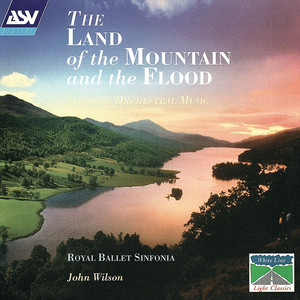 | The Land of the Mountain and the Flood, Op. 3 | Hamish MacCunn, Royal Ballet Sinfonia, John Wilson | B Major | 1 | 1B | 108 BPM | |
 | Clarinet Quintet in A Major: Clarinet Quintet in A Major: I. Allegro | Wolfgang Amadeus Mozart, Arcanto Quartett, Jörg Widmann | A Major | 1 | 11B | 116 BPM | |
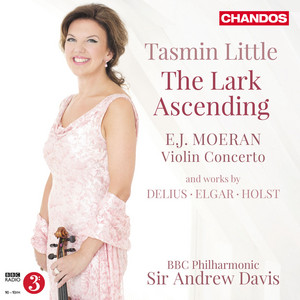 | The Lark Ascending | Ralph Vaughan Williams, Andrew Davis, BBC Philharmonic, BBC Symphony Orchestra, Tasmin Little | E Minor | 0 | 9A | 80 BPM | |
| Suite: Graceful Dance | Ernest Tomlinson, Royal Northern Sinfonia, David Lloyd-Jones | D Major | 3 | 10B | 133 BPM | |
 | Crown Imperial | William Walton, English Northern Philharmonia, Paul Daniel | C Major | 3 | 8B | 116 BPM | |
 | Phantasy Quintet: III. Alla Sarabanda: Lento | Ralph Vaughan Williams, Garfield Jackson, Maggini Quartet | E♭ Minor | 10 | 2A | 123 BPM | |
 | Sibelius: Symphony No. 5 in E-Flat Major, Op. 82: III. Allegro molto | Jean Sibelius, Sakari Oramo, City Of Birmingham Symphony Orchestra | A♭ Major | 1 | 4B | 149 BPM | |
 | Symphony No. 3, "Pastoral Symphony": II. Lento moderato | Ralph Vaughan Williams, Brendan O'Brien, Patricia Rozario, Bournemouth Symphony Orchestra, Kees Bakels | G Minor | 0 | 6A | 88 BPM | |
 | A Severn Rhapsody, Op. 3 | Gerald Finzi, Robert Plane, Royal Northern Sinfonia, Howard Griffiths | C Minor | 0 | 5A | 62 BPM | |
 | The Planets Suite, Op. 32: IV. Jupiter | Gustav Holst, Vladimir Jurowski, London Philharmonic Choir, London Philharmonic Orchestra, Neville Creed | G Minor | 3 | 6A | 151 BPM |
- ISRC
- GBAYC9402000
- Label
- L-M Records/RCA Records