- BPM
- 82
- Key
- B♭ Minor
- Camelot
- 3A
Elijah, Op. 70, MWV A25 / Part 2: "Go return upon thy way" by Felix Mendelssohn, Edinburgh Festival Chorus, Bryn Terfel, Stephen Doughty, Orchestra of the Age of Enlightenment, Paul Daniel Song Details
Felix Mendelssohn, Edinburgh Festival Chorus, Bryn Terfel, Stephen Doughty, Orchestra of the Age of Enlightenment, Paul Daniel's 'Elijah, Op. 70, MWV A25 / Part 2: "Go return upon thy way"' had a release date set for January 1, 1997. With This song being less than two minutes long, at 1:22, we are fairly confident that this song is not explicit and is safe for all ages. Based on the duration of this song, this song duration is much smaller than the average song duration. The track order of this song in Felix Mendelssohn, Bryn Terfel, Renée Fleming, Edinburgh Festival Chorus, Orchestra of the Age of Enlightenment, Paul Daniel's "Mendelssohn: Elijah" album is number 16 out of 44. On top of that, United Kingdom appears to be the country where this track was created. Elijah, Op. 70, MWV A25 / Part 2: "Go return upon thy way" is not that popular right now. In our opinion, the overall tone is not very danceable and projects negative sounds, such as being sad, depressed, or angry.
BPM and Tempo
We consider the tempo marking of Elijah, Op. 70, MWV A25 / Part 2: "Go return upon thy way" by Felix Mendelssohn, Edinburgh Festival Chorus, Bryn Terfel, Stephen Doughty, Orchestra of the Age of Enlightenment, Paul Daniel to be Andante (at a walking pace) because the track has a tempo of 82 BPM, a half-time of 41BPM, and a double-time of 164 BPM. Based on that, the speed of the song's tempo is slow. The time signature for this track is 4/4.
Music Key
B♭ Minor is the music key of this track. Because this track belongs in the B♭ Minor key, the camelot key is 3A. So, the perfect camelot match for 3A would be either 3A or 2B. While, a low energy boost can consist of either 3B or 4A. For moderate energy boost, you would use 12A and a high energy boost can either be 5A or 10A. However, if you are looking for a low energy drop, finding a song with a camelot key of 2A would be a great choice. Where 6A would give you a moderate drop, and 1A or 8A would be a high energy drop. Lastly, 6B allows you to change the mood.
Want to find the BPM and music key for other songs? Check out our BPM and Key Finder page!
- Popularity
- 7%
- Loudness
- -18.581 dB
- Acousticness
- 98%
- Danceability
- 29%
- Energy
- 16%
- Instrumentalness
- 0%
- Liveness
- 14%
- Loudness
- 69%
- Speechiness
- 4%
- Valence
- 35%
Recommendations
| Track | Artist | Key | Energy | Camelot | BPM | ||
|---|---|---|---|---|---|---|---|
 | Chopin - 6 Chants Polonais, S480/R145: No. 2. Fruhling(Wiosna, Spring) | Joseph Banowetz, Franz Liszt | G Major | 1 | 9B | 108 BPM | |
 | Violin Concerto In E Minor, Op. 64, MWV O14: I. Allegro molto appassionato | Felix Mendelssohn, Anne-Sophie Mutter, Gewandhausorchester, Kurt Masur | E Minor | 1 | 9A | 81 BPM | |
 | Haydn: Cello Concerto No. 2 in D Major, Hob. VIIb:2: III. Rondo. Allegro | Joseph Haydn, Mstislav Rostropovich, Academy of St. Martin in the Fields | A Major | 1 | 11B | 138 BPM | |
 | Notturno for Strings and Harp | Arnold Schoenberg, Daniel Hope, Zürcher Kammerorchester, Jane Berthe | A♭ Major | 1 | 4B | 75 BPM | |
 | Character Pieces, MA Ms. 44 (selections): VIII: Allegro moderato, in B Major | Fanny Mendelssohn, Beatrice Rauchs | A♭ Minor | 1 | 1A | 88 BPM | |
 | 6 Piano Pieces, Op. 118: No. 2, Intermezzo in A Major | Johannes Brahms, Radu Lupu | D Minor | 0 | 7A | 135 BPM | |
 | Rêverie au bord de la mer, WoO | Jacques Offenbach, Raphaela Gromes, Julian Riem | G Major | 1 | 9B | 73 BPM | |
 | Gigues en rondeau I & II | Jean-Philippe Rameau, Víkingur Ólafsson | E Major | 1 | 12B | 128 BPM | |
 | Sonata for Cello and Piano in G minor, Op. 19: 3. Andante | Sergei Rachmaninoff, Lynn Harrell, Vladimir Ashkenazy | E♭ Major | 0 | 5B | 74 BPM | |
 | Lieder ohne Worte, Op. 19: No. 6 in G Minor (Andante sostenuto) "Venetian Gondola Song", MWV U78 | Felix Mendelssohn, Jan Lisiecki | G Minor | 0 | 6A | 168 BPM | |
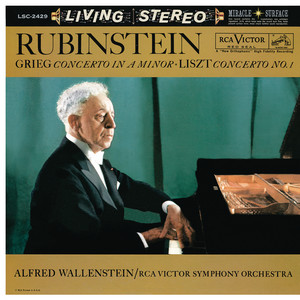 | Piano Concerto in A Minor, Op. 16: III. Allegro moderato molto e marcato - Remastered | Edvard Grieg, Arthur Rubinstein, Alfred Wallenstein, RCA Victor Symphony Orchestra | F Major | 1 | 7B | 119 BPM | |
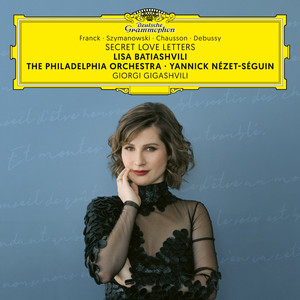 | Beau soir, L. 6 (L. 84) (Arr. Heifetz for Violin and Piano) | Claude Debussy, Lisa Batiashvili, Yannick Nézet-Séguin | F Minor | 1 | 4A | 79 BPM | |
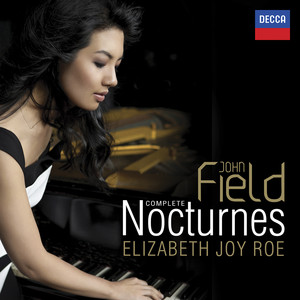 | Nocturne No. 1 in E-Flat Major, H. 24 | John Field, Elizabeth Joy Roe | E♭ Major | 0 | 5B | 75 BPM | |
 | 6 Album Leaves, Op. 2, JB 1:51: No. 2 in A Minor, Chanson. Moderato | Bedřich Smetana, Jitka Čechová | A Minor | 0 | 8A | 66 BPM | |
 | Paradis: Sicilienne 파라디스 시실리안느 | 김준영 | E♭ Major | 0 | 5B | 137 BPM | |
 | Piano Concerto No. 2 in C Minor, Op. 18: I. Moderato | Sergei Rachmaninoff, Yuja Wang, Los Angeles Philharmonic, Gustavo Dudamel | G Minor | 3 | 6A | 97 BPM | |
 | 6 Moments musicaux, Op. 16: No. 5, Adagio sostenuto | Sergei Rachmaninoff, Boris Giltburg | E Minor | 2 | 9A | 126 BPM | |
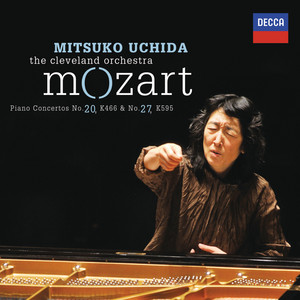 | Piano Concerto No. 20 in D Minor, K. 466: 3. Rondo. Allegro assai - Live | Wolfgang Amadeus Mozart, Mitsuko Uchida, Cleveland Orchestra | D Minor | 1 | 7A | 129 BPM | |
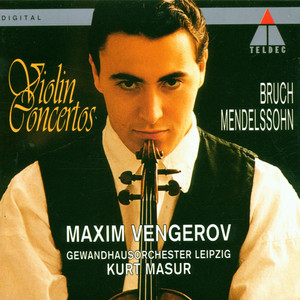 | Mendelssohn: Violin Concerto in E Minor, Op. 64, MWV O14: II. Andante | Felix Mendelssohn, Maxim Vengerov, Kurt Masur, Gewandhausorchester | C Major | 1 | 8B | 96 BPM | |
 | Adagio in F, H.XVII No. 9 | Joseph Haydn, Alfred Brendel | F Major | 0 | 7B | 71 BPM | |
 | Concerto in D Minor for Two Violins, BWV 1043: Vivace | Johann Sebastian Bach, Jascha Heifetz, Erick Friedman, Thornton Lofthouse, The New Symphony Orchestra Of London, Sir Malcolm Sargent | A Minor | 2 | 8A | 94 BPM | |
 | Lieder ohne Worte, Book 6, Op. 67: No. 32 in F-Sharp Minor, Op. 67, No. 2 | Felix Mendelssohn, Péter Nagy | F♯ Minor | 1 | 11A | 166 BPM | |
 | La separation, Nocturne in F Minor | Mikhail Glinka, Victor Ryabchikov | F Minor | 1 | 4A | 73 BPM | |
 | 7 Variations on the Air Vien qua, Dorina bella by Bianchi, Op. 7, J. 53: Variation 1 | Carl Maria von Weber, Michael Endres | E Major | 1 | 12B | 87 BPM | |
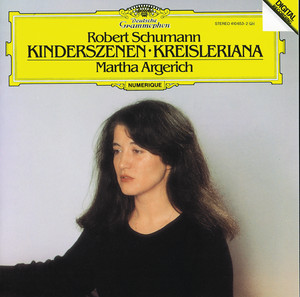 | Kinderszenen, Op. 15: XII. Kind im Einschlummern | Robert Schumann, Martha Argerich | E Minor | 0 | 9A | 123 BPM |
- ISRC
- GBF079643138
- Label
- L-M Records/RCA Records