- BPM
- 126
- Key
- D Major
- Camelot
- 10B
Pièces de Clavecin I, Suite in A Minor, RCT 1: IX. Menuet by Jean-Philippe Rameau, Denys Proshayev Song Details
"Pièces de Clavecin I, Suite in A Minor, RCT 1: IX. Menuet" by Jean-Philippe Rameau, Denys Proshayev had its release date on 2006. With This song being less than two minutes long, at 1:30, we are fairly confident that this song is not explicit and is safe for all ages. Based on the duration of this song, this song duration is much smaller than the average song duration. There are a total of 31 in the song's album "Rameau: Baroque Suites". In this album, this song's track order is #9. Furthermore, we believe that the track originated from Germany. Based on our statistics, Pièces de Clavecin I, Suite in A Minor, RCT 1: IX. Menuet's popularity is not that popular right now. Although the tone can be danceable to some, this track does projects more of a negative sound rather than a postive one.
BPM and Tempo
With Pièces de Clavecin I, Suite in A Minor, RCT 1: IX. Menuet by Jean-Philippe Rameau, Denys Proshayev having a BPM of 126 with a half-time of 63 BPM and a double-time of 252 BPM, we would consider this track to have a Allegro (fast, quick, and bright) tempo marking. Because of this, we believe that the song has an overall fast tempo. Looking at the BPM of this song, this song might go great with walking. The time signature for this track is 4/4.
Music Key
This song is in the music key of D Major. Or for those who are familiar with the camelot wheel, this song has a camelot key of 10B. So, the perfect camelot match for 10B would be either 10B or 11A. While, 11B can give you a low energy boost. For moderate energy boost, you would use 7B and a high energy boost can either be 12B or 5B. Though, if you want a low energy drop, you should looking for songs with either a camelot key of 10A or 9B will give you a low energy drop, 1B would be a moderate one, and 8B or 3B would be a high energy drop. Lastly, 7A allows you to change the mood.
Want to find the BPM and music key for other songs? Check out our BPM and Key Finder page!
- Popularity
- 11%
- Loudness
- -18.745 dB
- Acousticness
- 98%
- Danceability
- 42%
- Energy
- 9%
- Instrumentalness
- 1%
- Liveness
- 9%
- Loudness
- 69%
- Speechiness
- 6%
- Valence
- 9%
Recommendations
| Track | Artist | Key | Energy | Camelot | BPM | ||
|---|---|---|---|---|---|---|---|
 | Rêverie, L. 68 | Claude Debussy, Alice Sara Ott | G Minor | 0 | 6A | 68 BPM | |
 | Bach, JS : Well-Tempered Clavier Book 2 : Prelude No.3 in C sharp major BWV872 | Daniel Barenboim | D♭ Major | 0 | 3B | 133 BPM | |
 | Suite No. 2 in F Major, HWV 427: I. Adagio | George Frideric Handel, Dina Ugorskaja | D Minor | 0 | 7A | 112 BPM | |
 | Orphée - Arr. for Piano duet / Act 1: III. La chambre d'Orphée | Philip Glass, Katia Labèque, Marielle Labèque | F Minor | 0 | 4A | 137 BPM | |
 | Handel: Keyboard Suite in G Minor, HWV 434: IV. Menuet (With Alternate Kempff Version) | George Frideric Handel, Shani Diluka | D Minor | 0 | 7A | 134 BPM | |
 | La Couperin: 21ème ordre, 4ème livre | François Couperin, Iddo Bar-Shaï | B Minor | 1 | 10A | 120 BPM | |
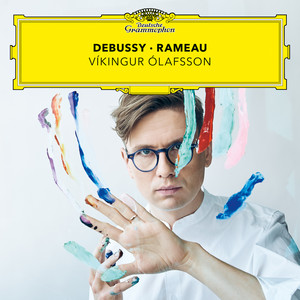 | Les sauvages | Jean-Philippe Rameau, Víkingur Ólafsson | G Minor | 3 | 6A | 118 BPM | |
 | Satie: Gnossiennes: IV. Lent | Erik Satie, Hélène Grimaud | C Major | 0 | 8B | 96 BPM | |
 | Adagio in F, H.XVII No. 9 | Joseph Haydn, Alfred Brendel | F Major | 0 | 7B | 71 BPM | |
 | Gavotte (Paride ed Elena) | Christoph Willibald Gluck, Johannes Brahms, Matti Raekallio | A Major | 0 | 11B | 98 BPM | |
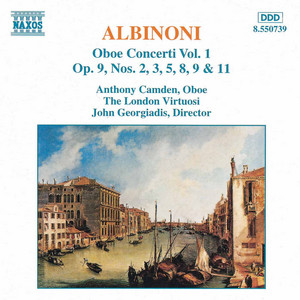 | Oboe Concerto in D Minor, Op. 9, No. 2: I. Allegro e non presto | Tomaso Albinoni, Anthony Camden, London Virtuosi, John Georgiadis | D Minor | 2 | 7A | 145 BPM | |
 | Viola da gamba Sonata in D Major, Wq. 137 (Arr. for Cello & Piano): I. Adagio, ma non tanto | Carl Philipp Emanuel Bach, Daniel Müller-Schott, Angela Hewitt | D Major | 0 | 10B | 100 BPM | |
 | Flute Sonata in E-Flat Major, BWV 1031: II. Siciliano (Arr. Kempff for Piano) | Johann Sebastian Bach, Wilhelm Kempff | G Minor | 0 | 6A | 106 BPM | |
 | Keyboard Sonata in E-Flat Major, F. 5: II. Largo | Wilhelm Friedemann Bach, Anthony Spiri | C Minor | 0 | 5A | 113 BPM | |
 | Couperin, F: Second Livre de pièces de clavecin, Sixième Ordre: Les baricades mïstérieuses | François Couperin, Jean Rondeau | A Major | 1 | 11B | 145 BPM | |
 | Déraisonnable beauté: Chaconne | Rinaldo Alessandrini | B Major | 1 | 1B | 124 BPM | |
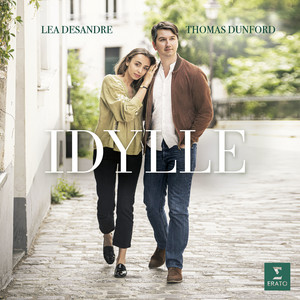 | Satie: 6 Gnossiennes: No. 1, Lent | Erik Satie, Thomas Dunford | D Minor | 3 | 7A | 107 BPM | |
 | Sonata in D Minor, K. 9 | Domenico Scarlatti, Ivo Pogorelich | D Minor | 0 | 7A | 94 BPM | |
 | Suite Les Boréades, RCT 31: 9. Entrée d' Albaris, Polimnie, les Muses, Zéphirs, Saisons, Les Heures et Les Arts | Jean-Philippe Rameau, Orchestra Of The 18th Century, Frans Brüggen | D♭ Major | 2 | 3B | 85 BPM | |
 | Gottes Zeit ist die allerbeste Zeit, BWV 106 "Actus tragicus": I. Sonatina | Johann Sebastian Bach, Márta Kurtág, György Kurtág | F Major | 3 | 7B | 102 BPM | |
 | Oboe Concerto in D Minor S.Z799: 2. Adagio (Arr. Harle) | Alessandro Marcello, Jess Gillam, BBC Concert Orchestra, Richard Balcombe | C Minor | 1 | 5A | 71 BPM | |
 | Galuppi: Concerto a quattro No. 1 in G Minor: I. Grave e adagio | Baldassare Galuppi, Quartetto Italiano | B♭ Major | 2 | 6B | 92 BPM | |
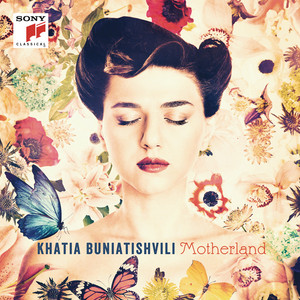 | Slavonic Dance for Four Hands in E Minor, Op. 72/2: Dumka (Allegretto grazioso) | Antonín Dvořák, Khatia Buniatishvili | C Major | 0 | 8B | 77 BPM | |
 | 3 Romances, Op. 11: I. Andante | Clara Schumann, Yoshiko Iwai | C Major | 0 | 8B | 66 BPM | |
 | Orfeo ed Euridice, Wq. 30, Act II: Danse des champs-elysées "Mélodie" (Arr. for Piano by Ignaz Friedman) | Christoph Willibald Gluck, Joseph Banowetz | A Major | 0 | 11B | 72 BPM |
- ISRC
- DEE860600635
- Label
- L-M Records/RCA Records