- BPM
- 117
- Key
- D Major
- Camelot
- 10B
Vier letzte Lieder: 4. Im Abendrot by Richard Strauss, Renée Fleming, Munich Philharmonic Orchestra, Christian Thielemann Song Details
"Vier letzte Lieder: 4. Im Abendrot" by Richard Strauss, Renée Fleming, Munich Philharmonic Orchestra, Christian Thielemann had its release date on January 1, 2008. Since This song is still less than 10 minute long, it is still considered a pretty long duration song compared to the average song length. This song does not appear to be explicit due to the lack of the "E" tag. There are a total of 12 in the song's album "Strauss, R.: Vier Letzte Lieder". In this album, this song's track order is #4. Furthermore, we believe that the track originated from United Kingdom. In terms of popularity, Vier letzte Lieder: 4. Im Abendrot is currently not that popular. In our opinion, the overall tone is not very danceable and projects negative sounds, such as being sad, depressed, or angry.
BPM and Tempo
With Vier letzte Lieder: 4. Im Abendrot by Richard Strauss, Renée Fleming, Munich Philharmonic Orchestra, Christian Thielemann having a BPM of 117 with a half-time of 58 BPM and a double-time of 234 BPM, we would consider this track to have a Moderato (at a moderate speed) tempo marking. Because of this, we believe that the song has an overall moderate tempo. Looking at the BPM of this song, this song might go great with walking. The time signature for this track is 4/4.
Music Key
This song has a musical key of D Major. Or for those who are familiar with the camelot wheel, this song has a camelot key of 10B. So, the perfect camelot match for 10B would be either 10B or 11A. While, 11B can give you a low energy boost. For moderate energy boost, you would use 7B and a high energy boost can either be 12B or 5B. Though, if you want a low energy drop, you should looking for songs with either a camelot key of 10A or 9B will give you a low energy drop, 1B would be a moderate one, and 8B or 3B would be a high energy drop. Lastly, 7A allows you to change the mood.
Want to find the BPM and music key for other songs? Check out our BPM and Key Finder page!
- Popularity
- 18%
- Loudness
- -19.297 dB
- Acousticness
- 93%
- Danceability
- 22%
- Energy
- 11%
- Instrumentalness
- 92%
- Liveness
- 28%
- Loudness
- 68%
- Speechiness
- 4%
- Valence
- 7%
Recommendations
| Track | Artist | Key | Energy | Camelot | BPM | ||
|---|---|---|---|---|---|---|---|
![Parsifal, Act I: Wein und Brot des letzten Mahles – [Auszug der Ritter] – Was stehst du noch da? by Richard Wagner, Hanna Schwarz, Kurt Moll, Berliner Philharmoniker, Herbert von Karajan](https://i.scdn.co/image/ab67616d00001e0250126e496db622e63ee4bf11) | Parsifal, Act I: Wein und Brot des letzten Mahles – [Auszug der Ritter] – Was stehst du noch da? | Richard Wagner, Hanna Schwarz, Kurt Moll, Berliner Philharmoniker, Herbert von Karajan | B♭ Major | 0 | 6B | 83 BPM | |
 | Ariadne auf Naxos, Op. 60, TrV 228: "Es gibt ein Reich" | Richard Strauss, Lise Davidsen, Philharmonia Orchestra, Esa-Pekka Salonen | B♭ Major | 1 | 6B | 77 BPM | |
 | Les pêcheurs de perles, WD 13 / Act I: "C'était le soir" ... "Au fond du temple saint" | Georges Bizet, Rolando Villazón, Ildar Abdrazakov, Orchestre Métropolitain, Yannick Nézet-Séguin | E Major | 0 | 12B | 79 BPM | |
 | Stabat Mater, P. 77: 1. Stabat Mater dolorosa | Giovanni Battista Pergolesi, June Anderson, Cecilia Bartoli, Sinfonietta de Montréal, Charles Dutoit | C Minor | 1 | 5A | 82 BPM | |
 | Lakmé / Act 2: "Où va la jeune Indoue" (Bell song) | Léo Delibes, Aida Garifullina, Vienna Radio Symphony Orchestra, Cornelius Meister | D Minor | 1 | 7A | 168 BPM | |
 | Tosca, Act III: Mario Cavaradossi? A voi – Introduzione all'aria | Giacomo Puccini, John Tomlinson, Luciano Pavarotti, National Philharmonic Orchestra, Nicola Rescigno | E♭ Minor | 3 | 2A | 85 BPM | |
 | Nocturnes, L. 91: 3. Sirènes | Claude Debussy, Berliner Philharmoniker, Claudio Abbado, Rundfunkchor Berlin, Robin Gritton | F♯ Major | 1 | 2B | 93 BPM | |
 | Die Frau ohne Schatten, Op. 65, TrV 234, Act I: Licht überm See (Live) | Richard Strauss, Frankfurter Opern- und Museumsorchester, Tanja Ariane Baumgartner, Dietrich Volle, Sebastian Weigle | B Major | 2 | 1B | 132 BPM | |
 | Peer Gynt, Op. 23 - Incidental Music: No. 19 Solveig's Song | Edvard Grieg, Barbara Bonney, Gothenburg Symphony Orchestra, Neeme Järvi | B♭ Major | 1 | 6B | 130 BPM | |
 | Handel: Serse, HWV 40, Act 1: Arioso. "Ombra mai fù" (Serse) | George Frideric Handel, Les Arts Florissants, William Christie, Anne Sofie von Otter | E Major | 1 | 12B | 89 BPM | |
 | Vivaldi: Tieteberga, RV 737: "Sento in seno ch'in pioggia di lagrime" (Lotario) | Antonio Vivaldi, Philippe Jaroussky, Ensemble Matheus, Jean-Christophe Spinosi | B♭ Minor | 0 | 3A | 119 BPM | |
 | Bizet: Les pêcheurs de perles, WD 13, Act 1: "Je crois entendre encore" (Nadir) | Georges Bizet, Pierre Dervaux, Nicolai Gedda, Orchestre du Theatre National de IOpera-Comique | A Minor | 1 | 8A | 88 BPM | |
 | Stabat Mater: 6. Vidit suum | Giovanni Battista Pergolesi, Margaret Marshall, London Symphony Orchestra, Claudio Abbado, Leslie Pearson | F Minor | 0 | 4A | 138 BPM | |
 | Elektra: Xii. Was sagen sie ihr denn? | Hugo von Hofmannsthal, Richard Strauss, Laila Andersson-palme, Royal Swedish Opera Orchestra, Siegfried Köhler | B Major | 3 | 1B | 136 BPM | |
 | Stabat Mater, P. 77: X. Fac ut portem | Giovanni Battista Pergolesi, Lucia Valentini Terrani, London Symphony Orchestra, Claudio Abbado, Leslie Pearson | G Minor | 0 | 6A | 66 BPM | |
 | L'incoronazione di Poppea / Act 3: Pur ti miro | Claudio Monteverdi, Danielle de Niese, Andreas Scholl, The English Concert, Harry Bicket | A Major | 1 | 11B | 100 BPM | |
 | L'Allegro, Il Penseroso, ed il Moderato, HWV 55, Part III: "As steals the morn" | George Frideric Handel, Lucy Crowe, Mark Padmore, The English Concert, Andrew Manze | A Major | 1 | 11B | 84 BPM | |
 | Acte III - Tableau IV : Salve Regina | Francis Poulenc, Jean-Pierre Marty | G Major | 2 | 9B | 69 BPM | |
 | Mussorgsky / Orch. Ravel: Pictures at an Exhibition: XI. The Knight's Gate in the Old Capital of Kiev | Modest Mussorgsky, Sir Simon Rattle, Berliner Philharmoniker | E♭ Major | 2 | 5B | 85 BPM | |
 | Lohengrin, WWV. 75: Prelude to Act I | Richard Wagner, Philadelphia Orchestra, Christian Thielemann | B Major | 1 | 1B | 72 BPM | |
 | Monteverdi: L'incoronazione di Poppea, SV 308, Act 3: "Pur ti miro" (Nerone, Poppea) | Claudio Monteverdi, Philippe Jaroussky, L'Arpeggiata, Núria Rial, Christina Pluhar | G Major | 1 | 9B | 77 BPM | |
 | Poulenc: Dialogues des Carmélites, FP 159, Act 3: "Salve Regina" (La foule, Les carmélites, La nouvelle prieure, Constance, Mère Jeanne, Mathilde, Blanche) | Francis Poulenc, José van Dam, Kent Nagano, Orchestre De L'Opéra National De Lyon | G Minor | 1 | 6A | 89 BPM | |
 | Symphony No. 2 in C Minor "Resurrection": IV. Urlicht. Sehr feierlich, aber schlicht | Gustav Mahler, Lorin Maazel, Wiener Philharmoniker | B♭ Major | 2 | 6B | 130 BPM | |
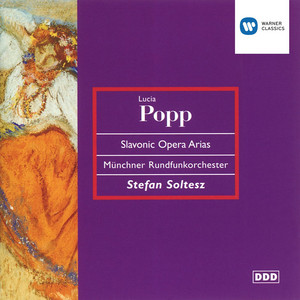 | Dvořák: Rusalka, Op. 114, B. 203, Act 1: "Mesicku na nebi hlubokém" (Rusalka) | Antonín Dvořák, Lucia Popp, Stefan Soltesz, Munich Radio Orchestra | F♯ Major | 1 | 2B | 96 BPM | |
 | La Wally / Act 1: "Ebben? Ne andrò lontana" | Alfredo Catalani, Renata Tebaldi, Monte-Carlo Philharmonic Orchestra, Fausto Cleva | E Major | 1 | 12B | 66 BPM |
- ISRC
- GBBBA0800764
- Label
- L-M Records/RCA Records