- BPM
- 126
- Key
- C Major
- Camelot
- 8B
5 Pieces for String Quartet: No. 4, Alla Tango Milonga by Erwin Schulhoff, Prezioso String Quartet Song Details
"5 Pieces for String Quartet: No. 4, Alla Tango Milonga" by Erwin Schulhoff, Prezioso String Quartet had its release date on July 3, 2012. With this song being around four minutes long, at 4:00, the duration of this song is pretty average compared to other songs. This track is safe for children and doesn't appear to contain any foul language, since the "Explicit" tag was not present in this track. There are a total of 16 in the song's album "Prezioso String Quartet". In this album, this song's track order is #4. Furthermore, we believe that the track originated from Estonia. Based on our statistics, 5 Pieces for String Quartet: No. 4, Alla Tango Milonga's popularity is unknown right now. Although the tone can be danceable to some, this track does projects more of a negative sound rather than a postive one.
BPM and Tempo
With 5 Pieces for String Quartet: No. 4, Alla Tango Milonga by Erwin Schulhoff, Prezioso String Quartet having a BPM of 126 with a half-time of 63 BPM and a double-time of 252 BPM, we would consider this track to have a Allegro (fast, quick, and bright) tempo marking. Because of this, we believe that the song has an overall fast tempo. Looking at the BPM of this song, this song might go great with walking. The time signature for this track is 4/4.
Music Key
C Major is the music key of this track. Or for those who are familiar with the camelot wheel, this song has a camelot key of 8B. So, the perfect camelot match for 8B would be either 8B or 9A. While, 9B can give you a low energy boost. For moderate energy boost, you would use 5B and a high energy boost can either be 10B or 3B. Though, if you want a low energy drop, you should looking for songs with either a camelot key of 8A or 7B will give you a low energy drop, 11B would be a moderate one, and 6B or 1B would be a high energy drop. Lastly, 5A allows you to change the mood.
Want to find the BPM and music key for other songs? Check out our BPM and Key Finder page!
- Popularity
- 0%
- Loudness
- -11.86 dB
- Acousticness
- 96%
- Danceability
- 41%
- Energy
- 50%
- Instrumentalness
- 92%
- Liveness
- 8%
- Loudness
- 80%
- Speechiness
- 4%
- Valence
- 18%
Recommendations
| Track | Artist | Key | Energy | Camelot | BPM | ||
|---|---|---|---|---|---|---|---|
 | Romanze F Minor: Romanze F Minor | Sergei Rachmaninoff, Reiner Ginzel, Gitti Pirner | F Minor | 0 | 4A | 166 BPM | |
 | Préludes: III. Le nombre léger | Olivier Messiaen, Jan Lisiecki | E Major | 2 | 12B | 116 BPM | |
 | Reflection No. 2 | Camille Thomas, Julien Brocal | A♭ Major | 0 | 4B | 96 BPM | |
 | Piano Trio in G Minor, Op. 17: II. Scherzo. Tempo di Menuetto | Clara Schumann, Ragna Schirmer, Iason Keramidis, Benedict Kloeckner | E♭ Major | 0 | 5B | 83 BPM | |
 | Whispers of Peace | Rylandiaa | G Major | 2 | 9B | 136 BPM | |
 | Shostakovich: Piano Quintet in G Minor, Op. 57: II. Fugue. Adagio | Dmitri Shostakovich, Borodin Quartet, Elisabeth Leonskaja | C Minor | 0 | 5A | 90 BPM | |
 | Reflection, Op. 31a | Oliver Knussen, Tamsin Waley-Cohen, Huw Watkins | A♭ Major | 0 | 4B | 96 BPM | |
 | Die Dreigroschenoper: Overture (Arr. for Double Bass, Piano & Accordion by Murray Grainger, Marianne Schofield & William Vann) | Kurt Weill, William Vann, Murray Grainger, Marianne Schofield | A♭ Major | 0 | 4B | 96 BPM | |
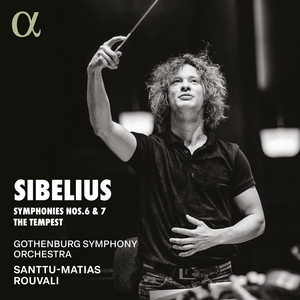 | Symphony No. 6 in D Major, Op. 104: IV. Allegro molto - Allegro assai - Doppio più lento | Jean Sibelius, Santtu-Matias Rouvali, Gothenburg Symphony Orchestra | G Major | 3 | 9B | 110 BPM | |
 | Kodály: Duo for Violin and Cello, Op. 7: II. Adagio (Live at Saratoga Performing Arts Centre, 1998) | Zoltán Kodály, Truls Mørk, Chantal Juillet | A♭ Major | 0 | 4B | 96 BPM | |
 | Landschaften, Op. 26: No. 2, Alle Frauen weinen. Sehr ruhig | Erwin Schulhoff, Doris Soffel, Deutsches Symphonie-Orchester Berlin, Gerd Albrecht | F Major | 3 | 7B | 158 BPM | |
 | Horn Trio in E-Flat Major, Op. 40: II. Scherzo (Allegro - Molto meno Allegro) | Johannes Brahms, Isabelle Faust, Alexander Melnikov, Teunis van der Zwart | A Major | 0 | 11B | 88 BPM | |
 | Barcarolle No. 12, Op. 106 bis | Gabriel Fauré, Louis Lortie | E♭ Major | 0 | 5B | 107 BPM | |
 | Trittico Botticelliano: No. 3, La nascita di Venere | Ottorino Respighi, Bamberg Symphony, Riccardo Frizza | A♭ Major | 0 | 4B | 96 BPM | |
 | Clarinet Quintet in B Minor, Op. 115: IV. Con moto | Johannes Brahms, David Shifrin, Emerson String Quartet | B Minor | 1 | 10A | 168 BPM | |
 | Lyric Suite: V. Presto delirando - Tenebroso | Alban Berg, Leonkoro Quartet | A♭ Major | 0 | 4B | 96 BPM | |
 | Lutosławski: Concerto for Orchestra: I. Intrada. Allegro maestoso | Witold Lutosławski, Daniel Barenboim, Chicago Symphony Orchestra | F♯ Minor | 1 | 11A | 128 BPM | |
 | Piano Quartet No. 1 in C Minor, Op. 15: IV. Finale (Allegro molto) | Gabriel Fauré, Trio Wanderer, Antoine Tamestit | B♭ Major | 2 | 6B | 104 BPM | |
 | Schoenberg: Suite in the Old Style for String Orchestra: II. Adagio | Arnold Schoenberg, Mario Venzago, Deutsche Kammerphilharmonie Bremen | G Major | 1 | 9B | 101 BPM | |
 | Piano Concerto No. 2, Sz. 95: I. Allegro | Béla Bartók, Géza Anda, Deutsches Symphonie-Orchester Berlin, Ferenc Fricsay | C Major | 5 | 8B | 98 BPM | |
 | Concerto for Violin & Orchestra in D Major, Op. 35: II. Romance. Andante | Erich Wolfgang Korngold, Tassilo Probst, Thessaloniki State Symphony Orchestra, Daniel Geiss | A♭ Major | 0 | 4B | 96 BPM | |
 | Sonata Santera: III. Bembe | Iván Enrique Rodríguez, Han Chen, Eric Schultz | A Minor | 1 | 8A | 88 BPM | |
 | Quatuor pour la fin du Temps: V. Louange à l’Éternité de Jésus | Olivier Messiaen, Louise Bessette, Cameron Crozman | A♭ Major | 0 | 4B | 96 BPM | |
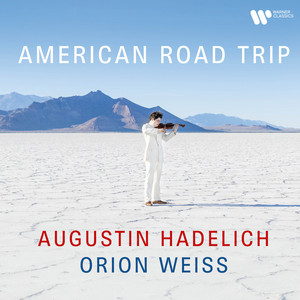 | Hartke: Netsuke "6 Movements for Violin and Piano": No. 6, Jewel of Widsom with Mountain Pavilions | Stephen Hartke, Augustin Hadelich, Orion Weiss | D Major | 2 | 10B | 104 BPM | |
 | String Quartet No. 3 in D Major, Op. 34: II. Scherzo. Allegro molto | Erich Wolfgang Korngold, Calidore String Quartet | A♭ Major | 0 | 4B | 96 BPM |
- ISRC
- EEHA11259123
- Label
- L-M Records/RCA Records