- BPM
- 110
- Key
- B♭ Minor
- Camelot
- 3A
September Song by Kurt Weill, Iiro Rantala Song Details
Kurt Weill, Iiro Rantala's 'September Song' had a release date set for October 26, 2012. With this song being around four minutes long, at 3:49, the duration of this song is pretty average compared to other songs. This track is safe for children and doesn't appear to contain any foul language, since the "Explicit" tag was not present in this track. The track order of this song in Iiro Rantala's "My History of Jazz" album is number 10 out of 17. On top of that, Germany appears to be the country where this track was created. In terms of popularity, September Song is currently not that popular. Although the overall vibe is very danceable, it does project more negative sounds.
BPM and Tempo
We consider the tempo marking of September Song by Kurt Weill, Iiro Rantala to be Moderato (at a moderate speed) because the track has a tempo of 110 BPM, a half-time of 55BPM, and a double-time of 220 BPM. Based on that, the speed of the song's tempo is moderate. The time signature for this track is 4/4.
Music Key
This song is in the music key of B♭ Minor. Because this track belongs in the B♭ Minor key, the camelot key is 3A. So, the perfect camelot match for 3A would be either 3A or 2B. While, a low energy boost can consist of either 3B or 4A. For moderate energy boost, you would use 12A and a high energy boost can either be 5A or 10A. However, if you are looking for a low energy drop, finding a song with a camelot key of 2A would be a great choice. Where 6A would give you a moderate drop, and 1A or 8A would be a high energy drop. Lastly, 6B allows you to change the mood.
Want to find the BPM and music key for other songs? Check out our BPM and Key Finder page!
- Popularity
- 12%
- Loudness
- -18.642 dB
- Acousticness
- 98%
- Danceability
- 68%
- Energy
- 22%
- Instrumentalness
- 93%
- Liveness
- 10%
- Loudness
- 69%
- Speechiness
- 3%
- Valence
- 39%
Recommendations
| Track | Artist | Key | Energy | Camelot | BPM | ||
|---|---|---|---|---|---|---|---|
 | Auch kleine Dinge können uns entzücken | Hugo Wolf, Mojca Erdmann | A Major | 0 | 11B | 68 BPM | |
 | Pelléas et Mélisande, Op. 80 (Arr. C. Koechlin): V. Sicilienne. Allegretto molto moderato | Gabriel Fauré, Radio Sinfonieorchester Stuttgart des SWR, Heinz Holliger | G Minor | 0 | 6A | 91 BPM | |
 | Mahler: Kindertotenlieder: No. 3, Wenn dein Mütterlein tritt zur Tür herein | Gustav Mahler, Kathleen Ferrier, Wiener Philharmoniker, Bruno Walter | D Major | 1 | 10B | 107 BPM | |
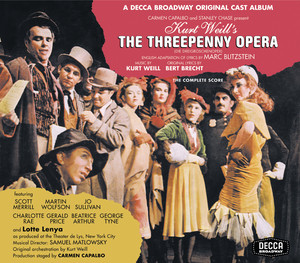 | Instead-Of-Song - The Threepenny Opera/1954 Original Broadway Cast/Remastered | Bertolt Brecht, Marc Blitzstein, Kurt Weill, Martin Wolfson, Charlotte Rae | B♭ Major | 1 | 6B | 149 BPM | |
 | Pêcheur de lune | Manuel Rosenthal, Julie Roset, Susan Manoff | B Minor | 1 | 10A | 80 BPM | |
 | Mass (A Theatre Piece For Singers, Players And Dancers): Devotions before Mass - Hymn and Psalm: "A Simple Song" - Excerpt | Leonard Bernstein, Alan Titus, Norman Scribner Choir, The Berkshire Boy Choir | D Minor | 0 | 7A | 80 BPM | |
 | Mozart: Die Zauberflöte, K. 620: "In diesen heil'gen Hallen" (Sarastro) | Wolfgang Amadeus Mozart, Kim Borg, Horst Stein, Deutsches Symphonie-Orchester Berlin | E Major | 1 | 12B | 78 BPM | |
 | The Little Rose, Oh How Should It Be Listed? | Stefanie Schlesinger, Wolfgang Lackerschmid, Mark Soskin, Jay Anderson, Adam Nussbaum, Bertolt Brecht | A♭ Major | 1 | 4B | 100 BPM | |
 | Gretchen am Spinnrade, D.118 | Franz Schubert, Jessye Norman, Phillip Moll | B♭ Major | 0 | 6B | 108 BPM | |
 | Glückwunsch eines Enfant terrible | Edmund Nick, Constance Heller, Gerold Huber | F Minor | 1 | 4A | 82 BPM | |
 | Auf dem Wasser zu singen, Op. 72, D. 774 | Franz Schubert, Dietrich Fischer-Dieskau, Gerald Moore | E♭ Major | 1 | 5B | 102 BPM | |
 | Overture: Overture | Grażyna Bacewicz, BBC Symphony Orchestra, Sakari Oramo | B Major | 0 | 1B | 112 BPM | |
 | Transfigured Night, Op. 4 (Version for String Orchestra): Pesante - Grave | Arnold Schoenberg, Berliner Philharmoniker, Kirill Petrenko | E Major | 0 | 12B | 73 BPM | |
 | Waltz (Face of Another) | Toru Takemitsu, Yuri Bashmet | F Minor | 1 | 4A | 71 BPM | |
 | Enescu: String Octet in C Major, Op. 7: III. Lentement | George Enescu, Quatuor Ébène, Belcea Quartet | B Minor | 1 | 10A | 80 BPM | |
 | Adams: Nixon in China: Act I, Scene 1 - Landing of the Spirit of '76 | John Adams, Edo de Waart, Orchestra of St. Luke's | F Major | 4 | 7B | 106 BPM | |
 | Surabaya-Johnny | Lotte Lenya | F Minor | 2 | 4A | 124 BPM | |
 | What Keeps Mankind Alive? from The Threepenny Opera | Kurt Weill, William S. Burroughs | B♭ Major | 3 | 6B | 68 BPM | |
 | Nocturne, Op. 9,2 | Frédéric Chopin, Joanna Madroszkiewicz, Paul Gulda | E♭ Major | 0 | 5B | 115 BPM | |
 | Carmen Suite: VIII. Bolero (after G. Bizet): Introduction | Rodion Shchedrin, Ukrainian State Symphony Orchestra, Theodore Kuchar | D♭ Major | 0 | 3B | 99 BPM | |
 | Sinfonietta, JW VI/18: III. Moderato | Leoš Janáček, Czech Philharmonic, Karel Ančerl | A♭ Minor | 2 | 1A | 138 BPM | |
 | Ich weiß nicht, zu wem ich gehöre | Marlene Dietrich | C Major | 7 | 8B | 111 BPM | |
 | Anstatt-Dass-Song (1.Akt) (Polly Peachum ist nicht | Bertolt Brecht, Kurt Weill | B♭ Major | 2 | 6B | 108 BPM | |
 | Amour et printemps | Émile Waldteufel, Ensemble FA | E♭ Major | 0 | 5B | 108 BPM | |
 | Die Dreigroschenoper: 3. Dreigroschenfinale | Kurt Weill, Rolf Boysen, Wolfgang Reichmann, René Kollo, Ute Lemper, Helga Dernesch, Mario Adorf, Rias-Sinfonietta Berlin, John Mauceri | F Major | 1 | 7B | 81 BPM |
- ISRC
- DEA891200969
- Label
- L-M Records/RCA Records