- BPM
- 96
- Key
- G Major
- Camelot
- 9B
Messiah, HWV 56: For unto Us a Child Is Born by George Frideric Handel, Eugene Ormandy, Philadelphia Orchestra Song Details
George Frideric Handel, Eugene Ormandy, Philadelphia Orchestra's 'Messiah, HWV 56: For unto Us a Child Is Born' had a release date set for 1959. With this song being around four minutes long, at 4:14, the duration of this song is pretty average compared to other songs. This track is safe for children and doesn't appear to contain any foul language, since the "Explicit" tag was not present in this track. The track order of this song in George Frideric Handel, Mormon Tabernacle Choir, Philadelphia Orchestra, Eugene Ormandy, Richard P. Condie's "Handel: Messiah, HWV 56" album is number 10 out of 32. On top of that, United States appears to be the country where this track was created. In terms of popularity, Messiah, HWV 56: For unto Us a Child Is Born is currently not that popular. Although the tone can be danceable to some, this track does projects more of a negative sound rather than a postive one.
BPM and Tempo
We consider the tempo marking of Messiah, HWV 56: For unto Us a Child Is Born by George Frideric Handel, Eugene Ormandy, Philadelphia Orchestra to be Andante (at a walking pace) because the track has a tempo of 96 BPM, a half-time of 48BPM, and a double-time of 192 BPM. Based on that, the speed of the song's tempo is slow. The time signature for this track is 4/4.
Music Key
This song is in the music key of G Major. This also means that this song has a camelot key of 9B. So, the perfect camelot match for 9B would be either 9B or 10A. While, 10B can give you a low energy boost. For moderate energy boost, you would use 6B and a high energy boost can either be 11B or 4B. Though, if you want a low energy drop, you should looking for songs with either a camelot key of 9A or 8B will give you a low energy drop, 12B would be a moderate one, and 7B or 2B would be a high energy drop. Lastly, 6A allows you to change the mood.
Want to find the BPM and music key for other songs? Check out our BPM and Key Finder page!
- Popularity
- 14%
- Loudness
- -21.009 dB
- Acousticness
- 97%
- Danceability
- 42%
- Energy
- 14%
- Instrumentalness
- 1%
- Liveness
- 30%
- Loudness
- 65%
- Speechiness
- 3%
- Valence
- 33%
Recommendations
| Track | Artist | Key | Energy | Camelot | BPM | ||
|---|---|---|---|---|---|---|---|
 | Albinoni: Adagio in G Minor | Tomaso Albinoni, Sir Neville Marriner, Academy of St. Martin in the Fields | C Minor | 1 | 5A | 90 BPM | |
 | Capriol Suite: 5. Pied-en- l'air | Peter Warlock, Academy of St. Martin in the Fields, Nicholas Kraemer, Sir Neville Marriner | G Major | 1 | 9B | 113 BPM | |
 | Die schöne Müllerin, D. 795: No. 19, Der Müller und der Bach - Performed on Cello & Piano | Franz Schubert, Mischa Maisky, Daria Hovora | G Major | 0 | 9B | 96 BPM | |
 | Salut d'amour, Op. 12 (Arr. Cullen for Cello and Orchestra) | Edward Elgar, Julian Lloyd Webber, Royal Philharmonic Orchestra, James Judd | D Major | 1 | 10B | 80 BPM | |
 | Dido and Aeneas, Z. 626: Overture | Henry Purcell, Kym Amps, David van Asch, Anna Crookes, The Scholars Baroque Ensemble | B Minor | 2 | 10A | 91 BPM | |
 | Armide: Passacaille | Jean-Baptiste Lully, Véronique Gens/Les Talens Lyriques/Christophe Rousset, Christophe Rousset, Les Talens Lyriques | F Minor | 1 | 4A | 122 BPM | |
 | L'Allegro, Il Penseroso, ed il Moderato, HWV 55, Part III: "As steals the morn" | George Frideric Handel, Lucy Crowe, Mark Padmore, The English Concert, Andrew Manze | A Major | 1 | 11B | 84 BPM | |
 | Ständchen in D Minor (After Schubert), S. 560 | Franz Liszt, Lise de la Salle | D Major | 0 | 10B | 76 BPM | |
 | Clarinet Concerto in B-Flat Major: Andante sostenuto | Gaetano Donizetti, Camerata De Budapest, Laszlo Kovacs | B♭ Minor | 0 | 3A | 69 BPM | |
 | Le carnaval des animaux, R. 125: Le cygne | Camille Saint-Saëns, Mischa Maisky, Orpheus Chamber Orchestra | C Major | 0 | 8B | 83 BPM | |
 | Oboe Concerto in B-Flat Major, Wq. 164, H. 466: I. Allegretto | Carl Philipp Emanuel Bach, Jozsef Kiss, Budapest Ferenc Erkel Chamber Orchestra | B♭ Major | 1 | 6B | 131 BPM | |
 | Suite in D Minor: 2. Sarabande | Louis Couperin, Christopher Hogwood | D♭ Minor | 1 | 12A | 140 BPM | |
 | Stabat Mater, P. 77: II. Soprano. Cuius animam gementem | Giovanni Battista Pergolesi, Emma Kirkby, Academy of Ancient Music, Christopher Hogwood | G Major | 1 | 9B | 79 BPM | |
 | 6 Sonates en symphonies, Op. 3, Sonata No. 4: II. Aria. Andante gratioso | Jean-Joseph Cassanéa De Mondonville, Les Musiciens du Louvre, Marc Minkowski | B Minor | 0 | 10A | 102 BPM | |
 | Clarinet Concerto in A Major, K. 622: II. Adagio | Wolfgang Amadeus Mozart, Martin Fröst, Amsterdam Sinfonietta, Peter Oundjian | D Major | 0 | 10B | 94 BPM | |
 | Eternal Source of Light Divine (From "Ode for the Birthday of Queen Anne, HWV 74") | George Frideric Handel, Wynton Marsalis, Kathleen Battle, John Nelson, Anthony Newman, John Feeney, Daire Fitzgerald, Orchestra of St. Luke's | C Major | 1 | 8B | 65 BPM | |
 | Concerto For Oboe In D Minor - Presto | Tafelmusik Baroque Orchestra | D♭ Minor | 3 | 12A | 104 BPM | |
 | Oboe Concerto in C Major on Themes of Pergolesi: IV. Allegro | Anthony Camden, City of London Sinfonia, Nicholas Ward | G Major | 1 | 9B | 124 BPM | |
 | Pièces de viole, Livre 3 - Suite No. 7 in G Major: No. 92. Prélude. Lentement | Marin Marais, Mieneke van der Velden, Glen Wilson | E♭ Minor | 0 | 2A | 120 BPM | |
 | Sonata in D Minor, K. 32 | Domenico Scarlatti, Lucas Debargue | D Minor | 0 | 7A | 130 BPM | |
 | Adagio in E Major, K. 261 | Wolfgang Amadeus Mozart, Pinchas Zukerman, Saint Paul Chamber Orchestra | E Major | 1 | 12B | 100 BPM | |
 | Messiah, HWV 56, Pt. I: Pastoral Symphony, "Pifa" (Arr. L. Stokowski) | George Frideric Handel, Bournemouth Symphony Orchestra, José Serebrier | C Major | 0 | 8B | 84 BPM | |
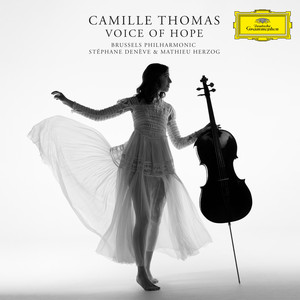 | Dido and Aeneas, Z. 626 / Act III: "When I Am Laid in Earth" Dido's Lamento (Arr. by Mathieu Herzog for Cello and Strings) | Henry Purcell, Camille Thomas, Brussels Philharmonic, Mathieu Herzog | G Minor | 1 | 6A | 77 BPM | |
 | Welcome to all the Pleasures, Z. 339: I. Overture | Henry Purcell, The Deller Consort, Alfred Deller | E Minor | 1 | 9A | 82 BPM | |
 | Water Music Suite No. 3 in G Major, HWV 350: Rigaudon I & II | George Frideric Handel, Academy of St. Martin in the Fields, Sir Neville Marriner | G Major | 1 | 9B | 98 BPM |
- ISRC
- USSM10205219
- Label
- L-M Records/RCA Records