- BPM
- 101
- Key
- G Major
- Camelot
- 9B
Strauss, R: Dance Suite from Keyboard Pieces by François Couperin: I. Einzug und feierlicher Reigen. Pavane by Richard Strauss, Rudolf Kempe, Staatskapelle Dresden Song Details
Richard Strauss, Rudolf Kempe, Staatskapelle Dresden's 'Strauss, R: Dance Suite from Keyboard Pieces by François Couperin: I. Einzug und feierlicher Reigen. Pavane' had a release date set for 2013. With this song being around four minutes long, at 3:34, the duration of this song is pretty average compared to other songs. This track is safe for children and doesn't appear to contain any foul language, since the "Explicit" tag was not present in this track. There are a total of 103 in the song's album "Strauss, Richard: Complete Orchestral Works". In this album, this song's track order is #56. Furthermore, we believe that the track originated from United Kingdom. In terms of popularity, Strauss, R: Dance Suite from Keyboard Pieces by François Couperin: I. Einzug und feierlicher Reigen. Pavane is currently unknown. In our opinion, the overall tone is not very danceable and projects negative sounds, such as being sad, depressed, or angry.
BPM and Tempo
With Strauss, R: Dance Suite from Keyboard Pieces by François Couperin: I. Einzug und feierlicher Reigen. Pavane by Richard Strauss, Rudolf Kempe, Staatskapelle Dresden having a BPM of 101 with a half-time of 50 BPM and a double-time of 202 BPM, we would consider this track to have a Andante (at a walking pace) tempo marking. Because of this, we believe that the song has an overall slow tempo. The time signature for this track is 4/4.
Music Key
This song has a musical key of G Major. Or for those who are familiar with the camelot wheel, this song has a camelot key of 9B. So, the perfect camelot match for 9B would be either 9B or 10A. While, 10B can give you a low energy boost. For moderate energy boost, you would use 6B and a high energy boost can either be 11B or 4B. Though, if you want a low energy drop, you should looking for songs with either a camelot key of 9A or 8B will give you a low energy drop, 12B would be a moderate one, and 7B or 2B would be a high energy drop. Lastly, 6A allows you to change the mood.
Want to find the BPM and music key for other songs? Check out our BPM and Key Finder page!
- Popularity
- 0%
- Loudness
- -18.334 dB
- Acousticness
- 94%
- Danceability
- 24%
- Energy
- 15%
- Instrumentalness
- 91%
- Liveness
- 9%
- Loudness
- 69%
- Speechiness
- 3%
- Valence
- 29%
Recommendations
| Track | Artist | Key | Energy | Camelot | BPM | ||
|---|---|---|---|---|---|---|---|
 | Prokofiev: Suite No. 2 from Romeo and Juliet, Op. 64ter: I. The Montagues and Capulets (Excerpt) | Sergei Prokofiev, Philadelphia Orchestra, Riccardo Muti | A Minor | 3 | 8A | 108 BPM | |
 | The Tempest Suite No. 1, Op. 109, No. 2: I. The Oak Tree | Jean Sibelius, Lahti Symphony Orchestra, Okko Kamu | B♭ Major | 0 | 6B | 86 BPM | |
 | The Legend, Op. 17 | Henryk Wieniawski, Filharmonie Brno, Petr Altrichter, Jan Stanovsky | G Minor | 1 | 6A | 112 BPM | |
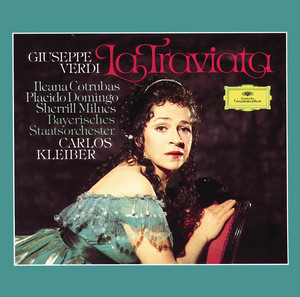 | La Traviata / Act 1: Prelude | Giuseppe Verdi, Bavarian State Orchestra, Carlos Kleiber | B Major | 0 | 1B | 131 BPM | |
 | Götterdämmerung, WWV 86D, Act I: Day Breaking 'Round Siegfried's and Brünnhilde's Passion | Richard Wagner, Berliner Philharmoniker, Lorin Maazel | B♭ Minor | 1 | 3A | 68 BPM | |
 | Handel / Orch. Hale: Keyboard Suite No. 4 in D Minor, HWV 437: III. Sarabande | George Frideric Handel, Alexander Briger, Academy of St. Martin in the Fields | D Minor | 0 | 7A | 116 BPM | |
 | Miške, MKČ 101: II. Exposition, Bridge Passage | Mikalojus Konstantinas Čiurlionis, Orchestre Philharmonique de Radio France, Mirga Gražinytė-Tyla | A Minor | 0 | 8A | 85 BPM | |
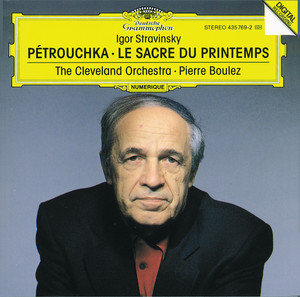 | Petrouchka / Tableau I: Fête populaire de la semaine grasse | Igor Stravinsky, Cleveland Orchestra, Pierre Boulez | D Minor | 2 | 7A | 116 BPM | |
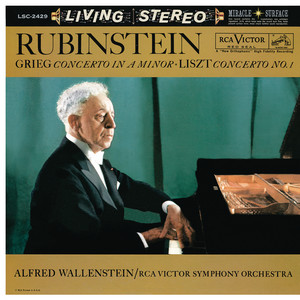 | Piano Concerto in A Minor, Op. 16: I. Allegro molto moderato - Remastered | Edvard Grieg, Arthur Rubinstein, RCA Victor Symphony Orchestra, Alfred Wallenstein | A Minor | 1 | 8A | 82 BPM | |
 | Orfeo ed Euridice, Wq. 30: Dance of the Blessed Spirits "Melody" (Arr. Sgambati for Piano) | Christoph Willibald Gluck, Yuja Wang | D Minor | 0 | 7A | 70 BPM | |
 | Symphony No. 3 in E Flat Major, Op. 97 "Rhenish": I. Lebhaft | Robert Schumann, Staatskapelle Berlin, Daniel Barenboim | E Minor | 2 | 9A | 90 BPM | |
 | Le carnaval des animaux, R. 125: Le cygne | Camille Saint-Saëns, Mischa Maisky, Orpheus Chamber Orchestra | C Major | 0 | 8B | 83 BPM | |
 | Vier letzte Lieder, TrV 296: 3. Beim Schlafengehen | Richard Strauss, Jessye Norman, Gewandhausorchester, Kurt Masur | D♭ Major | 1 | 3B | 82 BPM | |
 | Violin Concerto in D Minor, Op. 47: III. Allegro, ma non tanto | Jean Sibelius, Anne-Sophie Mutter, Staatskapelle Dresden, André Previn | D Major | 2 | 10B | 112 BPM | |
 | Piano Concerto No. 2 in F Major, Op. 102: II. Andante | Dmitri Shostakovich, Yuja Wang, Boston Symphony Orchestra, Andris Nelsons | F Major | 1 | 7B | 104 BPM | |
 | Peer Gynt Suite No. 1, Op. 46: II. The Death of Åse - Recorded 1982 | Edvard Grieg, Berliner Philharmoniker, Herbert von Karajan | G Major | 0 | 9B | 45 BPM | |
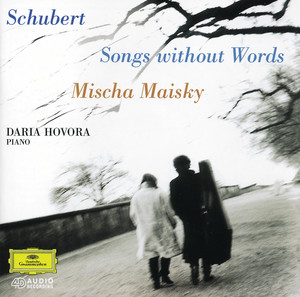 | Du bist die Ruh, D. 776 | Franz Schubert, Mischa Maisky, Daria Hovora | E♭ Major | 0 | 5B | 67 BPM | |
 | In the Steppes of Central Asia | Alexander Borodin, Royal Philharmonic Orchestra, Vladimir Ashkenazy | A Major | 0 | 11B | 69 BPM | |
 | Hungarian Dance No.1 in G minor - Orchestrated by Brahms: Allegro molto | Johannes Brahms, Chicago Symphony Orchestra, Daniel Barenboim | G Minor | 2 | 6A | 65 BPM | |
 | Symphony No. 9 in E Minor, Op. 95 "From the New World": II. Largo | Antonín Dvořák, New York Philharmonic, Alan Gilbert | D♭ Major | 0 | 3B | 87 BPM | |
 | Symphony No. 3 in F Major, Op. 90: IV. Allegro | Johannes Brahms, Berliner Philharmoniker, Claudio Abbado | C Major | 1 | 8B | 79 BPM | |
 | 4 Letzte Lieder, TrV 296: No. 4, Im Abendrot | Richard Strauss, Jessye Norman, Gewandhausorchester, Kurt Masur | B♭ Major | 1 | 6B | 78 BPM | |
 | 6 Impromptus, Op. 5: Impromptu V | Jean Sibelius, Leif Ove Andsnes | B Minor | 0 | 10A | 72 BPM | |
 | Dvořák: 8 Slavonic Dances, Op. 72, B. 145: No. 2 in E Minor | Antonín Dvořák, Sir Charles Mackerras, Philharmonia Orchestra | B♭ Major | 2 | 6B | 146 BPM | |
 | Danse macabre, Op. 40 | Camille Saint-Saëns, Royal Concertgebouw Orchestra, Charles Münch | D Major | 2 | 10B | 81 BPM |
- ISRC
- GBAYC1201699
- Label
- L-M Records/RCA Records