- BPM
- 174
- Key
- B♭ Major
- Camelot
- 6B
Hungarian Rhapsody No. 2 by Franz Liszt, William Rimmer, The Black Dyke Mills Band & James Watson, James Watson Song Details
"Hungarian Rhapsody No. 2" by Franz Liszt, William Rimmer, The Black Dyke Mills Band & James Watson, James Watson had its release date on 1994. Since This song is still less than 10 minute long, it is still considered a pretty long duration song compared to the average song length. This song does not appear to be explicit due to the lack of the "E" tag. There are a total of 10 in the song's album "Spectacular Classics". In this album, this song's track order is #5. Furthermore, we believe that the track originated from Switzerland. The popularity of Hungarian Rhapsody No. 2 is currently unknown right now. In our opinion, the overall tone is not very danceable and projects negative sounds, such as being sad, depressed, or angry.
BPM and Tempo
With Hungarian Rhapsody No. 2 by Franz Liszt, William Rimmer, The Black Dyke Mills Band & James Watson, James Watson having a BPM of 174 with a half-time of 87 BPM and a double-time of 348 BPM, we would consider this track to have a Vivace (lively and fast) tempo marking. Because of this, we believe that the song has an overall fast tempo. The time signature for this track is 4/4.
Music Key
B♭ Major is the music key of this track. Or for those who are familiar with the camelot wheel, this song has a camelot key of 6B. So, the perfect camelot match for 6B would be either 6B or 7A. While, 7B can give you a low energy boost. For moderate energy boost, you would use 3B and a high energy boost can either be 8B or 1B. Though, if you want a low energy drop, you should looking for songs with either a camelot key of 6A or 5B will give you a low energy drop, 9B would be a moderate one, and 4B or 11B would be a high energy drop. Lastly, 3A allows you to change the mood.
Want to find the BPM and music key for other songs? Check out our BPM and Key Finder page!
- Popularity
- 0%
- Loudness
- -21.694 dB
- Acousticness
- 98%
- Danceability
- 26%
- Energy
- 12%
- Instrumentalness
- 94%
- Liveness
- 9%
- Loudness
- 64%
- Speechiness
- 5%
- Valence
- 9%
Recommendations
| Track | Artist | Key | Energy | Camelot | BPM | ||
|---|---|---|---|---|---|---|---|
 | Pavane pour une infante défunte, M. 19 | Maurice Ravel, Seong-Jin Cho | E Minor | 0 | 9A | 66 BPM | |
 | Images I, CD 105: I. Reflets dans l'eau | Claude Debussy, Seong-Jin Cho | D♭ Major | 0 | 3B | 67 BPM | |
 | Debussy: 2 Arabesques, CD 74, L. 66: No. 1, Andantino con moto | Claude Debussy, Monique Haas | D♭ Minor | 0 | 12A | 81 BPM | |
 | Lyric Pieces, Book 1, Op. 12: Arietta | Edvard Grieg, Einar Steen-Nøkleberg | E♭ Major | 0 | 5B | 111 BPM | |
 | Liebesleid, Old Viennese Dance No. 2 | Fritz Kreisler, Joshua Bell, Paul Coker | A Major | 1 | 11B | 74 BPM | |
 | 4 Lieder, Op. 27, TrV 170: IV. Morgen! (Arr. for Cello and Piano by Julian Riem) | Richard Strauss, Raphaela Gromes, Julian Riem | F Major | 0 | 7B | 174 BPM | |
 | 4 Sketches, Op. 5, JB 1:67: No. 2, Melancholy. Allegretto | Bedřich Smetana, Jitka Čechová | A♭ Minor | 0 | 1A | 173 BPM | |
 | Orfeo ed Euridice, Act II: Dance of the Blessed Spirits, "Melodie" (Arr. I. Friedman) | Christoph Willibald Gluck, Yoonie Han | D Minor | 0 | 7A | 77 BPM | |
 | Ständchen (From Schwanengesang, D957) | Franz Liszt, Evgeny Kissin | D Major | 0 | 10B | 68 BPM | |
 | 2 Pieces for the Left Hand, Op. 9: No. 1, Prelude in C-Sharp Minor | Alexander Scriabin, Maria Lettberg | A Major | 0 | 11B | 126 BPM | |
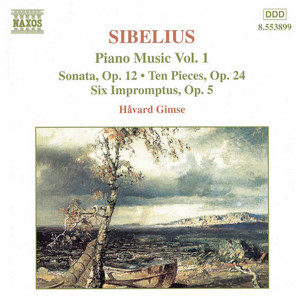 | 6 Impromptus, Op. 5: Impromptu No. 5 in B Minor | Jean Sibelius, Håvard Gimse | B Minor | 0 | 10A | 84 BPM | |
 | Adagio in E-Flat Major | Fanny Mendelssohn, Heather Schmidt | E♭ Minor | 0 | 2A | 90 BPM | |
 | Gaspard de la nuit, M. 55: I. Ondine | Maurice Ravel, Martha Argerich | D♭ Major | 0 | 3B | 72 BPM | |
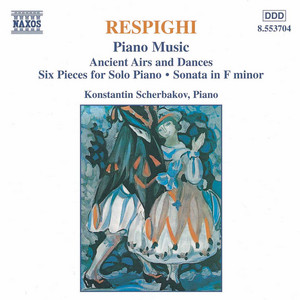 | 6 Pezzi, P. 44: No. 4. Minuetto | Ottorino Respighi, Konstantin Scherbakov | G Major | 0 | 9B | 132 BPM | |
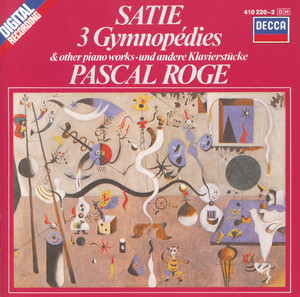 | Je te veux | Erik Satie, Pascal Rogé | C Major | 0 | 8B | 103 BPM | |
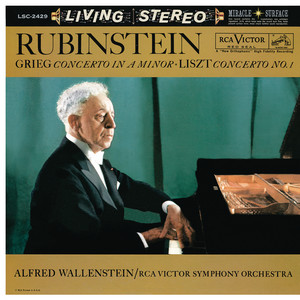 | Piano Concerto in A Minor, Op. 16: I. Allegro molto moderato - Remastered | Edvard Grieg, Arthur Rubinstein, RCA Victor Symphony Orchestra, Alfred Wallenstein | A Minor | 1 | 8A | 82 BPM | |
 | Children's Album No. 1 "Pictures of Childhood": No. 1, Andantino | Aram Khachaturian, Charlene Farrugia | A♭ Major | 0 | 4B | 84 BPM | |
 | Après un rêve, Op. 7, No. 1 | Gabriel Fauré, Yo-Yo Ma | F Minor | 0 | 4A | 115 BPM | |
 | Prélude in C-Sharp Minor, Op. 3, No. 2 | Sergei Rachmaninoff | F♯ Minor | 1 | 11A | 115 BPM | |
 | 24 Preludes, Op. 11: No. 15 in D-Flat Major | Alexander Scriabin, Evgeny Zarafiants | D♭ Major | 0 | 3B | 70 BPM | |
 | Fantasia in D Minor, K. 397 | Wolfgang Amadeus Mozart, Seong-Jin Cho | D Major | 1 | 10B | 130 BPM | |
 | Three Romances for Violin and Piano, Op. 22: I. Andante molto | Clara Schumann, Esther Abrami, Iyad Sughayer | D♭ Major | 2 | 3B | 81 BPM | |
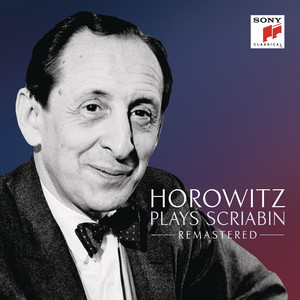 | Etude in D-Sharp Minor, Op. 8, No. 12: Patetico - Remastered | Alexander Scriabin, Vladimir Horowitz | D♭ Minor | 3 | 12A | 72 BPM | |
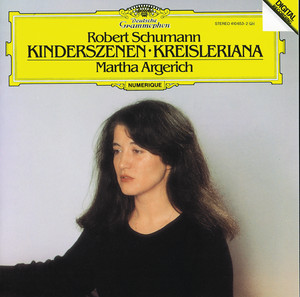 | Kinderszenen, Op. 15: I. Von fremden Ländern und Menschen | Robert Schumann, Martha Argerich | G Major | 0 | 9B | 128 BPM | |
 | Sonata In G Minor For Cello & Piano, Op. 19: 3. Andante | Sergei Rachmaninoff, Alisa Weilerstein, Inon Barnatan | F Major | 2 | 7B | 82 BPM |
- ISRC
- CH6540837260
- Label
- L-M Records/RCA Records