- BPM
- 99
- Key
- A Major
- Camelot
- 11B
The Rake's Progress, Act I Scene 3: Recitative. No word from Tom (Anne) by Igor Stravinsky, Jayne West, Jon Garrison, Arthur Woodley, John Cheek, Shirley Love, Wendy White, Melvin Lowery, Jeffrey Johnson, Gregg Smith Singers, Orchestra of St. Luke's, Robert Craft Song Details
Igor Stravinsky, Jayne West, Jon Garrison, Arthur Woodley, John Cheek, Shirley Love, Wendy White, Melvin Lowery, Jeffrey Johnson, Gregg Smith Singers, Orchestra of St. Luke's, Robert Craft's ' "The Rake's Progress, Act I Scene 3: Recitative. No word from Tom (Anne)" was released on its scheduled release date, May 26, 2009. With This song being less than a minute long, we are pretty confident that this song does not contain any foul language. That being said, this song is pretty short compared to other songs. There are a total of 73 in the song's album "Stravinsky, I.: Rake's Progress (The) [Opera]". In this album, this song's track order is #22. Furthermore, we believe that the track originated from Hong Kong. In terms of popularity, The Rake's Progress, Act I Scene 3: Recitative. No word from Tom (Anne) is currently unknown. Since there is more of a neutral sound being played, this makes the track somewhat danceable.
BPM and Tempo
With The Rake's Progress, Act I Scene 3: Recitative. No word from Tom (Anne) by Igor Stravinsky, Jayne West, Jon Garrison, Arthur Woodley, John Cheek, Shirley Love, Wendy White, Melvin Lowery, Jeffrey Johnson, Gregg Smith Singers, Orchestra of St. Luke's, Robert Craft having a BPM of 99 with a half-time of 50 BPM and a double-time of 198 BPM, we would consider this track to have a Andante (at a walking pace) tempo marking. Because of this, we believe that the song has an overall slow tempo. The time signature for this track is 4/4.
Music Key
This song is in the music key of A Major. Or for those who are familiar with the camelot wheel, this song has a camelot key of 11B. So, the perfect camelot match for 11B would be either 11B or 12A. While, 12B can give you a low energy boost. For moderate energy boost, you would use 8B and a high energy boost can either be 1B or 6B. Though, if you want a low energy drop, you should looking for songs with either a camelot key of 11A or 10B will give you a low energy drop, 2B would be a moderate one, and 9B or 4B would be a high energy drop. Lastly, 8A allows you to change the mood.
Want to find the BPM and music key for other songs? Check out our BPM and Key Finder page!
- Popularity
- 0%
- Loudness
- -21.165 dB
- Acousticness
- 97%
- Danceability
- 41%
- Energy
- 18%
- Instrumentalness
- 0%
- Liveness
- 43%
- Loudness
- 65%
- Speechiness
- 6%
- Valence
- 54%
Recommendations
| Track | Artist | Key | Energy | Camelot | BPM | ||
|---|---|---|---|---|---|---|---|
 | Quatuor pour la fin du Temps: V. Louange à l'éternité de Jésus | Olivier Messiaen, Lucas Debargue, Torleif Thedéen | E Major | 0 | 12B | 81 BPM | |
 | Chamber Symphony No. 5 in A-Flat Major, Op. 118a: I. Andante | Dmitri Shostakovich, Yuli Turovsky, I Musici de Montréal | D♭ Major | 0 | 3B | 106 BPM | |
 | Peer Gynt Suite No. 1, Op. 46: III. Anitra's Dance | Edvard Grieg, Berliner Philharmoniker, Herbert von Karajan | D Minor | 0 | 7A | 84 BPM | |
 | Symphony No. 8 in B Minor, D. 759 "Unfinished": 1. Allegro moderato | Franz Schubert, Berliner Philharmoniker, Herbert von Karajan | B Minor | 1 | 10A | 107 BPM | |
 | The Planets, Op. 32: 5. Saturn, the Bringer of Old Age | Gustav Holst, Berliner Philharmoniker, Herbert von Karajan | C Major | 0 | 8B | 106 BPM | |
 | Prince Igor (Knyaz Igor): Overture | Alexander Borodin, Ukraine National Radio Symphony Orchestra, Theodore Kuchar | G Minor | 1 | 6A | 73 BPM | |
 | Petrushka: Danse Russe | Robert Groslot, Belgian Radio and Television Philharmonic Orchestra, Igor Stravinsky | D Minor | 5 | 7A | 80 BPM | |
 | Symphony No. 7 in A Major, Op. 92: III. Presto. Trio I und II. Assai meno presto | Ludwig van Beethoven, Berliner Philharmoniker, Kirill Petrenko | D Major | 2 | 10B | 105 BPM | |
 | Sibelius: Symphony No. 5 in E-Flat Major, Op. 82: I. Tempo molto moderato | Jean Sibelius, Sakari Oramo, City Of Birmingham Symphony Orchestra | E♭ Major | 1 | 5B | 83 BPM | |
 | Piano Concerto No. 1 in B-Flat Minor, Op. 23, TH. 55: II. Andantino semplice - Prestissimo - Tempo I - Live at Philharmonie, Berlin | Pyotr Ilyich Tchaikovsky, Evgeny Kissin, Berliner Philharmoniker, Herbert von Karajan | D♭ Major | 0 | 3B | 80 BPM | |
 | The Miraculous Mandarin, Sz. 73: Introduction. Allegro | Béla Bartók, Chicago Symphony Orchestra, Pierre Boulez | D♭ Minor | 4 | 12A | 59 BPM | |
 | Oedipus Rex, Prologue and Act I: "Spectateurs, vous allez entendre…" | Igor Stravinsky, London Symphony Orchestra, Stuart Skelton, Fanny Ardant, The Monteverdi Choir, John Eliot Gardiner | B♭ Minor | 1 | 3A | 172 BPM | |
 | Bruch : Violin Concerto No.1 in G minor Op.26 : III Finale - Allegro energico | Max Bruch, Maxim Vengerov, Kurt Masur, Gewandhausorchester Leipzig | G Major | 2 | 9B | 90 BPM | |
 | Sibelius: Symphony No. 5 in E-Flat Major, Op. 82: III. Allegro molto (1915 Version) | Jean Sibelius, San Francisco Symphony, Esa-Pekka Salonen | E♭ Major | 1 | 5B | 76 BPM | |
 | In the Steppes of Central Asia | Alexander Borodin, Royal Philharmonic Orchestra, Vladimir Ashkenazy | A Major | 0 | 11B | 69 BPM | |
 | Symphony in C Major, Op. 46: II. Sehr langsam - | Hans Pfitzner, Seattle Symphony Orchestra, Gerard Schwarz | F Major | 0 | 7B | 87 BPM | |
 | Piano Concerto No. 2 Op. 102 in F Major: I. Allegro | Dmitri Shostakovich, Alexander Melnikov, Mahler Chamber Orchestra, Teodor Currentzis | B♭ Major | 2 | 6B | 73 BPM | |
 | Introduction And Allegro For Harp, String Quartet, Flute And Clarinet | Maurice Ravel, Nash Ensemble, Skaila Kanga, Philippa Davies, Michael Collins | E♭ Minor | 1 | 2A | 70 BPM | |
 | Pulcinella, K 034: II. Serenata | Igor Stravinsky, Josep Pons, Orquestra De Cambra Teatre Lliure | C Minor | 0 | 5A | 77 BPM | |
 | String Quartet No. 12 in F major, Op. 96 - "American" B.179: 1. Allegro ma non troppo | Antonín Dvořák, Hagen Quartett | F Major | 1 | 7B | 113 BPM | |
 | Tchaikovsky: Symphony No. 4 in F Minor, Op. 36: II. Andantino in moto di canzone | Pyotr Ilyich Tchaikovsky, San Francisco Symphony, Michael Tilson Thomas | B♭ Minor | 0 | 3A | 82 BPM | |
 | Quatuor pour la fin du Temps: IV. Intermède | Olivier Messiaen, Martin Fröst | F♯ Major | 2 | 2B | 96 BPM | |
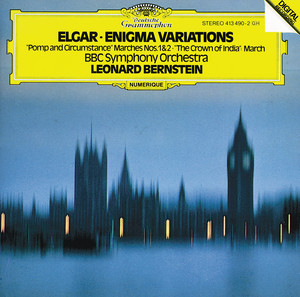 | Enigma Variations, Op. 36: Var. 1. L'istesso tempo "C.A.E." | Edward Elgar, BBC Symphony Orchestra, Leonard Bernstein | G Minor | 0 | 6A | 81 BPM | |
 | Symphony No. 1 in E Minor, Op. 39: II. Andante (ma non troppo lento) | Jean Sibelius, Sir Colin Davis, London Symphony Orchestra | A♭ Major | 1 | 4B | 83 BPM | |
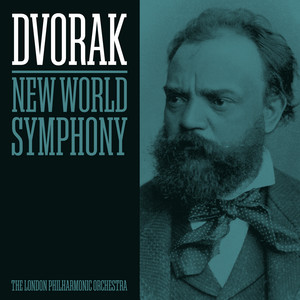 | 1st Movement: Adaggio / Allegro Molto | London Philharmonic Orchestra | E Minor | 1 | 9A | 116 BPM |
- ISRC
- HKI190908222
- Label
- L-M Records/RCA Records