- BPM
- 90
- Key
- D Major
- Camelot
- 10B
Ist ein Traum (Der Rosenkavalier) by Rise Stevens, Erna Berger Song Details
"Ist ein Traum (Der Rosenkavalier)" by Rise Stevens, Erna Berger had its release date on August 24, 2006. Since This song is still less than 10 minute long, it is still considered a pretty long duration song compared to the average song length. This song does not appear to be explicit due to the lack of the "E" tag. The track order of this song in Rise Stevens's "Lebendige Vergangenheit - Risë Stevens" album is number 15 out of 15. In terms of popularity, Ist ein Traum (Der Rosenkavalier) is currently unknown. In our opinion, the overall tone is not very danceable and projects negative sounds, such as being sad, depressed, or angry.
BPM and Tempo
We consider the tempo marking of Ist ein Traum (Der Rosenkavalier) by Rise Stevens, Erna Berger to be Andante (at a walking pace) because the track has a tempo of 90 BPM, a half-time of 45BPM, and a double-time of 180 BPM. Based on that, the speed of the song's tempo is slow. Activities such as, yoga or pilates, can go well with this song. The time signature for this track is 4/4.
Music Key
This song has a musical key of D Major. This also means that this song has a camelot key of 10B. So, the perfect camelot match for 10B would be either 10B or 11A. While, 11B can give you a low energy boost. For moderate energy boost, you would use 7B and a high energy boost can either be 12B or 5B. Though, if you want a low energy drop, you should looking for songs with either a camelot key of 10A or 9B will give you a low energy drop, 1B would be a moderate one, and 8B or 3B would be a high energy drop. Lastly, 7A allows you to change the mood.
Want to find the BPM and music key for other songs? Check out our BPM and Key Finder page!
- Popularity
- 0%
- Loudness
- -15.761 dB
- Acousticness
- 97%
- Danceability
- 18%
- Energy
- 20%
- Instrumentalness
- 8%
- Liveness
- 36%
- Loudness
- 74%
- Speechiness
- 4%
- Valence
- 4%
Recommendations
| Track | Artist | Key | Energy | Camelot | BPM | ||
|---|---|---|---|---|---|---|---|
 | La Cenerentola, Act I: Aria. Una volta c'era un re | Gioachino Rossini, Teresa Berganza, Margherita Guglielmi, Laura Zannini, Ugo Trama, London Symphony Orchestra, Claudio Abbado | G Major | 2 | 9B | 74 BPM | |
 | Il Barbiere di Siviglia: Ecco, ridente in cielo - Highlights | Gioachino Rossini, Samuel Ramey, Enzo Dara, Marilyn Horne, Leo Nucci, Paolo Barbacini, Riccardo Chailly | C Major | 1 | 8B | 126 BPM | |
 | My Ship | Rise Stevens | B Major | 1 | 1B | 168 BPM | |
 | Bellini: I puritani: "Credeasi, misera, da me tradita" (Arturo, Elvira, Riccardo, Giorgio, Coro) | Vincenzo Bellini, Dresdner Philharmonie, Riccardo Frizza | D♭ Major | 3 | 3B | 181 BPM | |
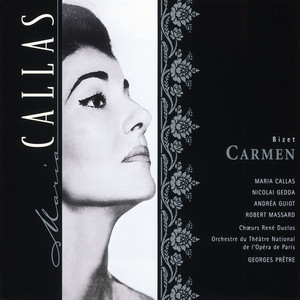 | Bizet: Carmen, Act 4: "C'est toi!...Viva! viva! la course est belle!" (Carmen, José, Chorus) | Georges Bizet, Maria Callas, Nicolai Gedda, Choeurs Rene Duclos, Choeurs D'Enfants Jean Pesneaud, Orchestre de l'Opéra National de Paris, Georges Prêtre, Orchestre du Théâtre National de l'Opéra Paris, Paris Opera Orchestra | D♭ Major | 2 | 3B | 119 BPM | |
 | Ciléa: Adriana Lecouvreur, Act 1 Scene 3: "Ecco, respiro appena - lo son l'umile ancella" (Adriana) | Kiri Te Kanawa, Myung-Whun Chung | A♭ Major | 2 | 4B | 98 BPM | |
 | Mignon: Ce pays enchanté n'est-ce pas l'Italie? | Ambroise Thomas, James Melton, Rise Stevens, John Gurney, Ezio Pinza, Wilfrid Pelletier | D♭ Major | 9 | 3B | 80 BPM | |
 | Cendrillon: Faites-vous très belles | Jules Massenet, Philharmonia Orchestra, Julius Rudel | B♭ Major | 1 | 6B | 115 BPM | |
 | La Traviata, Teil 3 | La Traviata | B♭ Major | 0 | 6B | 0 BPM | |
 | Offenbach: La Belle Hélène, Act 2: Duo. "C'est le ciel qui m'envoie" (Hélène, Pâris) | Jacques Offenbach, Marc Minkowski, Felicity Lott, Yann Beuron, Les Musiciens du Louvre | E Major | 1 | 12B | 90 BPM | |
 | Gounod: Faust, Act 3: "Je voudrais bien savoir" - Chanson. "Il était un roi de Thulé" (Marguerite) | Charles Gounod, Michel Plasson, Cheryl Studer, Orchestre Du Capitole De Toulouse | A Minor | 1 | 8A | 94 BPM | |
 | Il barbiere di Siviglia, Act II: No. 14, Aria. Il vecchiotto cerca moglie | Gioachino Rossini, Gabriele Sima, Chamber Orchestra of Europe, Claudio Abbado | F Major | 1 | 7B | 128 BPM | |
| Gounod: Faust, Act 3: Couplets. "Faites-lui mes aveux" (Siebel) | Charles Gounod, Michel Plasson, Martine Mahé, Orchestre Du Capitole De Toulouse | A Minor | 1 | 8A | 94 BPM | |
 | Così fan tutte, K. 588 / Act I: "Una bella serenata" | Wolfgang Amadeus Mozart, Rolando Villazón, Adam Plachetka, Alessandro Corbelli, Chamber Orchestra of Europe, Yannick Nézet-Séguin | C Major | 2 | 8B | 135 BPM | |
 | La Wally / Act 1: "Ebben? Ne andrò lontana" | Alfredo Catalani, Angela Gheorghiu, Orchestra del Teatro Regio di Torino, John Mauceri | E Major | 1 | 12B | 87 BPM | |
 | La Boheme: Acto III: "Donde Lieta Usce" | Victoria de los Ángeles | D♭ Major | 1 | 3B | 98 BPM | |
 | Lucia di Lammermoor / Act 1: "Quando rapito in estasi" | Gaetano Donizetti, Dame Joan Sutherland, Huguette Tourangeau, Orchestra of the Royal Opera House, Covent Garden, Richard Bonynge | G Major | 3 | 9B | 84 BPM | |
 | Mozart: Don Giovanni, K. 527, Act 1: Duettino. "Là ci darem la mano" (Don Giovanni, Zerlina) | Wolfgang Amadeus Mozart, Riccardo Muti, Susanne Mentzer, William Shimell, Wiener Philharmoniker | A Major | 1 | 11B | 97 BPM | |
 | Zwei Scenen für Singstimme und Orchester, Op. 199: No. 2, Die Hirtin | Joachim Raff, Therese Schleiden, Lena-Lisa Wüstendörfer, Marie-Claude Chappuis, Swiss Orchestra | G Major | 2 | 9B | 74 BPM | |
| Cendrillon: Ah! Douce enfant | Jules Massenet, Philharmonia Orchestra, Julius Rudel | B Major | 0 | 1B | 91 BPM | |
 | Carmen: Voici l'ordre, partez | Georges Bizet, Osie Hawkins, Rise Stevens, Fritz Reiner | F♯ Major | 3 | 2B | 132 BPM | |
 | Lasciami cantare una canzone | Leo Nucci, Salotto Ottocento Ensemble | D Major | 2 | 10B | 94 BPM | |
| Girl of the Moment | Rise Stevens, Lady in the Dark Ensemble (1963) | F Major | 4 | 7B | 97 BPM | |
 | La Gioconda / Act 1: Feste! Pane! Feste! | Amilcare Ponchielli, Sherrill Milnes, The London Opera Chorus, National Philharmonic Orchestra, Bruno Bartoletti | B♭ Major | 4 | 6B | 67 BPM | |
 | Orfeo ed Euridice, Wq. 30: Act I: Recitativo: "Che disse! Che ascoltai! Dunque Euridice vivrà" | Christoph Willibald Gluck, Pierre Monteux, Rome Opera Orchestra | A Major | 1 | 11B | 93 BPM |
- ISRC
- This song does not have an ISRC.
- Label
- L-M Records/RCA Records