- BPM
- 141
- Key
- A Minor
- Camelot
- 8A
Drei Quartette, Op.64: 3. Fragen by Johannes Brahms, Edith Mathis, Brigitte Fassbaender, Peter Schreier, Dietrich Fischer-Dieskau, Karl Engel Song Details
Johannes Brahms, Edith Mathis, Brigitte Fassbaender, Peter Schreier, Dietrich Fischer-Dieskau, Karl Engel's 'Drei Quartette, Op.64: 3. Fragen' had a release date set for January 1, 1983. The duration of This song is about 3 minutes long, at 3:05. Based on our data, This song appears to be safe for all ages and is not considered explicit. This track is about the average length of a typical track. The song is number 36 out of 36 in Brahms: Liebeslieder-Walzer by Johannes Brahms, Edith Mathis, Brigitte Fassbaender, Peter Schreier, Dietrich Fischer-Dieskau. Based on our statistics, Drei Quartette, Op.64: 3. Fragen's popularity is not that popular right now. In our opinion, the overall tone is not very danceable and projects negative sounds, such as being sad, depressed, or angry.
BPM and Tempo
The tempo marking of Drei Quartette, Op.64: 3. Fragen by Johannes Brahms, Edith Mathis, Brigitte Fassbaender, Peter Schreier, Dietrich Fischer-Dieskau, Karl Engel is Allegro (fast, quick, and bright), since this song has a tempo of 141 BPM. With that information, we can conclude that the song has a fast tempo. This song can go great with jogging or cycling. The time signature for this track is 4/4.
Music Key
This song is in the music key of A Minor. Because this track belongs in the A Minor key, the camelot key is 8A. So, the perfect camelot match for 8A would be either 8A or 7B. While, a low energy boost can consist of either 8B or 9A. For moderate energy boost, you would use 5A and a high energy boost can either be 10A or 3A. However, if you are looking for a low energy drop, finding a song with a camelot key of 7A would be a great choice. Where 11A would give you a moderate drop, and 6A or 1A would be a high energy drop. Lastly, 11B allows you to change the mood.
Want to find the BPM and music key for other songs? Check out our BPM and Key Finder page!
- Popularity
- 1%
- Loudness
- -22.553 dB
- Acousticness
- 98%
- Danceability
- 35%
- Energy
- 12%
- Instrumentalness
- 0%
- Liveness
- 8%
- Loudness
- 62%
- Speechiness
- 6%
- Valence
- 24%
Recommendations
| Track | Artist | Key | Energy | Camelot | BPM | ||
|---|---|---|---|---|---|---|---|
 | Dance of the Hours from Act III of "La Gioconda" | Amilcare Ponchielli, Philadelphia Orchestra, Eugene Ormandy | E Major | 1 | 12B | 130 BPM | |
 | Rachmaninov: 10 Preludes, Op. 23: No. 5 in G Minor | Sergei Rachmaninoff, Nikolai Lugansky | G Minor | 1 | 6A | 113 BPM | |
 | Sonata No. 13, Hob. XVI:6: III. Adagio | Joseph Haydn, Jean-Efflam Bavouzet | B♭ Major | 0 | 6B | 75 BPM | |
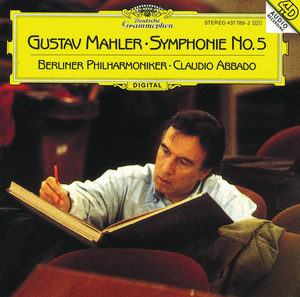 | Symphony No. 5: IV. Adagietto. Sehr langsam | Gustav Mahler, Berliner Philharmoniker, Claudio Abbado | F Major | 0 | 7B | 91 BPM | |
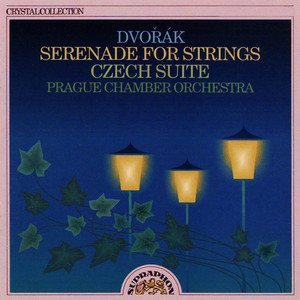 | Serenade for Strings in E Major, Op. 22, B. 52: III. Scherzo. Vivace | Antonín Dvořák, Prague Chamber Orchestra, Petr Skvor | F Major | 2 | 7B | 130 BPM | |
 | Wiegenlied, Op. 49, No. 4 | Johannes Brahms, Leonidas Kavakos, Yuja Wang | E♭ Major | 0 | 5B | 74 BPM | |
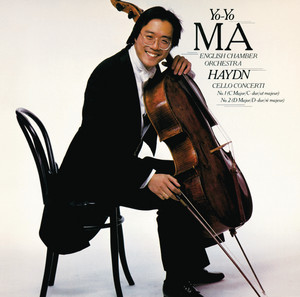 | Cello Concerto No. 1 in C Major, Hob. VIIb:1: II. Adagio | Joseph Haydn, Yo-Yo Ma, English Chamber Orchestra, José-Luis Garcia | F Major | 1 | 7B | 62 BPM | |
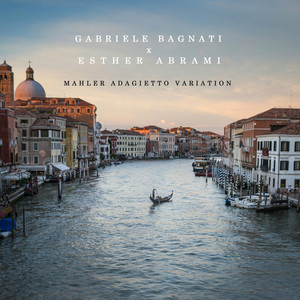 | Mahler Adagietto Variation (From Symphony No. 5 in C-Sharp Minor, Arr. for Violin and Piano by Jan-Peter Klöpfel) | Gustav Mahler, Gabriele Bagnati, Esther Abrami | F Major | 2 | 7B | 82 BPM | |
 | Nien, Geliebter, Setze Dich | Georg Friedrich Daumer, Johannes Brahms, One Voice Mixed Chorus, Jane Ramseyer Miller | E Major | 0 | 12B | 86 BPM | |
 | 21 Hungarian Dances, WoO 1 (Arr. for Violin & Piano): No. 1 in G Minor | Johannes Brahms, Baiba Skride, Lauma Skride | D Major | 2 | 10B | 129 BPM | |
 | Haydn: Cello Concerto No. 1 in C Major, Hob. VIIb, 1: II. Adagio (Cadenza by Britten) | Franz Joseph Haydn, Mstislav Rostropovich, Academy of St. Martin in the Fields | F Major | 1 | 7B | 124 BPM | |
 | Recueil de chants, Op. 65: No. 6, Barcarolle | Charles-Valentin Alkan, Bruce Liu | G Minor | 0 | 6A | 70 BPM | |
 | Polovtsian Dances from Prince Igor (piano arr. by L. Faulkner) | Luke Faulkner, Alexander Borodin | A Major | 1 | 11B | 72 BPM | |
 | Ancient Airs & Dances, Suite III, P. 172: I. Italiana (Anonymous) | Ottorino Respighi, Filarmonica della Scala, Riccardo Chailly | B♭ Major | 1 | 6B | 172 BPM | |
 | Le roi s'amuse: Pavane | Léo Delibes, Slovak Philharmonic, Ondrej Lenard | B♭ Major | 0 | 6B | 91 BPM | |
 | Nocturnes, Op. 27: No. 2 in D-Flat Major | Frédéric Chopin, Arthur Rubinstein | D♭ Major | 0 | 3B | 77 BPM | |
 | Symphony No. 6 in B Minor, Op. 74 "Pathétique": IV. Finale. Adagio lamentoso – Andante | Pyotr Ilyich Tchaikovsky, Berliner Philharmoniker, Kirill Petrenko | B Minor | 1 | 10A | 71 BPM | |
 | Liebestraum | Franz Liszt, Arthur Rubinstein | A♭ Major | 2 | 4B | 95 BPM | |
 | Notturno in G Minor | Fanny Mendelssohn, Heather Schmidt | G Minor | 1 | 6A | 125 BPM | |
 | Saint-Saëns: Piano Concerto No. 2 in G Minor, Op. 22: I. Andante sostenuto | Camille Saint-Saëns, Bertrand Chamayou, Emmanuel Krivine, Orchestre National De France | G Minor | 2 | 6A | 94 BPM | |
 | Zapateado Op. 23 | Pablo de Sarasate, Sarah Chang, Charles Abramovic | A Major | 3 | 11B | 113 BPM | |
 | 2 Pieces for the Left Hand, Op. 9: No. 2, Nocturne in D-Flat Major | Alexander Scriabin, Maria Lettberg | A♭ Major | 0 | 4B | 74 BPM | |
 | Cello Concerto No. 1 in A Minor, Op. 33: I. Allegro non troppo | Camille Saint-Saëns, Mischa Maisky, Orpheus Chamber Orchestra | F Major | 2 | 7B | 131 BPM | |
 | Haydn: Symphony No. 94 in G Major, Hob. I:94 "Surprise": IV. Finale. Allegro di molto | Joseph Haydn, André Previn, Pittsburgh Symphony Orchestra | G Major | 2 | 9B | 140 BPM | |
 | Piano Sonata No. 8 in C Minor, Op. 13 "Pathétique": II. Adagio cantabile | Ludwig van Beethoven, François-Frédéric Guy | A♭ Major | 0 | 4B | 170 BPM |
- ISRC
- This song does not have an ISRC.
- Label
- L-M Records/RCA Records