- BPM
- 103
- Key
- D Major
- Camelot
- 10B
Der Rosenkavalier, Op. 59 / Act 1: Introduction by Richard Strauss, Wiener Philharmoniker, Sir Georg Solti Song Details
Richard Strauss, Wiener Philharmoniker, Sir Georg Solti's 'Der Rosenkavalier, Op. 59 / Act 1: Introduction' had a release date set for January 1, 1969. With this song being around four minutes long, at 3:31, the duration of this song is pretty average compared to other songs. This track is safe for children and doesn't appear to contain any foul language, since the "Explicit" tag was not present in this track. There are a total of 43 in the song's album "Strauss, R.: Der Rosenkavalier". In this album, this song's track order is #1. Furthermore, we believe that the track originated from United Kingdom. In terms of popularity, Der Rosenkavalier, Op. 59 / Act 1: Introduction is currently not that popular. In our opinion, the overall tone is not very danceable and projects negative sounds, such as being sad, depressed, or angry.
BPM and Tempo
With Der Rosenkavalier, Op. 59 / Act 1: Introduction by Richard Strauss, Wiener Philharmoniker, Sir Georg Solti having a BPM of 103 with a half-time of 52 BPM and a double-time of 206 BPM, we would consider this track to have a Andante (at a walking pace) tempo marking. Because of this, we believe that the song has an overall slow tempo. The time signature for this track is 4/4.
Music Key
This song has a musical key of D Major. Or for those who are familiar with the camelot wheel, this song has a camelot key of 10B. So, the perfect camelot match for 10B would be either 10B or 11A. While, 11B can give you a low energy boost. For moderate energy boost, you would use 7B and a high energy boost can either be 12B or 5B. Though, if you want a low energy drop, you should looking for songs with either a camelot key of 10A or 9B will give you a low energy drop, 1B would be a moderate one, and 8B or 3B would be a high energy drop. Lastly, 7A allows you to change the mood.
Want to find the BPM and music key for other songs? Check out our BPM and Key Finder page!
- Popularity
- 12%
- Loudness
- -16.373 dB
- Acousticness
- 96%
- Danceability
- 27%
- Energy
- 40%
- Instrumentalness
- 93%
- Liveness
- 13%
- Loudness
- 73%
- Speechiness
- 7%
- Valence
- 27%
Recommendations
| Track | Artist | Key | Energy | Camelot | BPM | ||
|---|---|---|---|---|---|---|---|
 | Das Rheingold, WWV 86A / Scene 4: "Schwüles Gedünst schwebt in der Luft" | Richard Wagner, Eberhard Wächter, Waldemar Kmentt, Wiener Philharmoniker, Sir Georg Solti | E♭ Major | 0 | 5B | 84 BPM | |
 | The Cunning Little Vixen (Prihody Lisky Bystrousky): Prelude | Leoš Janáček, Wiener Philharmoniker, Sir Charles Mackerras | D♭ Minor | 1 | 12A | 99 BPM | |
 | Enigma Variations, Op. 36: Theme. Andante | Edward Elgar, Wiener Philharmoniker, John Eliot Gardiner | G Minor | 0 | 6A | 83 BPM | |
 | Sinfonia domestica, Op. 53: I. Themes. Bewegt – Sehr lebhaft – Ruhig - Live at Musikverein, Vienna, 1983 | Richard Strauss, Wiener Philharmoniker, Lorin Maazel | D♭ Major | 1 | 3B | 75 BPM | |
 | Symphony No. 2: 1. Andante maestoso | Aram Khachaturian, Wiener Philharmoniker | A Minor | 1 | 8A | 81 BPM | |
 | Salome, Op. 54 / Scene 3: "Zurück, Tochter Sodoms!" | Richard Strauss, Cheryl Studer, Bryn Terfel, Orchester der Deutschen Oper Berlin, Giuseppe Sinopoli | B Minor | 1 | 10A | 128 BPM | |
 | Le nozze di Figaro, K.492 / Act 2: "Voi signor, che giusto siete" | Wolfgang Amadeus Mozart, Boje Skovhus, Cheryl Studer, Sylvia McNair, Anna Caterina Antonacci, Carlo Allemano, Ildebrando D'Arcangelo, Lucio Gallo, Wiener Philharmoniker, Claudio Abbado | G Major | 2 | 9B | 122 BPM | |
 | Lohengrin, WWV 75: Prelude To Act III | Richard Wagner, Wiener Philharmoniker, Karl Böhm | G Major | 3 | 9B | 120 BPM | |
 | Beethoven: Symphony No. 3 in E-Flat Major, Op. 55 "Eroica": III. Scherzo. Allegro vivace | Ludwig van Beethoven, Wiener Philharmoniker, Sir Simon Rattle | E♭ Major | 2 | 5B | 166 BPM | |
 | Symphonie fantastique, Op. 14, H 48: 5d. Songe d'une nuit du Sabbat - Dies irae et Ronde du Sabbat ensemble | Hector Berlioz, Chicago Symphony Orchestra, Claudio Abbado | B♭ Major | 1 | 6B | 153 BPM | |
 | Don Quixote, Op. 35: II. Don Quixote, the Knight of the Sorrowful Countenance – III. Sancha Panza. Maggiore | Richard Strauss, Pierre Fournier, Giusto Cappone, Berliner Philharmoniker, Herbert von Karajan | F Major | 1 | 7B | 206 BPM | |
 | Symphony No.8 in E flat - "Symphony of a Thousand" / Part Two: Final scene from Goethe's "Faust": "Neige, neige, du Ohnegleiche" | Gustav Mahler, Lucia Popp, Arleen Auger, Vienna Boys' Choir, Wiener Singverein, Chicago Symphony Orchestra, Sir Georg Solti | B♭ Major | 2 | 6B | 101 BPM | |
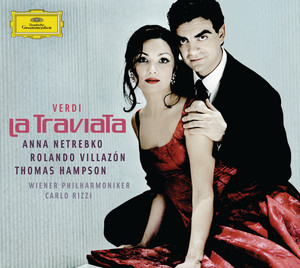 | La traviata / Act 1: Prelude | Giuseppe Verdi, Wiener Philharmoniker, Carlo Rizzi | B Major | 0 | 1B | 127 BPM | |
 | Turandot, Act III: Padre augusto. Conosco il nome (Turandot, Coro, Coro di ragazzi) | Giacomo Puccini, Katia Ricciarelli, Wiener Philharmoniker, Herbert von Karajan, Wiener Staatsopernchor | D Major | 5 | 10B | 84 BPM | |
| Salome, Op. 54 / Scene 2: Laßt den Propheten herauskommen | Richard Strauss, Cheryl Studer, Clemens Bieber, Orchester der Deutschen Oper Berlin, Giuseppe Sinopoli | C Minor | 0 | 5A | 64 BPM | |
 | Vert-Vert: Overture | Jacques Offenbach, Berliner Philharmoniker, Herbert von Karajan | G Major | 1 | 9B | 101 BPM | |
 | Glück: I. Andante | Siegfried Wagner, Rundfunk-Sinfonieorchester Frankfurt, Dimitrij Kitajenko | A Minor | 0 | 8A | 86 BPM | |
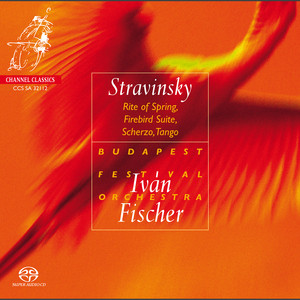 | L'oiseau de feu, K. 10. Suite 1919: VI. Berceuse | Igor Stravinsky, Budapest Festival Orchestra, Iván Fischer | A Minor | 0 | 8A | 103 BPM | |
 | Lohengrin, WWV 75 / Act I: "Hört, Grafen, Edle, Freie von Brabant!" | Richard Wagner, Andreas Schmidt, Kurt Moll, Vienna State Opera Chorus, Peter Burian, Wiener Philharmoniker, Claudio Abbado | G Major | 2 | 9B | 128 BPM | |
 | Music for Strings, Percussion & Celesta, Sz. 106: II. Allegro | Béla Bartók, Chicago Symphony Orchestra, Sir Georg Solti | D♭ Major | 2 | 3B | 142 BPM | |
 | Otello / Act 1: "Una vela! Una vela!" | Giuseppe Verdi, Alan Opie, Anthony Rolfe Johnson, John Keyes, Leo Nucci, Chicago Symphony Chorus, Chicago Symphony Orchestra, Sir Georg Solti | A♭ Major | 3 | 4B | 73 BPM | |
 | Symphony No.9 In E Minor, Op.95, B.178 - "From The New World": 1. Adagio - Allegro molto | Antonín Dvořák, Berliner Philharmoniker, Rafael Kubelík | G Major | 1 | 9B | 118 BPM | |
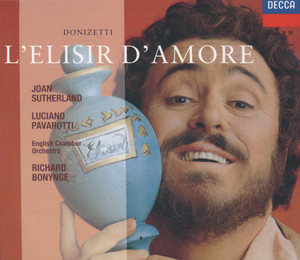 | L'elisir d'amore: Overture (Preludio) | Gaetano Donizetti, English Chamber Orchestra, Richard Bonynge | D Major | 0 | 10B | 169 BPM | |
 | Khovanshchina: Prelude. Dawn on the Moscow River | Modest Mussorgsky, Orchester der Wiener Staatsoper, Claudio Abbado | D♭ Major | 0 | 3B | 99 BPM | |
 | Symphony No. 3 in D Major, D. 200: IV. Presto. Vivace | Franz Schubert, Wiener Philharmoniker, Carlos Kleiber | D Major | 3 | 10B | 98 BPM |
- ISRC
- GBF076940301
- Label
- L-M Records/RCA Records