- BPM
- 92
- Key
- F♯ Minor
- Camelot
- 11A
Prélude in C-Sharp Minor, Op. 3 No. 2 (Lento) by Sergei Rachmaninoff, Lukas Geniusas Song Details
"Prélude in C-Sharp Minor, Op. 3 No. 2 (Lento)" by Sergei Rachmaninoff, Lukas Geniusas had its release date on October 23, 2015. With this song being around four minutes long, at 4:09, the duration of this song is pretty average compared to other songs. This track is safe for children and doesn't appear to contain any foul language, since the "Explicit" tag was not present in this track. There are a total of 24 in the song's album "Rachmaninoff: Preludes, Complete". In this album, this song's track order is #1. In terms of popularity, Prélude in C-Sharp Minor, Op. 3 No. 2 (Lento) is currently not that popular. Although the tone can be danceable to some, this track does projects more of a negative sound rather than a postive one.
BPM and Tempo
With Prélude in C-Sharp Minor, Op. 3 No. 2 (Lento) by Sergei Rachmaninoff, Lukas Geniusas having a BPM of 92 with a half-time of 46 BPM and a double-time of 184 BPM, we would consider this track to have a Andante (at a walking pace) tempo marking. Because of this, we believe that the song has an overall slow tempo. Looking at the BPM of this song, this song might go great with yoga or pilates. The time signature for this track is 4/4.
Music Key
This song has a musical key of F♯ Minor. Or for those who are familiar with the camelot wheel, this song has a camelot key of 11A. So, the perfect camelot match for 11A would be either 11A or 10B. While, a low energy boost can consist of either 11B or 12A. For moderate energy boost, you would use 8A and a high energy boost can either be 1A or 6A. However, if you are looking for a low energy drop, finding a song with a camelot key of 10A would be a great choice. Where 2A would give you a moderate drop, and 9A or 4A would be a high energy drop. Lastly, 2B allows you to change the mood.
Want to find the BPM and music key for other songs? Check out our BPM and Key Finder page!
- Popularity
- 19%
- Loudness
- -21.416 dB
- Acousticness
- 99%
- Danceability
- 42%
- Energy
- 6%
- Instrumentalness
- 86%
- Liveness
- 10%
- Loudness
- 64%
- Speechiness
- 5%
- Valence
- 6%
Recommendations
| Track | Artist | Key | Energy | Camelot | BPM | ||
|---|---|---|---|---|---|---|---|
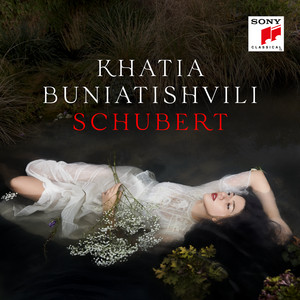 | Ständchen, S. 560 (Trans. from Schwanengesang No. 4, D. 957) | Franz Schubert, Franz Liszt, Khatia Buniatishvili | D Major | 0 | 10B | 67 BPM | |
 | Ivan Sings "Andantino" | Aram Khachaturian, Christopher Ferreira | A♭ Major | 0 | 4B | 74 BPM | |
 | Samson et Dalila, Op. 47: Bacchanale | Camille Saint-Saëns, Leonard Bernstein, New York Philharmonic | D Minor | 2 | 7A | 145 BPM | |
 | 13 Preludes, Op. 32: No. 12 in G-Sharp Minor. Allegro - Live | Sergei Rachmaninoff, Vladimir Horowitz | E Major | 0 | 12B | 68 BPM | |
 | Double Concerto in A Minor, Op. 102 for Violin, Cello and Orchestra: III. Vivace non troppo | Johannes Brahms, Joshua Bell, Steven Isserlis, Academy of St. Martin in the Fields | A Minor | 2 | 8A | 86 BPM | |
 | Suite española No. 1, Op. 47: Asturias (Leyenda) | Isaac Albéniz, Alicia de Larrocha | E♭ Major | 1 | 5B | 134 BPM | |
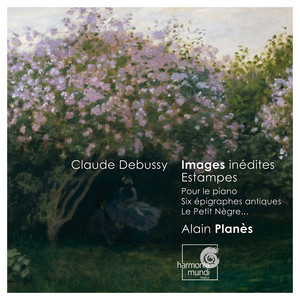 | Valse romantique, L. 71 | Claude Debussy, Alain Planès | F Minor | 0 | 4A | 103 BPM | |
 | 6 Consolations, S. 172: No. 3 in D-Flat Major (Lento, placido) | Franz Liszt, Daniel Barenboim | D♭ Major | 0 | 3B | 69 BPM | |
 | Five Pieces for Piano, Op. 75: Granen, No. 5 | Jean Sibelius, Leif Ove Andsnes | B Minor | 0 | 10A | 78 BPM | |
 | Zigeunerweisen, Op. 20 (version for violin and orchestra) | Pablo de Sarasate, Ruggiero Ricci, London Symphony Orchestra, Pierino Gamba | C Minor | 1 | 5A | 108 BPM | |
 | The Lark | Mikhail Glinka, Evgeny Kissin | B♭ Minor | 0 | 3A | 96 BPM | |
 | Tchaikovsky: Symphony No. 4 in F Minor, Op. 36: II. Andantino in moto di canzone | Pyotr Ilyich Tchaikovsky, San Francisco Symphony, Michael Tilson Thomas | B♭ Minor | 0 | 3A | 82 BPM | |
 | Waltz in F Minor | Vladimir Horowitz, Valery Kuleshov | B♭ Minor | 0 | 3A | 75 BPM | |
 | Toccata | Aram Khachaturian, Karine Poghosyan | A♭ Minor | 2 | 1A | 104 BPM | |
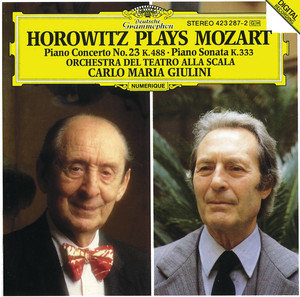 | Piano Concerto No. 23 in A Major, K. 488: II. Adagio | Wolfgang Amadeus Mozart, Vladimir Horowitz, Orchestra Del Teatro Alla Scala, Milano, Carlo Maria Giulini | F♯ Minor | 0 | 11A | 108 BPM | |
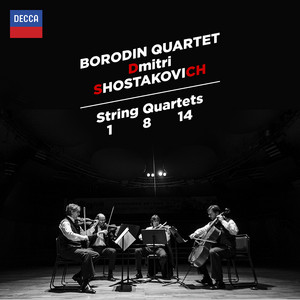 | String Quartet No. 8 in C Minor, Op. 110: II. Allegro molto | Dmitri Shostakovich, Borodin Quartet | G Major | 5 | 9B | 126 BPM | |
 | Concerto grosso No.1: 1. Prelude: Allegro energico e pesante | Ernest Bloch, Eastman-Rochester Orchestra, Howard Hanson | B♭ Major | 3 | 6B | 129 BPM | |
 | Piano Concerto in A Minor, Op. 54: III. Allegro vivace | Robert Schumann, Evgeny Kissin, Carlo Maria Giulini, Wiener Philharmoniker | C Major | 3 | 8B | 78 BPM | |
 | Morceaux de fantaisie, Op. 3: 5 Morceaux de fantasie, Op. 3: No. 2. Prelude in C-Sharp Minor | Sergei Rachmaninoff, Eldar Nebolsin | A Major | 1 | 11B | 91 BPM | |
 | Iberia, T. 105, Book 2: VI. Triana | Isaac Albéniz, Yuja Wang | F♯ Minor | 1 | 11A | 97 BPM | |
 | Nocturnes, Op. 27: No. 2 in D-Flat Major | Frédéric Chopin, Arthur Rubinstein | D♭ Major | 0 | 3B | 77 BPM | |
 | Slavonic Dance for Four Hands in E Minor, Op. 72/2: Dumka (Allegretto grazioso) | Antonín Dvořák, Khatia Buniatishvili | C Major | 0 | 8B | 77 BPM | |
 | Liebesleid | Fritz Kreisler, Sergei Rachmaninoff | A Minor | 0 | 8A | 77 BPM | |
 | Piano Concerto No. 2 in C Minor, Op. 18: III. Allegro scherzando | Sergei Rachmaninoff, Khatia Buniatishvili, Paavo Järvi, Czech Philharmonic | F Minor | 1 | 4A | 78 BPM | |
 | Sonata No. 13, Hob. XVI:6: III. Adagio | Joseph Haydn, Jean-Efflam Bavouzet | B♭ Major | 0 | 6B | 75 BPM |
- ISRC
- This song does not have an ISRC.
- Label
- L-M Records/RCA Records