- BPM
- 69
- Key
- B Minor
- Camelot
- 10A
Suite in E Minor, RCT 2: No. 8, Tambourin - Adapted by Marina Baranova by Jean-Philippe Rameau, Marina Baranova Song Details
Jean-Philippe Rameau, Marina Baranova's 'Suite in E Minor, RCT 2: No. 8, Tambourin - Adapted by Marina Baranova' had a release date set for August 26, 2016. The duration of This song is about two minutes long, specifically at 2:10. This song does not appear to have any foul language. Suite in E Minor, RCT 2: No. 8, Tambourin - Adapted by Marina Baranova's duration is considered a little bit shorter than the average duration of a typical track. The track order of this song in Marina Baranova's "Hypersuites" album is number 14 out of 20. On top of that, Germany appears to be the country where this track was created. Suite in E Minor, RCT 2: No. 8, Tambourin - Adapted by Marina Baranova is not that popular right now. In our opinion, the overall tone is not very danceable and projects negative sounds, such as being sad, depressed, or angry.
BPM and Tempo
We consider the tempo marking of Suite in E Minor, RCT 2: No. 8, Tambourin - Adapted by Marina Baranova by Jean-Philippe Rameau, Marina Baranova to be Adagio (slowly with great expression) because the track has a tempo of 69 BPM, a half-time of 34BPM, and a double-time of 138 BPM. Based on that, the speed of the song's tempo is slow. The time signature for this track is 4/4.
Music Key
This song is in the music key of B Minor. This also means that this song has a camelot key of 10A. So, the perfect camelot match for 10A would be either 10A or 9B. While, a low energy boost can consist of either 10B or 11A. For moderate energy boost, you would use 7A and a high energy boost can either be 12A or 5A. However, if you are looking for a low energy drop, finding a song with a camelot key of 9A would be a great choice. Where 1A would give you a moderate drop, and 8A or 3A would be a high energy drop. Lastly, 1B allows you to change the mood.
Want to find the BPM and music key for other songs? Check out our BPM and Key Finder page!
- Popularity
- 11%
- Loudness
- -13.595 dB
- Acousticness
- 99%
- Danceability
- 36%
- Energy
- 45%
- Instrumentalness
- 89%
- Liveness
- 11%
- Loudness
- 77%
- Speechiness
- 5%
- Valence
- 30%
Recommendations
| Track | Artist | Key | Energy | Camelot | BPM | ||
|---|---|---|---|---|---|---|---|
 | Nocturnes, Op. 9: No. 1 in B Flat Minor. Larghetto | Frédéric Chopin, Jan Lisiecki | B♭ Minor | 0 | 3A | 72 BPM | |
 | A Chloris in E Major (Arr. for Piano by William Youn) | Reynaldo Hahn, William Youn | E Major | 0 | 12B | 105 BPM | |
 | Dolly Suite, Op. 56: I. Berceuse | Gabriel Fauré, Katia Labèque, Marielle Labèque | E Major | 0 | 12B | 63 BPM | |
 | Schubert: String Quartet No. 14 in D Minor, D. 810, "Death and the Maiden": II. Theme - | Franz Schubert, vision string quartet | G Minor | 0 | 6A | 131 BPM | |
 | Concerto Grosso No. 3 in F Major: IV. Largo | Alessandro Scarlatti, Capella Istropolitana, Jaroslav Krcek | D Minor | 1 | 7A | 168 BPM | |
 | Gluck: Orphée et Eurydice, Wq. 41, Act 2: Danse des ombres heureuses | Christoph Willibald Gluck, Sir Neville Marriner, Academy of St. Martin in the Fields, Paul Davies | F Major | 0 | 7B | 76 BPM | |
![Organ Sonata No. 4, BWV 528: II. Andante [Adagio] (Transcr. by August Stradal) by Johann Sebastian Bach, Víkingur Ólafsson](https://i.scdn.co/image/ab67616d00001e02369f6761d1cccba9a34f05cf) | Organ Sonata No. 4, BWV 528: II. Andante [Adagio] (Transcr. by August Stradal) | Johann Sebastian Bach, Víkingur Ólafsson | B Minor | 0 | 10A | 71 BPM | |
 | Haydn: Cello Concerto No. 1 in C Major, Hob. VIIb, 1: II. Adagio (Cadenza by Britten) | Franz Joseph Haydn, Mstislav Rostropovich, Academy of St. Martin in the Fields | F Major | 1 | 7B | 124 BPM | |
 | 4 Impromptus, Op. 90, D. 899: No. 1 in C Minor: Allegro molto moderato | Franz Schubert, Krystian Zimerman | C Minor | 0 | 5A | 105 BPM | |
 | Sonata in E Minor (Allegrissimo), Kk. 98 | Domenico Scarlatti, Ivo Pogorelich | E Minor | 0 | 9A | 84 BPM | |
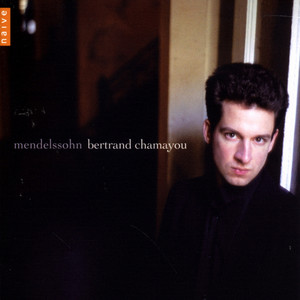 | Lied opus 34 no.2, transcription Franz Liszt: Auf Flügeln Des Gesanges | Felix Mendelssohn, Bertrand Chamayou | A♭ Major | 0 | 4B | 71 BPM | |
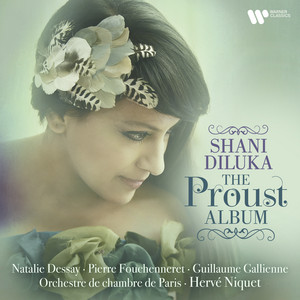 | Fauré: 3 Romances sans paroles, Op. 17: No. 3 in A-Flat Major | Gabriel Fauré, Shani Diluka | F Major | 2 | 7B | 123 BPM | |
 | Lieder ohne Worte, Book 6, Op. 67: No. 32 in F-Sharp Minor, Op. 67, No. 2 | Felix Mendelssohn, Péter Nagy | F♯ Minor | 1 | 11A | 166 BPM | |
 | Symphony in D Major, J-C 16: II. Andante sempre piano | Giovanni Battista Sammartini, Aradia Ensemble, Kevin Mallon | F♯ Major | 1 | 2B | 137 BPM | |
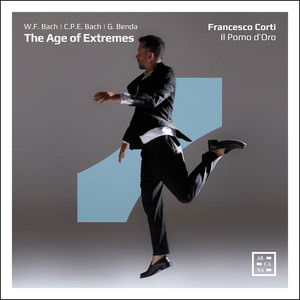 | Sinfonia in D Minor, Fk. 65: I. Adagio | Wilhelm Friedemann Bach, Il Pomo D'oro, Francesco Corti | D♭ Minor | 0 | 12A | 86 BPM | |
 | Sonata in C Minor, Jung III.2.B: I. Largo | Johann Georg Pisendel, Concerto Köln, Mayumi Hirasaki | B Minor | 1 | 10A | 96 BPM | |
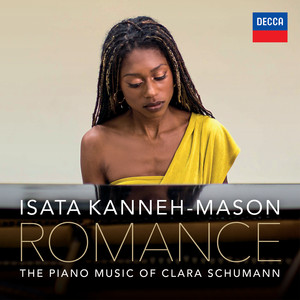 | 3 Romances, Op. 11: No. 1, Andante | Clara Schumann, Isata Kanneh-Mason | E♭ Minor | 0 | 2A | 127 BPM | |
 | Vater Unser (Version for Cello and Piano) | Arvo Pärt, Camille Thomas, Julien Brocal | A Minor | 0 | 8A | 63 BPM | |
 | Schumann, Clara: 3 Romances, Op. 11: No. 1 in E-Flat Minor | Clara Schumann, Sophie Pacini | E♭ Minor | 0 | 2A | 60 BPM | |
 | A Chloris: À Chloris | Reynaldo Hahn, Tanguy de Williencourt, Théotime Langlois de Swarte | E Major | 0 | 12B | 173 BPM | |
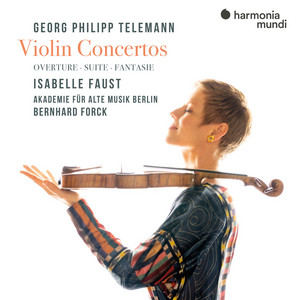 | Violin Concerto in A Major, TWV 51:A4 "Die Relinge": I. Allegro | Georg Philipp Telemann, Isabelle Faust, Akademie für Alte Musik Berlin, Bernhard Forck | D♭ Major | 3 | 3B | 140 BPM | |
 | Le Bourgeois Gentilhomme - Comédie-Ballet, LWV 43: Ouverture | Jean-Baptiste Lully, Gustav Leonhardt, La Petite Bande, Sigiswald Kuijken | F♯ Minor | 1 | 11A | 106 BPM | |
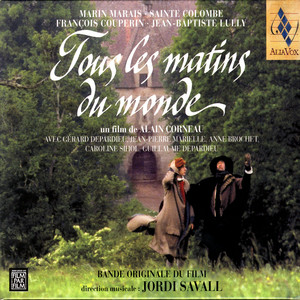 | Les Pleurs (Mr. de Sainte Colombe, version viole seule de Jordi Savall) | Monsieur de Sainte-Colombe, Jordi Savall | D♭ Minor | 0 | 12A | 102 BPM | |
 | Pavane, Op. 50 (Version for Piano) | Gabriel Fauré, Jorge Federico Osorio | F♯ Minor | 0 | 11A | 75 BPM | |
 | Introduttione II in F Major, Op. 4 No. 2: II. Andante | Pietro Locatelli, Fabio Biondi, Europa Galante | A♭ Major | 1 | 4B | 123 BPM |
- ISRC
- DES380022749
- Label
- L-M Records/RCA Records