- BPM
- 133
- Key
- E Major
- Camelot
- 12B
Rigoletto, Act I Scene 2: Gilda! (Rigoletto, Gilda) by Giuseppe Verdi, Sir Mark Elder, English National Opera Orchestra, John Rawnsley, Helen Field Song Details
Giuseppe Verdi, Sir Mark Elder, English National Opera Orchestra, John Rawnsley, Helen Field's ' "Rigoletto, Act I Scene 2: Gilda! (Rigoletto, Gilda)" was released on its scheduled release date, January 1, 2000. The duration of This song is about two minutes long, specifically at 2:03. This song does not appear to have any foul language. Rigoletto, Act I Scene 2: Gilda! (Rigoletto, Gilda)'s duration is considered a little bit shorter than the average duration of a typical track. This song is part of Verdi: Rigoletto by Giuseppe Verdi, Sir Mark Elder, English National Opera Orchestra, John Rawnsley, Helen Field, Arthur Davies, John Tomlinson, Jean Rigby, Norman Bailey. The song's track number on the album is #9 out of 38 tracks. Based on our data, United Kingdom was the country where this track was produced or recorded. Based on our statistics, Rigoletto, Act I Scene 2: Gilda! (Rigoletto, Gilda)'s popularity is unknown right now. Since there is more of a neutral sound being played, this makes the track somewhat danceable.
BPM and Tempo
Since Rigoletto, Act I Scene 2: Gilda! (Rigoletto, Gilda) by Giuseppe Verdi, Sir Mark Elder, English National Opera Orchestra, John Rawnsley, Helen Field has a tempo of 133 beats per a minute, the tempo markings of this song would be Allegro (fast, quick, and bright). With Rigoletto, Act I Scene 2: Gilda! (Rigoletto, Gilda) being at 133 BPM, the half-time would be 66 BPM with a double-time of 266 BPM.In addition, we consider the tempo speed to be pretty fast for this song. This makes this song perfect for activities such as, walking. The time signature for this track is 4/4.
Music Key
This song is in the music key of E Major. Or for those who are familiar with the camelot wheel, this song has a camelot key of 12B. So, the perfect camelot match for 12B would be either 12B or 1A. While, 1B can give you a low energy boost. For moderate energy boost, you would use 9B and a high energy boost can either be 2B or 7B. Though, if you want a low energy drop, you should looking for songs with either a camelot key of 12A or 11B will give you a low energy drop, 3B would be a moderate one, and 10B or 5B would be a high energy drop. Lastly, 9A allows you to change the mood.
Want to find the BPM and music key for other songs? Check out our BPM and Key Finder page!
- Popularity
- 0%
- Loudness
- -18.241 dB
- Acousticness
- 97%
- Danceability
- 46%
- Energy
- 18%
- Instrumentalness
- 0%
- Liveness
- 24%
- Loudness
- 70%
- Speechiness
- 11%
- Valence
- 49%
Recommendations
| Track | Artist | Key | Energy | Camelot | BPM | ||
|---|---|---|---|---|---|---|---|
 | Giulio Cesare, HWV 17, Act III Scene 1: Flow, my tears (Cleopatra) | George Frideric Handel, Sir Charles Mackerras, English National Opera Orchestra, Valerie Masterson | E Major | 0 | 12B | 65 BPM | |
 | Coro de los Gitanos de Il Trovatore (De "Una Noche en la Opera") | The Oscar's Orchestra | G Major | 2 | 9B | 135 BPM | |
 | Waltz Song: Je veux vivre (from Roméo et Juliette) | Dame Joan Sutherland, Orchestra of the Royal Opera House & Covent Garden, Francesco Molinari-Pradelli | G Major | 1 | 9B | 72 BPM | |
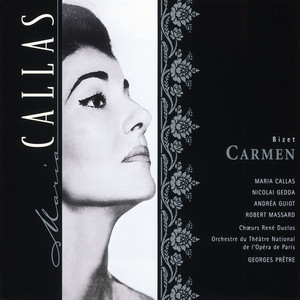 | Bizet: Carmen, Act 2: "Les tringles des sistres tintaient" (Carmen, Frasquita, Mercédès) | Georges Bizet, Maria Callas, Orchestre de l'Opéra National de Paris, Georges Prêtre, Orchestre du Théâtre National de l'Opéra Paris | C Major | 2 | 8B | 138 BPM | |
 | Prokofiev: Suite No. 2 from Romeo and Juliet, Op. 64ter: I. The Montagues and Capulets (Excerpt) | Sergei Prokofiev, Philadelphia Orchestra, Riccardo Muti | A Minor | 3 | 8A | 108 BPM | |
 | Nessun dorma! from Turandot | Plácido Domingo | D Major | 4 | 10B | 80 BPM | |
 | La Traviata: Libiamo ne' lieti calici (Brindisi) | Giuseppe Verdi, José Carreras, Agnes Baltsa, Plácido Domingo, London Symphony Orchestra | B♭ Major | 1 | 6B | 206 BPM | |
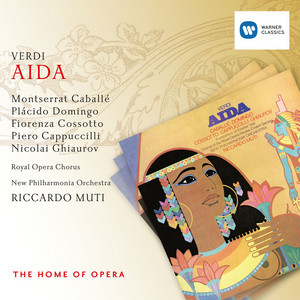 | Verdi: Aida, Act 1: "Vieni, o diletta, appressati" (Amneris, Aida, Radamès) | Giuseppe Verdi, Riccardo Muti, Fiorenza Cossotto, Montserrat Caballé, Plácido Domingo, New Philharmonia Orchestra | E Minor | 2 | 9A | 68 BPM | |
 | Addio fiorito asil | Carlo Bergonzi | D♭ Major | 2 | 3B | 74 BPM | |
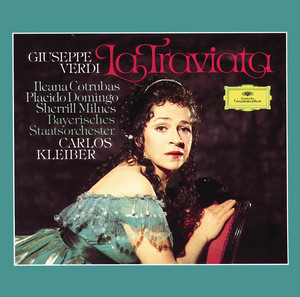 | La Traviata / Act 2: "Noi siamo zingarelle" | Giuseppe Verdi, Stefania Malagu, Alfredo Giacomotti, Giovanni Foiani, Chor der Bayerischen Staatsoper München, Bavarian State Orchestra, Carlos Kleiber | E Minor | 1 | 9A | 63 BPM | |
 | Carmen Votre toast, je peux vous le rendre - Instrumental Version | Arthur Fiedler, Boston Pops Orchestra | F Major | 3 | 7B | 113 BPM | |
 | Verdi: Otello, Act 4: "Ave Maria piena di grazia" (Desdemona) | Giuseppe Verdi, Maria Callas, Nicola Rescigno, Orchestre De La Société Des Concerts Du Conservatoire | A♭ Major | 1 | 4B | 88 BPM | |
 | Les Contes d'Hoffmann / Act 2: Barcarolle - Excerpt | Jacques Offenbach, Anna Netrebko, Elina Garanca, PKF – Prague Philharmonia, Emmanuel Villaume, Prague Philharmonic Choir, Lukás Vasilek | F Major | 4 | 7B | 89 BPM | |
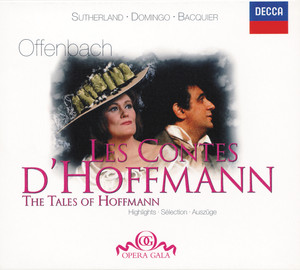 | Les Contes d'Hoffmann / Act 2: "Belle nuit, ô nuit d'amour" | Jacques Offenbach, Dame Joan Sutherland, Huguette Tourangeau, Chorus Pro Arte Lausanne Du Brassus, Radio Suisse Romande Chorus, Orchestre de la Suisse Romande, Richard Bonynge | D Major | 1 | 10B | 82 BPM | |
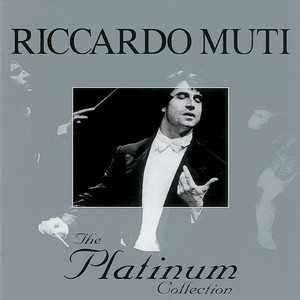 | Radetzky March Op. 228 | Riccardo Muti, Wiener Philharmoniker | A Major | 5 | 11B | 106 BPM | |
 | Verdi: La traviata, Act 1 Scene 5: "Ah, fors'è lui lui che I'anima" (Violetta) | Giuseppe Verdi, Maria Callas, Orquesta Sinfonica del Teatro Nacional de Santa Carlos, Lisboa, Franco Ghione, Orquestra Sinfónica do Teatro Nacional de Sõo Carlos de Lisboa | F♯ Major | 1 | 2B | 81 BPM | |
 | Carmina Burana: V. Ecce gratum | Carl Orff, Chor der Deutschen Oper Berlin, Orchester der Deutschen Oper Berlin, Eugen Jochum | B♭ Major | 4 | 6B | 139 BPM | |
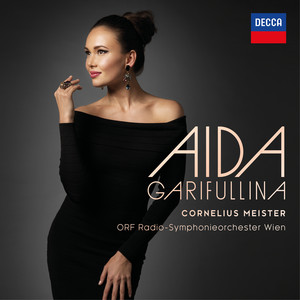 | Sadko: Song Of India | Nikolai Rimsky-Korsakov, Aida Garifullina, Vienna Radio Symphony Orchestra, Cornelius Meister | A Major | 2 | 11B | 75 BPM | |
 | La Bohème / Act 1: "O soave fanciulla" | Giacomo Puccini, Luciano Pavarotti, Mirella Freni, Berliner Philharmoniker, Herbert von Karajan | G Major | 2 | 9B | 83 BPM | |
| Bizet: Carmen, Act 1: "Avec la garde montante" (Children's Chorus, Moralès, José) | Georges Bizet, Nicolai Gedda/Claude Calès/Choeurs d'Enfants Jean Pesneaud/Orchestre de l'Opéra National de Paris/Georges Prêtre, Georges Prêtre, Orchestre du Théâtre National de l'Opéra Paris, Orchestre de l'Opéra National de Paris, Paris Opera Orchestra | D Minor | 1 | 7A | 122 BPM | |
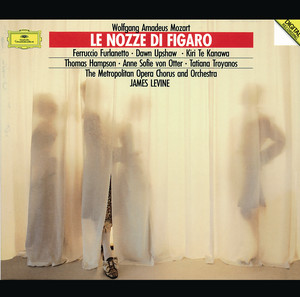 | Le nozze di Figaro, K.492 / Act 4: "Deh vieni, non tardar" | Wolfgang Amadeus Mozart, Dawn Upshaw, Metropolitan Opera Orchestra, James Levine | F Major | 0 | 7B | 97 BPM | |
 | Bizet: Carmen, WD 31, Act 3: Entr'acte | Georges Bizet, Michel Plasson, Orchestre National Du Capitole De Toulouse | D Minor | 1 | 7A | 113 BPM | |
 | Tannhäuser, WWV 70, Act II: Dich, teure Halle, grüß ich wieder | Richard Wagner, Lise Davidsen, Philharmonia Orchestra, Esa-Pekka Salonen | E Minor | 2 | 9A | 169 BPM | |
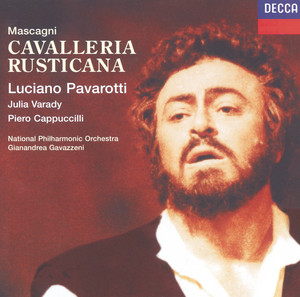 | Cavalleria rusticana: Preludio | Pietro Mascagni, National Philharmonic Orchestra, Gianandrea Gavazzeni | F Major | 2 | 7B | 88 BPM | |
 | Aida: Act II: Ma tu, Re, tu signore possente | Giuseppe Verdi, Maria Dragoni, Kristjan Johannsson, Barbara Dever, Mark Rucker, Francesco Ellero d' Artegna, Riccardo Ferrari, Antonio Marcenò, Monica Trini, Colin Mawby, RTÉ Philharmonic Choir, RTE Chamber Choir, Culwick Choral Society, Bray Choral Society, Dublin County Choir, Dun Laoghaire Choral Society, Cantabile Singers, Goethe Institut Choir, Musica Sacra, The Phoenix Singers, RTÉ National Symphony Orchestra, Irish Army No. 1 Band, Ricco Saccani | F Major | 4 | 7B | 146 BPM |
- ISRC
- GBLWD0001009
- Label
- L-M Records/RCA Records