- BPM
- 79
- Key
- D♭ Major
- Camelot
- 3B
Fauré: Cantique de Jean Racine, Op. 11 (Orchestral Version) by Gabriel Fauré, Paavo Järvi, Orchestre de Paris Song Details
"Fauré: Cantique de Jean Racine, Op. 11 (Orchestral Version)" by Gabriel Fauré, Paavo Järvi, Orchestre de Paris had its release date on September 5, 2011. With this song being about 5 minutes long, at This song is fairly a long song compared to the average song length. This song does not have an "Explicit" tag, making it safe for all ages. The song is number 8 out of 11 in Fauré: Requiem, Cantique de Jean Racine by Gabriel Fauré, Philippe Jaroussky, Matthias Goerne, Orchestre de Paris, Paavo Järvi. Going off of the ISRC code of this track, we detected that the origin of this track is from United Kingdom. Fauré: Cantique de Jean Racine, Op. 11 (Orchestral Version) is below average in popularity right now. In our opinion, the overall tone is not very danceable and projects negative sounds, such as being sad, depressed, or angry.
BPM and Tempo
The tempo marking of Fauré: Cantique de Jean Racine, Op. 11 (Orchestral Version) by Gabriel Fauré, Paavo Järvi, Orchestre de Paris is Andante (at a walking pace), since this song has a tempo of 79 BPM. With that information, we can conclude that the song has a slow tempo. The time signature for this track is 4/4.
Music Key
This song is in the music key of D♭ Major. This also means that this song has a camelot key of 3B. So, the perfect camelot match for 3B would be either 3B or 4A. While, 4B can give you a low energy boost. For moderate energy boost, you would use 12B and a high energy boost can either be 5B or 10B. Though, if you want a low energy drop, you should looking for songs with either a camelot key of 3A or 2B will give you a low energy drop, 6B would be a moderate one, and 1B or 8B would be a high energy drop. Lastly, 12A allows you to change the mood.
Want to find the BPM and music key for other songs? Check out our BPM and Key Finder page!
- Popularity
- 35%
- Loudness
- -22.459 dB
- Acousticness
- 97%
- Danceability
- 13%
- Energy
- 6%
- Instrumentalness
- 95%
- Liveness
- 17%
- Loudness
- 63%
- Speechiness
- 4%
- Valence
- 4%
Recommendations
| Track | Artist | Key | Energy | Camelot | BPM | ||
|---|---|---|---|---|---|---|---|
 | Grieg: Holberg Suite, Op. 40: IV. Air | Edvard Grieg, Paavo Järvi, Estonian National Symphony Orchestra | G Minor | 0 | 6A | 79 BPM | |
 | Requiem, Op. 48: 1. Introitus: Requiem aeternam - Kyrie | Gabriel Fauré, The Monteverdi Choir, Salisbury Cathedral Choristers, Orchestre Révolutionnaire et Romantique, John Eliot Gardiner | B♭ Major | 0 | 6B | 74 BPM | |
 | Orff: Carmina Burana: In Trutina | Carl Orff, Kate Royal, Edward Gardner, Academy of St. Martin in the Fields | D Major | 1 | 10B | 70 BPM | |
 | Rameau: Les Indes galantes, Quatrième entrée "Les sauvages": "Forêts paisibles" (Zima, Adario, Sauvages) | Jean-Philippe Rameau, Sabine Devieilhe, Aimery Lefèvre, Le Jeune Choeur de Paris, Alexis Kossenko, Les Ambassadeurs | F♯ Minor | 3 | 11A | 85 BPM | |
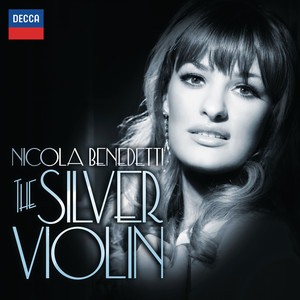 | Die tote Stadt, Act I: Mariettas Lied | Erich Wolfgang Korngold, Nicola Benedetti, Bournemouth Symphony Orchestra, Kirill Karabits | B♭ Major | 3 | 6B | 94 BPM | |
 | Missa Sancti Georgii: I. Kyrie | Herman Finkers, Cappella Amsterdam, Holland Baroque, Daniel Reuss | A Major | 0 | 11B | 74 BPM | |
 | À Chloris | Reynaldo Hahn, Susan Graham | E Major | 0 | 12B | 185 BPM | |
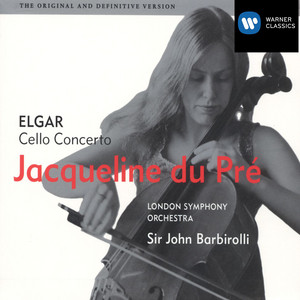 | Elgar: Sea Pictures, Op. 37: No. 3, A Sabbath Morning at Sea | Edward Elgar, Janet Baker, London Symphony Orchestra, Sir John Barbirolli | C Major | 1 | 8B | 86 BPM | |
 | Fauré: Requiem, Op. 48: VII. In Paradisum | Gabriel Fauré, Paavo Järvi, Orchestre de Paris | D Major | 0 | 10B | 147 BPM | |
 | Nabucco / Act 3: "Va, pensiero, sull'ali dorate" | Giuseppe Verdi, Chor der Staatsoper Dresden, Staatskapelle Dresden, Silvio Varviso | D♭ Major | 1 | 3B | 77 BPM | |
 | Stabat Mater: 1. Stabat Mater | Giovanni Battista Pergolesi, Emma Kirkby, James Bowman, Academy of Ancient Music, Christopher Hogwood | E Minor | 0 | 9A | 88 BPM | |
 | Purcell: Music for a while, Z 583/2 | Philippe Jaroussky | F♯ Minor | 0 | 11A | 90 BPM | |
| Missa Sancti Georgii: VI. Agnus Dei | Herman Finkers, Cappella Amsterdam, Holland Baroque, Daniel Reuss | B♭ Major | 2 | 6B | 73 BPM | |
 | Alleluia: III. Night | Valentin Silvestrov, Kārlis Rūtentāls, Latvian Radio Choir, Sigvards Kļava | D Major | 0 | 10B | 84 BPM | |
 | Brahms: Symphony No. 3 in F Major, Op. 90: III. Poco allegretto | Johannes Brahms, Nikolaus Harnoncourt, Berliner Philharmoniker | C Minor | 0 | 5A | 175 BPM | |
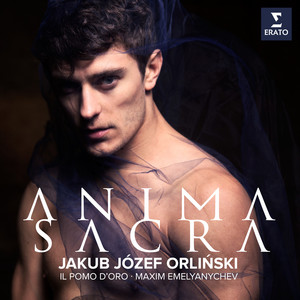 | Fago: Confitebor tibi Domine: I. "Confitebor tibi Domine" | Francesco Nicola Fago, Jakub Józef Orliński, Maxim Emelyanychev, Il Pomo D'oro | F♯ Major | 2 | 2B | 90 BPM | |
 | Bruch: Violin Concerto No. 1 in G Minor, Op. 26: II. Adagio | Max Bruch, Renaud Capuçon, Paavo Järvi, Orchestre de Paris | E♭ Major | 1 | 5B | 91 BPM | |
 | Grieg: Peer Gynt, Op. 23, Act 1: No. 1, Prelude. At the Wedding | Edvard Grieg, Paavo Järvi, Rain Vilu, Estonian National Symphony Orchestra | D Major | 1 | 10B | 85 BPM | |
 | Albinoni / Giazotto: The Beatitudes (Adagio) | Remo Giazotto, Tomaso Albinoni, Edward Higginbottom, Choir of New College, Oxford, Capricorn | C Minor | 2 | 5A | 95 BPM | |
| Handel: Serse, HWV 40, Act 1: "Frondi tenere... Ombra mai fu" (Xerse) | Philippe Jaroussky | E Major | 1 | 12B | 75 BPM | |
 | Handel: Rinaldo, HWV 7, Act 2: "Lascia ch'io pianga" (Almirena) | George Frideric Handel, Joyce DiDonato, Maxim Emelyanychev, Il Pomo D'oro | E Major | 0 | 12B | 76 BPM | |
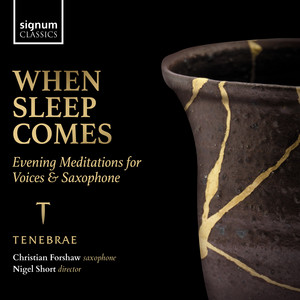 | Drop, Drop Slow Tears - Arr. for Saxophone and Vocal Ensemble by Christian Forshaw | Christian Forshaw, Orlando Gibbons, Tenebrae, Nigel Short | B♭ Major | 1 | 6B | 68 BPM | |
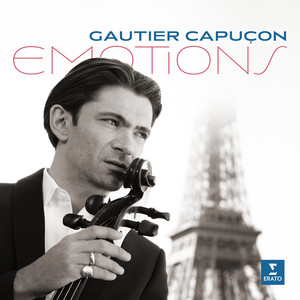 | Dvořák: Rusalka, Op. 114, B. 203, Act 1: Song to the Moon (Instrumental Version) | Antonín Dvořák, Gautier Capuçon, Adrien Perruchon, Orchestre de chambre de Paris | F♯ Major | 1 | 2B | 89 BPM | |
 | Litolff: Concerto symphonique No. 4 in D Minor, Op. 102: II. Scherzo | Henry Litolff, San Francisco Symphony, Michael Tilson Thomas | D Minor | 3 | 7A | 122 BPM | |
 | Stabat Mater, Op. 58: X. Quando corpus morietur (Andante con moto) | Antonín Dvořák, Philippe Herreweghe, Collegium Vocale Gent, Royal Flemish Philharmonic, Ilse Eerens, Michaela Selinger, Maximilian Schmitt, Florian Boesch | C Minor | 1 | 5A | 76 BPM |
- ISRC
- GBAYC1102942
- Label
- L-M Records/RCA Records