- BPM
- 81
- Key
- G Major
- Camelot
- 9B
Variations on an Original Theme, Op. 36 "Enigma": 6. Ysobel (Andantino) by Edward Elgar, London Symphony Orchestra, Eugen Jochum Song Details
"Variations on an Original Theme, Op. 36 "Enigma": 6. Ysobel (Andantino)" by Edward Elgar, London Symphony Orchestra, Eugen Jochum had its release date on January 1, 1975. With This song being less than two minutes long, at 1:22, we are fairly confident that this song is not explicit and is safe for all ages. Based on the duration of this song, this song duration is much smaller than the average song duration. The song is number 7 out of 25 in Elgar: Variations On An Original Theme, Op. 36 "Enigma" / Brahms: Variations On A Theme By Haydn, Op.56a by London Symphony Orchestra, Eugen Jochum. Going off of the ISRC code of this track, we detected that the origin of this track is from Germany. Variations on an Original Theme, Op. 36 "Enigma": 6. Ysobel (Andantino) is not that popular right now. In our opinion, the overall tone is not very danceable and projects negative sounds, such as being sad, depressed, or angry.
BPM and Tempo
The tempo marking of Variations on an Original Theme, Op. 36 "Enigma": 6. Ysobel (Andantino) by Edward Elgar, London Symphony Orchestra, Eugen Jochum is Andante (at a walking pace), since this song has a tempo of 81 BPM. With that information, we can conclude that the song has a slow tempo. The time signature for this track is 4/4.
Music Key
G Major is the music key of this track. This also means that this song has a camelot key of 9B. So, the perfect camelot match for 9B would be either 9B or 10A. While, 10B can give you a low energy boost. For moderate energy boost, you would use 6B and a high energy boost can either be 11B or 4B. Though, if you want a low energy drop, you should looking for songs with either a camelot key of 9A or 8B will give you a low energy drop, 12B would be a moderate one, and 7B or 2B would be a high energy drop. Lastly, 6A allows you to change the mood.
Want to find the BPM and music key for other songs? Check out our BPM and Key Finder page!
- Popularity
- 5%
- Loudness
- -16.304 dB
- Acousticness
- 96%
- Danceability
- 17%
- Energy
- 23%
- Instrumentalness
- 89%
- Liveness
- 15%
- Loudness
- 73%
- Speechiness
- 4%
- Valence
- 12%
Recommendations
| Track | Artist | Key | Energy | Camelot | BPM | ||
|---|---|---|---|---|---|---|---|
 | Minuet in G Minor, HWV 434 No. 4 (Transc. W. Kempff) | George Frideric Handel, Roberto Cominati | G Minor | 0 | 6A | 66 BPM | |
 | Symphony No. 6 in B Minor, Op. 74 "Pathétique": II. Allegro con grazia | Pyotr Ilyich Tchaikovsky, Berliner Philharmoniker, Kirill Petrenko | D Major | 1 | 10B | 85 BPM | |
 | The Moldau (From Má Vlast), JB 1:112 - Version 1960 | Bedřich Smetana, Berliner Philharmoniker, Ferenc Fricsay | E Minor | 2 | 9A | 87 BPM | |
 | Suite bergamasque, L. 75: 3. Clair de lune | Claude Debussy, Daniel Barenboim | D♭ Major | 0 | 3B | 66 BPM | |
 | Symphony No. 5: IV. Adagietto. Sehr langsam | Gustav Mahler, Berliner Philharmoniker, Claudio Abbado | F Major | 0 | 7B | 91 BPM | |
 | Scheherazade, Op. 35: II. Lento - Andantino "The Legend of the Kalendar Prince" | Nikolai Rimsky-Korsakov, New York Philharmonic, Alan Gilbert, Lawrence Rock | G Major | 1 | 9B | 59 BPM | |
 | Peer Gynt Suite No.1 op. 46 Anitra's Dance (Tempo di Mazurka) | Academy of St. Martin in the Fields | E Minor | 0 | 9A | 168 BPM | |
 | Serenade for strings in E Minor, Op. 20 | Edward Elgar, Academy of St. Martin in the Fields, Sir Neville Marriner | E Minor | 1 | 9A | 81 BPM | |
 | Capriol Suite: 5. Pied-en- l'air | Peter Warlock, Academy of St. Martin in the Fields, Nicholas Kraemer, Sir Neville Marriner | G Major | 1 | 9B | 113 BPM | |
 | 4 Impromptus, Op. 90, D. 899: No. 3 in G-flat major | Franz Schubert, Khatia Buniatishvili | F♯ Major | 0 | 2B | 69 BPM | |
 | Sailing By | Ronald Binge, Slovak Radio Symphony Orchestra, Ernest Tomlinson | F Major | 0 | 7B | 80 BPM | |
 | Mozart: Clarinet Concerto in A Major, K. 622: II. Adagio | Wolfgang Amadeus Mozart, Sabine Meyer, Hans Vonk, Staatskapelle Dresden | D Major | 0 | 10B | 93 BPM | |
 | Carnival of the Animals, R. 125: Aquarium | Camille Saint-Saëns, Philippe Entremont, Gaby Casadesus, Yo-Yo Ma, Michel Cerruti, Michel Cals, Régis Pasquier, Yan Pascal Tortelier, Gabin Lauridon, Gerard Causse, Alain Marion, Michel Arrignon | A Minor | 0 | 8A | 81 BPM | |
 | Sonata In G Minor For Cello & Piano, Op. 19: 3. Andante | Sergei Rachmaninoff, Alisa Weilerstein, Inon Barnatan | F Major | 2 | 7B | 82 BPM | |
 | Dido & Aeneas, Z. 626: When I Am Laid in Earth "Dido's Lament" (Transcr. L. Stokowski) | Henry Purcell, Timothy Walden, Bournemouth Symphony Orchestra, José Serebrier | E Major | 0 | 12B | 76 BPM | |
 | String Quartet No. 1 in D Major, Op. 11, TH 111: II. Andante cantabile (Version for String Orchestra) | Pyotr Ilyich Tchaikovsky, Leonard Bernstein, New York Philharmonic | B♭ Major | 1 | 6B | 93 BPM | |
 | Ancient Airs & Dances, Suite III, P. 172: I. Italiana (Anonymous) | Ottorino Respighi, Filarmonica della Scala, Riccardo Chailly | B♭ Major | 1 | 6B | 172 BPM | |
 | Symphony No. 1 in D Major: III. Feierlich und gemessen, ohne zu schleppen - Live | Gustav Mahler, Berliner Philharmoniker, Claudio Abbado | G Minor | 0 | 6A | 56 BPM | |
 | In the Steppes of Central Asia | Alexander Borodin, Royal Philharmonic Orchestra, Vladimir Ashkenazy | A Major | 0 | 11B | 69 BPM | |
 | Massenet: Thaïs, Act II: Méditation | Jules Massenet, Sarah Chang, Plácido Domingo, Berliner Philharmoniker | D Major | 1 | 10B | 99 BPM | |
 | Delius / Arr. Fenby: Koanga, Act II: La Calinda | Frederick Delius, Sir John Barbirolli, Hallé | E Minor | 4 | 9A | 116 BPM | |
 | The Planets, Op. 32: II. Venus, the Bringer of Peace | Gustav Holst, Berliner Philharmoniker, Herbert von Karajan | F Minor | 0 | 4A | 85 BPM | |
 | Bruch : Violin Concerto No.1 in G minor Op.26 : III Finale - Allegro energico | Max Bruch, Maxim Vengerov, Kurt Masur, Gewandhausorchester Leipzig | G Major | 2 | 9B | 90 BPM | |
 | Concerto in D Minor for Two Violins, BWV 1043: Vivace | Johann Sebastian Bach, Jascha Heifetz, Erick Friedman, Thornton Lofthouse, The New Symphony Orchestra Of London, Sir Malcolm Sargent | A Minor | 2 | 8A | 94 BPM | |
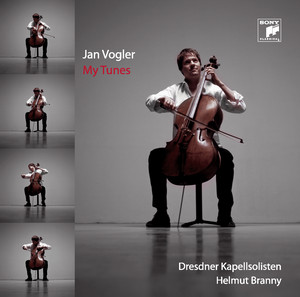 | Salut d'amour, Op. 12 | Edward Elgar, Jan Vogler, Dresdner Kapellsolisten, Helmut Branny, Dresden Cathedral Soloists | E Major | 1 | 12B | 84 BPM |
- ISRC
- DEF057501937
- Label
- L-M Records/RCA Records