- BPM
- 94
- Key
- G Major
- Camelot
- 9B
Serenade for Strings, Op. 48: III. Elégie. Larghetto elegiaco by Pyotr Ilyich Tchaikovsky, Ensemble Instrumental Musica Viva, Alexander Rudin Song Details
"Serenade for Strings, Op. 48: III. Elégie. Larghetto elegiaco" by Pyotr Ilyich Tchaikovsky, Ensemble Instrumental Musica Viva, Alexander Rudin had its release date on 2011. Since This song is still less than 10 minute long, it is still considered a pretty long duration song compared to the average song length. This song does not appear to be explicit due to the lack of the "E" tag. There are a total of 9 in the song's album "Tchaikovsky: Complete Works for Cello and Orchestra". In this album, this song's track order is #8. Furthermore, we believe that the track originated from Netherlands. In terms of popularity, Serenade for Strings, Op. 48: III. Elégie. Larghetto elegiaco is currently not that popular. In our opinion, the overall tone is not very danceable and projects negative sounds, such as being sad, depressed, or angry.
BPM and Tempo
With Serenade for Strings, Op. 48: III. Elégie. Larghetto elegiaco by Pyotr Ilyich Tchaikovsky, Ensemble Instrumental Musica Viva, Alexander Rudin having a BPM of 94 with a half-time of 47 BPM and a double-time of 188 BPM, we would consider this track to have a Andante (at a walking pace) tempo marking. Because of this, we believe that the song has an overall slow tempo. Looking at the BPM of this song, this song might go great with yoga or pilates. The time signature for this track is 4/4.
Music Key
This song has a musical key of G Major. Or for those who are familiar with the camelot wheel, this song has a camelot key of 9B. So, the perfect camelot match for 9B would be either 9B or 10A. While, 10B can give you a low energy boost. For moderate energy boost, you would use 6B and a high energy boost can either be 11B or 4B. Though, if you want a low energy drop, you should looking for songs with either a camelot key of 9A or 8B will give you a low energy drop, 12B would be a moderate one, and 7B or 2B would be a high energy drop. Lastly, 6A allows you to change the mood.
Want to find the BPM and music key for other songs? Check out our BPM and Key Finder page!
- Popularity
- 11%
- Loudness
- -24.643 dB
- Acousticness
- 88%
- Danceability
- 13%
- Energy
- 6%
- Instrumentalness
- 40%
- Liveness
- 10%
- Loudness
- 59%
- Speechiness
- 5%
- Valence
- 4%
Recommendations
| Track | Artist | Key | Energy | Camelot | BPM | ||
|---|---|---|---|---|---|---|---|
 | In the Steppes of Central Asia | Alexander Borodin, Royal Philharmonic Orchestra, Vladimir Ashkenazy | A Major | 0 | 11B | 69 BPM | |
 | Polonaise in A-Flat Major, Op. 53 | Frédéric Chopin, Evgeny Kissin | A♭ Major | 3 | 4B | 85 BPM | |
 | Ancient Airs & Dances, Suite III, P. 172: III. Siciliana (Anonymous) | Ottorino Respighi, Boston Symphony Orchestra, Seiji Ozawa | C Minor | 2 | 5A | 109 BPM | |
 | 6 Pieces for Piano, P. 44: No. 3. Notturno. Lento (Version for Harp) | Ottorino Respighi, Magdalena Hoffmann | F♯ Major | 0 | 2B | 88 BPM | |
 | 4 Romantic Pieces, Op. 75, B. 150: I. Allegro moderato (Arr. Soltani For Solo Cello and Cello Ensemble) | Antonín Dvořák, Kian Soltani, Staatskapelle Berlin, Cellists | B♭ Major | 1 | 6B | 115 BPM | |
 | 21 Hungarian Dances for Orchestra, WoO 1: No. 5, Allegro (Arr. A. Parlow) | Johannes Brahms, Magyar Szimfonikus Zenekarok, Istvan Bogar | G Minor | 2 | 6A | 144 BPM | |
 | Haydn: Symphony No. 94 in G Major, Hob. I:94 "Surprise": IV. Finale. Allegro di molto | Joseph Haydn, André Previn, Pittsburgh Symphony Orchestra | G Major | 2 | 9B | 140 BPM | |
 | Carmen Suite No.2: 5. Danse bohème | Georges Bizet, Orchestre de Paris, Semyon Bychkov | E Major | 1 | 12B | 142 BPM | |
 | Giselle: No. 21 - Andante | Adolphe Adam, Michael Tilson Thomas, London Symphony Orchestra | E♭ Major | 0 | 5B | 73 BPM | |
 | Les Sylphides: 2. Nocturne, Op. 32, No. 2 | Frédéric Chopin, National Philharmonic Orchestra, Richard Bonynge | A♭ Major | 1 | 4B | 125 BPM | |
 | Symphony No. 8 in B Minor, D. 759 "Unfinished": 1. Allegro moderato | Franz Schubert, Berliner Philharmoniker, Herbert von Karajan | B Minor | 1 | 10A | 107 BPM | |
 | Warsaw Concerto | Richard Addinsell, Jean-Yves Thibaudet, BBC Symphony Orchestra, Hugh Wolff | B Major | 1 | 1B | 76 BPM | |
 | Romance in F Minor, Op. 5: Andante cantabile | Pyotr Ilyich Tchaikovsky, Oxana Yablonskaya | F Minor | 0 | 4A | 128 BPM | |
 | Violin Sonata in A major, FWV 8: IV. Allegretto poco mosso | César Franck, Joshua Bell, Jeremy Denk | A Major | 1 | 11B | 94 BPM | |
 | Symphony No. 10 in E Minor, Op. 93: II. Allegro | Dmitri Shostakovich, Royal Liverpool Philharmonic Orchestra, Vasily Petrenko | B♭ Minor | 6 | 3A | 89 BPM | |
 | Scènes de ballet, Op. 52: II. Marionnettes | Alexander Glazunov, Moscow Philharmonic Orchestra, Alexander Anissimov | D Major | 0 | 10B | 69 BPM | |
 | Symphony No. 3 in F Major, Op. 90: III. Poco allegretto | Johannes Brahms, David Zinman | C Minor | 0 | 5A | 173 BPM | |
 | Giselle: Act II: Entree d'Hilarion, scene et fugue des Wilis - Grand pas de duex | Adolphe Adam, Slovak Radio Symphony Orchestra, Andrew Mogrelia | G Major | 1 | 9B | 122 BPM | |
 | A Midsummer Night's Dream, Incidental Music, Op.61, MWV M 13: No.1 Scherzo | Felix Mendelssohn, Judi Dench, Boston Symphony Orchestra, Seiji Ozawa | G Minor | 2 | 6A | 123 BPM | |
 | Giselle / Act 2: Grand pas de deux: Adage | Adolphe Adam, Orchestra of the Royal Opera House, Covent Garden, Richard Bonynge | E♭ Major | 0 | 5B | 73 BPM | |
 | 12 Songs, Op. 21: V. Lilacs (Transcr. Rachmaninoff for Solo Piano) | Sergei Rachmaninoff, Sergei Babayan | A♭ Major | 0 | 4B | 78 BPM | |
 | Morgen, Op. 27 No. 4 (Arr. Reger for Piano) | Richard Strauss, Angela Hewitt | A Major | 2 | 11B | 143 BPM | |
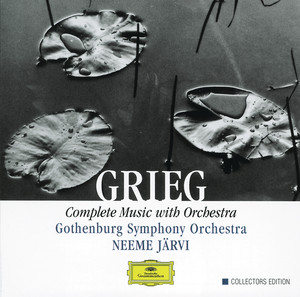 | In Autumn, Op. 11 | Edvard Grieg, Gothenburg Symphony Orchestra, Neeme Järvi | A Minor | 1 | 8A | 109 BPM | |
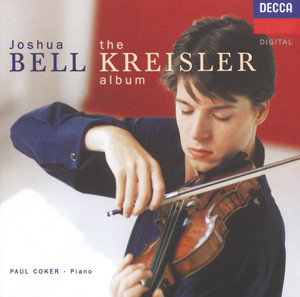 | Praeludium & Allegro "by Gaetano Pugnani" | Fritz Kreisler, Joshua Bell, Paul Coker | E Minor | 2 | 9A | 103 BPM | |
 | Carmen Suite No. 1 (Arr. E. Guiraud): IV. Séguedille | Georges Bizet, Orquestra Simfònica de Barcelona i Nacional de Catalunya, Pablo González | G Minor | 0 | 6A | 66 BPM |
- ISRC
- NLY331105298
- Label
- L-M Records/RCA Records