- BPM
- 169
- Key
- G Major
- Camelot
- 9B
Drei Quartette, Op.64: 2. Der Abend by Johannes Brahms, Edith Mathis, Brigitte Fassbaender, Peter Schreier, Dietrich Fischer-Dieskau, Karl Engel Song Details
"Drei Quartette, Op.64: 2. Der Abend" by Johannes Brahms, Edith Mathis, Brigitte Fassbaender, Peter Schreier, Dietrich Fischer-Dieskau, Karl Engel had its release date on January 1, 1983. With this song being around four minutes long, at 4:27, the duration of this song is pretty average compared to other songs. This track is safe for children and doesn't appear to contain any foul language, since the "Explicit" tag was not present in this track. The song is number 35 out of 36 in Brahms: Liebeslieder-Walzer by Johannes Brahms, Edith Mathis, Brigitte Fassbaender, Peter Schreier, Dietrich Fischer-Dieskau. The popularity of Drei Quartette, Op.64: 2. Der Abend is currently not that popular right now. In our opinion, the overall tone is not very danceable and projects negative sounds, such as being sad, depressed, or angry.
BPM and Tempo
The tempo marking of Drei Quartette, Op.64: 2. Der Abend by Johannes Brahms, Edith Mathis, Brigitte Fassbaender, Peter Schreier, Dietrich Fischer-Dieskau, Karl Engel is Vivace (lively and fast), since this song has a tempo of 169 BPM. With that information, we can conclude that the song has a fast tempo. The time signature for this track is 4/4.
Music Key
This song is in the music key of G Major. This also means that this song has a camelot key of 9B. So, the perfect camelot match for 9B would be either 9B or 10A. While, 10B can give you a low energy boost. For moderate energy boost, you would use 6B and a high energy boost can either be 11B or 4B. Though, if you want a low energy drop, you should looking for songs with either a camelot key of 9A or 8B will give you a low energy drop, 12B would be a moderate one, and 7B or 2B would be a high energy drop. Lastly, 6A allows you to change the mood.
Want to find the BPM and music key for other songs? Check out our BPM and Key Finder page!
- Popularity
- 4%
- Loudness
- -26.62 dB
- Acousticness
- 99%
- Danceability
- 17%
- Energy
- 7%
- Instrumentalness
- 0%
- Liveness
- 9%
- Loudness
- 56%
- Speechiness
- 5%
- Valence
- 5%
Recommendations
| Track | Artist | Key | Energy | Camelot | BPM | ||
|---|---|---|---|---|---|---|---|
 | Piano Concerto No. 1 in C Major, Op. 11, J. 98: II. Adagio | Carl Maria von Weber, Benjamin Frith, RTE Sinfonietta, Proinnsias O'Duinn | A♭ Major | 0 | 4B | 95 BPM | |
 | Orfeo ed Euridice, Wq. 30: Dance of the Blessed Spirits "Melody" (Arr. Sgambati for Piano) | Christoph Willibald Gluck, Yuja Wang | D Minor | 0 | 7A | 70 BPM | |
 | Hungarian Rhapsody No. 2 in C-Sharp Minor, S. 244/2 | Franz Liszt, Vladimir Horowitz | D♭ Major | 3 | 3B | 80 BPM | |
 | Träumerei | Robert Schumann, Vladimir Horowitz | A♭ Major | 1 | 4B | 128 BPM | |
 | 6 Impromptus, Op. 5: Impromptu No. 5 in B Minor | Jean Sibelius, Håvard Gimse | B Minor | 0 | 10A | 84 BPM | |
 | Symphony No. 2 In C Minor - "Resurrection" / 1st Movement - Allegro maestoso (Totenfeier): Allegro maestoso | Gustav Mahler, Wiener Philharmoniker, Gilbert Kaplan | C Minor | 1 | 5A | 80 BPM | |
 | Piano Concerto No. 2 in F Major, Op. 102: I. Allegro | Dmitri Shostakovich, I Musici de Montréal, Maxim Shostakovich | B♭ Major | 3 | 6B | 160 BPM | |
 | Souvenir d'un lieu cher, Op. 42: 3. Mélodie | Pyotr Ilyich Tchaikovsky, Janine Jansen, Mahler Chamber Orchestra, Daniel Harding | E♭ Major | 0 | 5B | 99 BPM | |
 | Schumann: Kinderszenen, Op. 15: I Von fremden Ländern und Menschen | Robert Schumann, Maria João Pires | G Major | 0 | 9B | 67 BPM | |
 | Nocturne No. 1 in E-Flat Major, H. 24 | John Field, Elizabeth Joy Roe | E♭ Major | 0 | 5B | 75 BPM | |
 | Romeo and Juliette, Op. 64 (Arr. for Viola and Piano by Vadim Borisovsky, Orchestration for Viola and String Orchestra by François Vallières): Introduction | Sergei Prokofiev, Elvira Misbakhova, I Musici de Montréal, Jean-François Rivest | D Major | 1 | 10B | 99 BPM | |
 | Peer Gynt Suite No. 1, Op. 46: III. Anitra's Dance | Edvard Grieg, Berliner Philharmoniker, Herbert von Karajan | D Minor | 0 | 7A | 84 BPM | |
 | Ma mère l'oye, M. 62: Apothéose. Le jardin féerique | Maurice Ravel, Orchestre National De Lyon, Leonard Slatkin | C Major | 0 | 8B | 62 BPM | |
 | No. 2 in E Minor, Dumka (Arr. P. Breiner for Piano) | Antonín Dvořák, Peter Breiner | G Major | 0 | 9B | 70 BPM | |
 | In the Steppes of Central Asia | Alexander Borodin, Royal Philharmonic Orchestra, Vladimir Ashkenazy | A Major | 0 | 11B | 69 BPM | |
 | Piano Concerto No. 21 in C Major, K. 467: II. Andante | Wolfgang Amadeus Mozart, Friedrich Gulda, Wiener Philharmoniker, Claudio Abbado | F Major | 0 | 7B | 81 BPM | |
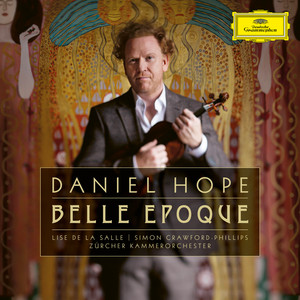 | Notturno for Strings and Harp | Arnold Schoenberg, Daniel Hope, Zürcher Kammerorchester, Jane Berthe | A♭ Major | 1 | 4B | 75 BPM | |
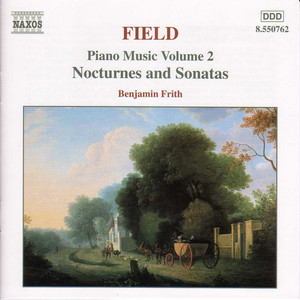 | Nocturne No. 10 In E Minor | Benjamin Frith, John Field | E Minor | 0 | 9A | 65 BPM | |
 | Schumann, Clara: 3 Romances, Op. 11: No. 1 in E-Flat Minor | Clara Schumann, Sophie Pacini | E♭ Minor | 0 | 2A | 60 BPM | |
 | Carnaval, Op. 9: XII. Chopin | Robert Schumann, Daniil Trifonov | E Major | 0 | 12B | 68 BPM | |
 | Dvořák: 4 Romantic Pieces, Op. 75, B. 150: No. 1, Allegro moderato | Antonín Dvořák, Renaud Capuçon, Khatia Buniatishvili | B♭ Major | 1 | 6B | 107 BPM | |
 | Schluss | Fanny Mendelssohn, Heather Schmidt | E Major | 1 | 12B | 87 BPM | |
 | Violin Concerto No. 1 in G Minor, Op. 26: III. Allegro energico | Max Bruch, Itzhak Perlman, Bernard Haitink, Royal Concertgebouw Orchestra | G Major | 3 | 9B | 97 BPM | |
 | Polovetsian Dances from Prince Igor: Introduzione | Alexander Borodin, George Szell, The Cleveland Orchestra | A Major | 1 | 11B | 83 BPM | |
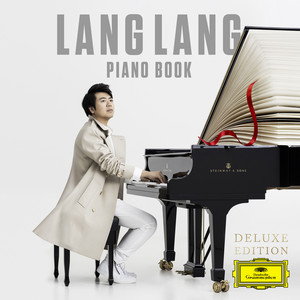 | The Well-Tempered Clavier I, Prelude & Fugue No. 1 in C Major, BWV 846: I. Prelude | Johann Sebastian Bach, Lang Lang | C Major | 1 | 8B | 134 BPM |
- ISRC
- This song does not have an ISRC.
- Label
- L-M Records/RCA Records