- BPM
- 127
- Key
- D Major
- Camelot
- 10B
String Sextet in D Minor, Op. 70, "Souvenir de Florence": II. Adagio cantabile e con moto by Pyotr Ilyich Tchaikovsky, Jan Vogler Song Details
"String Sextet in D Minor, Op. 70, "Souvenir de Florence": II. Adagio cantabile e con moto" by Pyotr Ilyich Tchaikovsky, Jan Vogler had its release date on March 4, 2016. Since This song is still less than 10 minute long, it is still considered a pretty long duration song compared to the average song length. This song does not appear to be explicit due to the lack of the "E" tag. There are a total of 16 in the song's album "Tchaikovsky". In this album, this song's track order is #14. Based on our statistics, String Sextet in D Minor, Op. 70, "Souvenir de Florence": II. Adagio cantabile e con moto's popularity is below average in popularity right now. In our opinion, the overall tone is not very danceable and projects negative sounds, such as being sad, depressed, or angry.
BPM and Tempo
With String Sextet in D Minor, Op. 70, "Souvenir de Florence": II. Adagio cantabile e con moto by Pyotr Ilyich Tchaikovsky, Jan Vogler having a BPM of 127 with a half-time of 64 BPM and a double-time of 254 BPM, we would consider this track to have a Allegro (fast, quick, and bright) tempo marking. Because of this, we believe that the song has an overall fast tempo. Looking at the BPM of this song, this song might go great with walking. The time signature for this track is 3/4.
Music Key
This song has a musical key of D Major. Or for those who are familiar with the camelot wheel, this song has a camelot key of 10B. So, the perfect camelot match for 10B would be either 10B or 11A. While, 11B can give you a low energy boost. For moderate energy boost, you would use 7B and a high energy boost can either be 12B or 5B. Though, if you want a low energy drop, you should looking for songs with either a camelot key of 10A or 9B will give you a low energy drop, 1B would be a moderate one, and 8B or 3B would be a high energy drop. Lastly, 7A allows you to change the mood.
Want to find the BPM and music key for other songs? Check out our BPM and Key Finder page!
- Popularity
- 27%
- Loudness
- -19.714 dB
- Acousticness
- 78%
- Danceability
- 21%
- Energy
- 13%
- Instrumentalness
- 68%
- Liveness
- 12%
- Loudness
- 67%
- Speechiness
- 5%
- Valence
- 5%
Recommendations
| Track | Artist | Key | Energy | Camelot | BPM | ||
|---|---|---|---|---|---|---|---|
 | Die Walküre, Act III: Ride of the Valkyries | Richard Wagner, Budapest Symphony Orchestra, György Lehel | D♭ Major | 1 | 3B | 72 BPM | |
 | Violin Concerto in E Minor, Op. 64, MWV O14: I. Allegro molto appassionato | Felix Mendelssohn, Hilary Hahn, Hugh Wolff, Oslo Philharmonic Orchestra, Oslo-Filharmonien | A Minor | 2 | 8A | 63 BPM | |
 | The Blue Danube | Johann Strauss II, Eugene Ormandy | D Major | 1 | 10B | 176 BPM | |
 | 6 Pieces for Piano, P. 44: No. 3. Notturno. Lento (Version for Harp) | Ottorino Respighi, Magdalena Hoffmann | F♯ Major | 0 | 2B | 88 BPM | |
 | Jazz Suite No. 2: IV. Waltz I | Dmitri Shostakovich, Royal Concertgebouw Orchestra, Riccardo Chailly | B♭ Major | 2 | 6B | 178 BPM | |
 | Fantasia in D Minor, K. 397 | Wolfgang Amadeus Mozart, Alfred Brendel | D Major | 0 | 10B | 126 BPM | |
 | Gold Und Silber (Gold And Silver), Op. 79 | Slovak Radio Symphony Orchestra, Franz Lehár | C Major | 1 | 8B | 81 BPM | |
 | La forza del destino: Overture (Sinfonia) | Giuseppe Verdi, Berliner Philharmoniker, Claudio Abbado | E Minor | 2 | 9A | 80 BPM | |
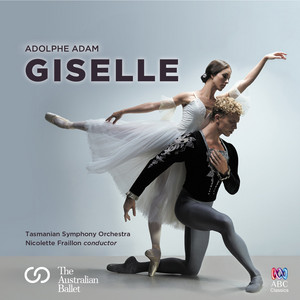 | Giselle, Act 1: No. 1 Pheasants' Entrance, Entrance of Hilarion | Adolphe Adam, Tasmanian Symphony Orchestra, Nicolette Fraillon | A♭ Major | 1 | 4B | 129 BPM | |
 | Cello Concerto No. 1 in A Minor, Op. 33: I. Allegro non troppo | Camille Saint-Saëns, Mischa Maisky, Orpheus Chamber Orchestra | F Major | 2 | 7B | 131 BPM | |
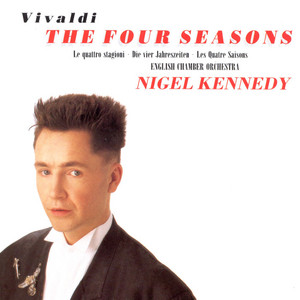 | Vivaldi: The Four Seasons, Violin Concerto in G Minor, Op. 8 No. 2, RV 315 "Summer": III. Presto | Antonio Vivaldi, Nigel Kennedy, English Chamber Orchestra | G Minor | 6 | 6A | 149 BPM | |
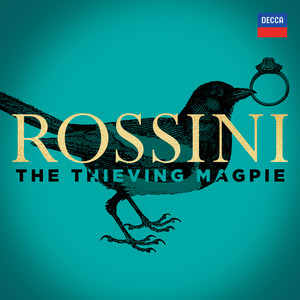 | The Thieving Magpie - From “A Clockwork Orange" | Gioachino Rossini, National Philharmonic Orchestra, Riccardo Chailly | E Major | 2 | 12B | 89 BPM | |
 | Finlandia, Op. 26 | Jean Sibelius, Berliner Philharmoniker, Herbert von Karajan | A♭ Major | 3 | 4B | 67 BPM | |
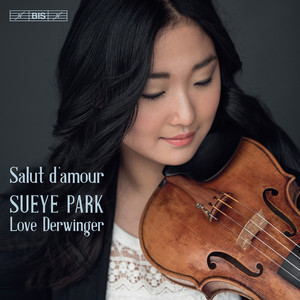 | Salut d'amour, Op. 12 | Edward Elgar, Sueye Park, Love Derwinger | E Major | 1 | 12B | 83 BPM | |
 | Peer Gynt Suite No. 1, Op. 46: II. Åse's Death | Edvard Grieg, Wiener Philharmoniker, Zubin Mehta | G Major | 0 | 9B | 99 BPM | |
 | Overture "A Midsummer Night's Dream", Op. 21 | Felix Mendelssohn, Boston Symphony Orchestra, Seiji Ozawa | E Major | 1 | 12B | 139 BPM | |
 | The Firebird (L'oiseau De Feu) - Suite (1919): Finale | Igor Stravinsky, Orchestre de l'Opéra National de Paris, Myung-Whun Chung | E Major | 2 | 12B | 78 BPM | |
 | Romeo and Juliette, Op. 64 (Arr. for Viola and Piano by Vadim Borisovsky, Orchestration for Viola and String Orchestra by François Vallières): Introduction | Sergei Prokofiev, Elvira Misbakhova, I Musici de Montréal, Jean-François Rivest | D Major | 1 | 10B | 99 BPM | |
 | Carmen Suite No. 1: 3. Intermezzo | Georges Bizet, Orchestre de Paris, Semyon Bychkov | B♭ Major | 0 | 6B | 74 BPM | |
 | Swan Lake, Op. 20: Op. 20: Act IV No. 29, Scène Finale | Pyotr Ilyich Tchaikovsky, Orchestra of the Royal Opera House, Covent Garden, Mark Ermler | B Major | 4 | 1B | 113 BPM | |
| Giselle, Act 1: No. 3 Giselle’s Entrance, Giselle and Albrecht first meet and are discovered by Hilarion | Adolphe Adam, Tasmanian Symphony Orchestra, Nicolette Fraillon | E♭ Major | 1 | 5B | 88 BPM | |
 | Carmen Suite No. 1 (Arr. E. Guiraud): IV. Séguedille | Georges Bizet, Orquestra Simfònica de Barcelona i Nacional de Catalunya, Pablo González | G Minor | 0 | 6A | 66 BPM | |
 | Frühlingsstimmen, Op. 410 | Johann Strauss II, Slovak Philharmonic, Noriaki Kitamura | B♭ Major | 0 | 6B | 181 BPM | |
 | Mahler: Symphony No. 5 in C-Sharp Minor: IV. Adagietto. Sehr langsam | Gustav Mahler, Daniel Barenboim, Chicago Symphony Orchestra | F Major | 1 | 7B | 82 BPM | |
 | Holberg Suite, Op. 40: II. Sarabande (Andante) | Edvard Grieg, Gothenburg Symphony Orchestra, Neeme Järvi | A Major | 1 | 11B | 87 BPM |
- ISRC
- This song does not have an ISRC.
- Label
- L-M Records/RCA Records