- BPM
- 88
- Key
- B Major
- Camelot
- 1B
Strauss, R: Der Rosenkavalier, Op. 59, Act I: "Wie du warst! Wie du bist!" (Octavian, Marschallin) by Richard Strauss, Herbert von Karajan, Elisabeth Schwarzkopf, Christa Ludwig, Philharmonia Orchestra Song Details
"Strauss, R: Der Rosenkavalier, Op. 59, Act I: "Wie du warst! Wie du bist!" (Octavian, Marschallin)" by Richard Strauss, Herbert von Karajan, Elisabeth Schwarzkopf, Christa Ludwig, Philharmonia Orchestra had its release date on 1957. With this song being about 5 minutes long, at This song is fairly a long song compared to the average song length. This song does not have an "Explicit" tag, making it safe for all ages. There are a total of 62 in the song's album "Strauss: Der Rosenkavalier". In this album, this song's track order is #2. Furthermore, we believe that the track originated from United Kingdom. Strauss, R: Der Rosenkavalier, Op. 59, Act I: "Wie du warst! Wie du bist!" (Octavian, Marschallin) is not that popular right now. In our opinion, the overall tone is not very danceable and projects negative sounds, such as being sad, depressed, or angry.
BPM and Tempo
With Strauss, R: Der Rosenkavalier, Op. 59, Act I: "Wie du warst! Wie du bist!" (Octavian, Marschallin) by Richard Strauss, Herbert von Karajan, Elisabeth Schwarzkopf, Christa Ludwig, Philharmonia Orchestra having a BPM of 88 with a half-time of 44 BPM and a double-time of 176 BPM, we would consider this track to have a Andante (at a walking pace) tempo marking. Because of this, we believe that the song has an overall slow tempo. Looking at the BPM of this song, this song might go great with yoga or pilates. The time signature for this track is 3/4.
Music Key
This song has a musical key of B Major. Or for those who are familiar with the camelot wheel, this song has a camelot key of 1B. So, the perfect camelot match for 1B would be either 1B or 2A. While, 2B can give you a low energy boost. For moderate energy boost, you would use 10B and a high energy boost can either be 3B or 8B. Though, if you want a low energy drop, you should looking for songs with either a camelot key of 1A or 12B will give you a low energy drop, 4B would be a moderate one, and 11B or 6B would be a high energy drop. Lastly, 10A allows you to change the mood.
Want to find the BPM and music key for other songs? Check out our BPM and Key Finder page!
- Popularity
- 12%
- Loudness
- -21.122 dB
- Acousticness
- 98%
- Danceability
- 16%
- Energy
- 11%
- Instrumentalness
- 1%
- Liveness
- 67%
- Loudness
- 65%
- Speechiness
- 4%
- Valence
- 4%
Recommendations
| Track | Artist | Key | Energy | Camelot | BPM | ||
|---|---|---|---|---|---|---|---|
 | La traviata / Act 3: Prelude | Giuseppe Verdi, Berliner Philharmoniker, Claudio Abbado | A♭ Major | 0 | 4B | 135 BPM | |
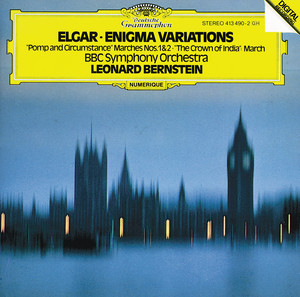 | Variations On An Original Theme, Op.36 "Enigma": 12. B.G.N. (Andante) | Edward Elgar, BBC Symphony Orchestra, Leonard Bernstein | B♭ Major | 0 | 6B | 82 BPM | |
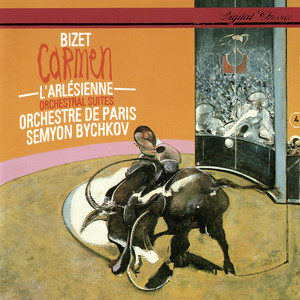 | Carmen Suite No. 1: 3. Intermezzo | Georges Bizet, Orchestre de Paris, Semyon Bychkov | B♭ Major | 0 | 6B | 74 BPM | |
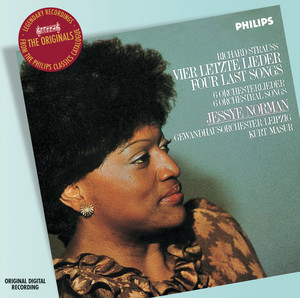 | 4 Letzte Lieder, TrV 296: No. 4, Im Abendrot | Richard Strauss, Jessye Norman, Gewandhausorchester, Kurt Masur | B♭ Major | 1 | 6B | 78 BPM | |
 | Symphony No. 3 in D Minor, WAB 103 (1873 Version): III. Scherzo. Ziemlich schnell – Trio. Gleiches Zeitmaß – Scherzo da capo | Anton Bruckner, Berliner Philharmoniker, Herbert Blomstedt | F Major | 2 | 7B | 136 BPM | |
 | Recueil de chants, Op. 65: No. 6, Barcarolle | Charles-Valentin Alkan, Bruce Liu | G Minor | 0 | 6A | 70 BPM | |
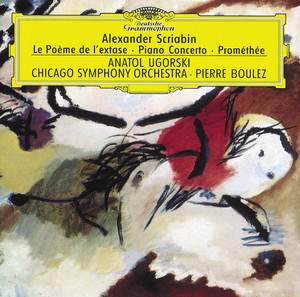 | Piano Concerto in F-Sharp Minor, Op. 20: I. Allegro | Alexander Scriabin, Anatol Ugorski, Chicago Symphony Orchestra, Pierre Boulez | D Major | 1 | 10B | 86 BPM | |
 | Strauss, R: 4 Letzte Lieder: No. 2, September | Richard Strauss, Elisabeth Schwarzkopf, George Szell, Deutsches Symphonie-Orchester Berlin | D Major | 1 | 10B | 70 BPM | |
 | St. Matthew Passion, BWV 244 / Part Two: "Erbarme dich" | Johann Sebastian Bach, Anne Sofie von Otter, Chicago Symphony Orchestra, Sir Georg Solti | B Minor | 1 | 10A | 93 BPM | |
 | Orfeo ed Euridice, Wq. 30 / Act II: Dance of the Blessed Spirits (Arr. by Mathieu Herzog for Cello and Strings) | Christoph Willibald Gluck, Camille Thomas, Brussels Philharmonic, Mathieu Herzog | B Minor | 1 | 10A | 87 BPM | |
| Macbeth, Act III: Ballet Music | Giuseppe Verdi, Berliner Philharmoniker, Claudio Abbado | F Major | 1 | 7B | 102 BPM | |
 | Scheherazade: The Sea & Sinbad's Ship | Nikolai Rimsky-Korsakov, Lars Hjalmar Joakim | E Major | 1 | 12B | 82 BPM | |
 | Warsaw Concerto | Richard Addinsell, Jean-Yves Thibaudet, BBC Symphony Orchestra, Hugh Wolff | B Major | 1 | 1B | 76 BPM | |
 | Fauré: Pavane, Op. 50 | Gabriel Fauré, San Francisco Symphony, Michael Tilson Thomas | F♯ Minor | 0 | 11A | 62 BPM | |
 | La Mer, L.109: 2. Play of the Waves (Jeux de vagues) | Claude Debussy, Orchestre Symphonique de Montréal, Charles Dutoit | E Major | 1 | 12B | 113 BPM | |
 | Bach: Prelude in B minor, BWV 855a (Arr. by Alexander Siloti) | Johann Sebastian Bach, Khatia Buniatishvili | F♯ Major | 0 | 2B | 69 BPM | |
 | Shéhérazade, Op. 35: I. The Sea and Sinbad's Ship | Nikolai Rimsky-Korsakov, Sergej Galaktionov, Gianandrea Noseda, Filarmonica Teatro Regio Torino | E Major | 1 | 12B | 136 BPM | |
 | Schubert / Orch. Mahler: String Quartet No. 14 in D Minor, D. 810 "Death and the Maiden": II. Andante con moto | Franz Schreker, Camerata Academica Salzburg/Franz Welser-Möst, Franz Welser-Möst, Camerata Salzburg | A Major | 0 | 11B | 80 BPM | |
 | Piano Concerto No. 2 in F Major, Op. 102: II. Andante | Dmitri Shostakovich, I Musici de Montréal, Maxim Shostakovich | C Minor | 0 | 5A | 177 BPM | |
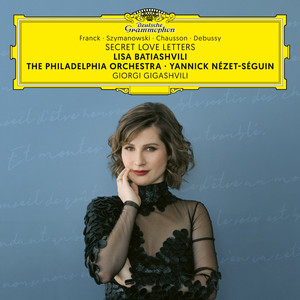 | Beau soir, L. 6 (L. 84) (Arr. Heifetz for Violin and Piano) | Claude Debussy, Lisa Batiashvili, Yannick Nézet-Séguin | F Minor | 1 | 4A | 79 BPM | |
 | Die Frau ohne Schatten, Op. 65, TrV 234, Act I: Licht überm See (Live) | Richard Strauss, Frankfurter Opern- und Museumsorchester, Tanja Ariane Baumgartner, Dietrich Volle, Sebastian Weigle | B Major | 2 | 1B | 132 BPM | |
 | Vier letzte Lieder, TrV 296: 3. Beim Schlafengehen | Richard Strauss, Jessye Norman, Gewandhausorchester, Kurt Masur | D♭ Major | 1 | 3B | 82 BPM | |
 | Strauss, R: Der Bürger als Edelmann Suite, Op. 60-IIIa: IV. Auftritt und Tanz der Schneider | Richard Strauss, Jeffrey Tate, English Chamber Orchestra, Clifford Benson, José-Luis Garcia | F Major | 1 | 7B | 65 BPM | |
 | Weber: Clarinet Concerto No. 1 in F Minor, Op. 73, J. 114: I. Allegro | Carl Maria von Weber, Sabine Meyer, Staatskapelle Dresden, Herbert Blomstedt | F Minor | 1 | 4A | 128 BPM | |
 | Brahms: Double Concerto for Violin and Cello in A Minor, Op. 102: III. Vivace non troppo | Johannes Brahms, Itzhak Perlman, Mstislav Rostropovich, Bernard Haitink, Royal Concertgebouw Orchestra | A Minor | 2 | 8A | 82 BPM |
- ISRC
- GBAYC0101311
- Label
- L-M Records/RCA Records