- BPM
- 77
- Key
- G Major
- Camelot
- 9B
Adagio for Strings, Op. 11a (Arr. M. Lo Muscio for Organ) by Samuel Barber, Marco Lo Muscio Song Details
"Adagio for Strings, Op. 11a (Arr. M. Lo Muscio for Organ)" by Samuel Barber, Marco Lo Muscio had its release date on December 5, 2013. Since This song is still less than 10 minute long, it is still considered a pretty long duration song compared to the average song length. This song does not appear to be explicit due to the lack of the "E" tag. The track order of this song in Marco Lo Muscio's "Great European Organs, Vol. 89" album is number 4 out of 12. On top of that, United Kingdom appears to be the country where this track was created. Adagio for Strings, Op. 11a (Arr. M. Lo Muscio for Organ) is unknown right now. In our opinion, the overall tone is not very danceable and projects negative sounds, such as being sad, depressed, or angry.
BPM and Tempo
We consider the tempo marking of Adagio for Strings, Op. 11a (Arr. M. Lo Muscio for Organ) by Samuel Barber, Marco Lo Muscio to be Andante (at a walking pace) because the track has a tempo of 77 BPM, a half-time of 38BPM, and a double-time of 154 BPM. Based on that, the speed of the song's tempo is slow. The time signature for this track is 3/4.
Music Key
This song has a musical key of G Major. This also means that this song has a camelot key of 9B. So, the perfect camelot match for 9B would be either 9B or 10A. While, 10B can give you a low energy boost. For moderate energy boost, you would use 6B and a high energy boost can either be 11B or 4B. Though, if you want a low energy drop, you should looking for songs with either a camelot key of 9A or 8B will give you a low energy drop, 12B would be a moderate one, and 7B or 2B would be a high energy drop. Lastly, 6A allows you to change the mood.
Want to find the BPM and music key for other songs? Check out our BPM and Key Finder page!
- Popularity
- 0%
- Loudness
- -16.012 dB
- Acousticness
- 56%
- Danceability
- 7%
- Energy
- 25%
- Instrumentalness
- 93%
- Liveness
- 28%
- Loudness
- 73%
- Speechiness
- 4%
- Valence
- 4%
Recommendations
| Track | Artist | Key | Energy | Camelot | BPM | ||
|---|---|---|---|---|---|---|---|
 | Adagio for Strings, Op. 11 | Samuel Barber, Thomas Bowes, Malmö Opera Orchestra, Joseph Swensen | B♭ Minor | 0 | 3A | 85 BPM | |
 | Romeo and Juliet, Op. 64: No. 13 Dance of the Knights | Sergei Prokofiev, Orchestra of the Royal Opera House, Covent Garden, Mark Ermler | C Major | 1 | 8B | 73 BPM | |
 | Mahler: Symphony No. 5 in C-Sharp Minor: IV. Adagietto. Sehr langsam (Conclusion) | Gustav Mahler, Sir John Barbirolli, John Barbirolli, New Philharmonia Orchestra | A Minor | 1 | 8A | 77 BPM | |
 | Allegri: Miserere (Excerpt) | Gregorio Allegri, Stephen Cleobury, Choir of King's College, Cambridge, Timothy Beasley-Murray | G Minor | 1 | 6A | 127 BPM | |
 | Nocturne No. 20 in C-Sharp Minor, Op. posth. | Frédéric Chopin, Menahem Pressler | F♯ Minor | 0 | 11A | 134 BPM | |
 | The Piano: The Heart Asks Pleasure First | Michael Nyman, Valentina Lisitsa | A Minor | 0 | 8A | 159 BPM | |
 | Adagio in G Minor | Tomaso Albinoni, Chamber Orchestra of Miemo | G Minor | 3 | 6A | 90 BPM | |
 | Symphony No. 5 in C-Sharp Minor: IV. Adagietto. Sehr langsam | Gustav Mahler, Leonard Bernstein, New York Philharmonic | B♭ Major | 3 | 6B | 96 BPM | |
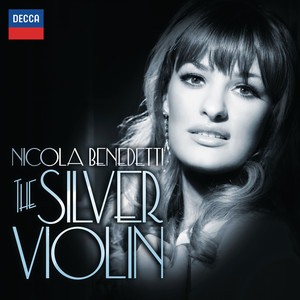 | Die tote Stadt, Act I: Mariettas Lied | Erich Wolfgang Korngold, Nicola Benedetti, Bournemouth Symphony Orchestra, Kirill Karabits | B♭ Major | 3 | 6B | 94 BPM | |
 | Walton: Henry V: Passacaglia "The Death of Falstaff" | William Walton, Douglas Boyd, Chamber Orchestra of Europe | E Minor | 0 | 9A | 86 BPM | |
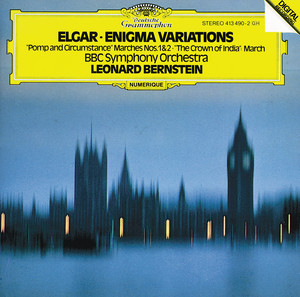 | Enigma Variations, Op. 36: Var. 1. L'istesso tempo "C.A.E." | Edward Elgar, BBC Symphony Orchestra, Leonard Bernstein | G Minor | 0 | 6A | 81 BPM | |
 | 3 Gymnopédies: No. 1, Lent et douloureux | Erik Satie, Khatia Buniatishvili | G Major | 0 | 9B | 79 BPM | |
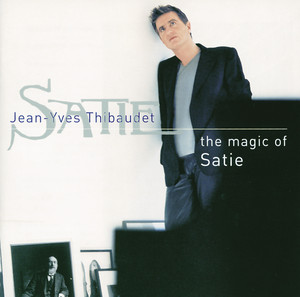 | Gymnopédie No. 1. Lent et douloureux | Erik Satie, Jean-Yves Thibaudet | G Major | 0 | 9B | 74 BPM | |
 | Scottish Fantasy for Violin and Orchestra, Op. 46: I. Introduction: Grave, Adagio cantabile | Max Bruch, Joshua Bell, Academy of St. Martin in the Fields | E♭ Major | 2 | 5B | 60 BPM | |
 | Crisantemi | Brodsky Quartet | F♯ Minor | 0 | 11A | 75 BPM | |
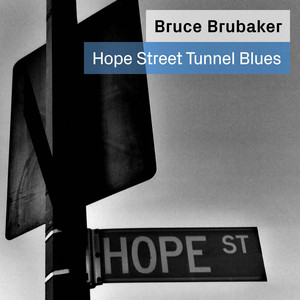 | Opening | Philip Glass, Bruce Brubaker | C Minor | 0 | 5A | 76 BPM | |
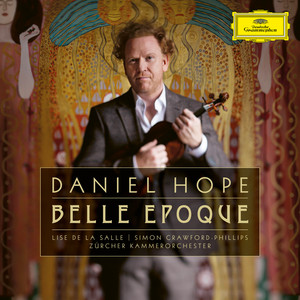 | Notturno for Strings and Harp | Arnold Schoenberg, Daniel Hope, Zürcher Kammerorchester, Jane Berthe | A♭ Major | 1 | 4B | 75 BPM | |
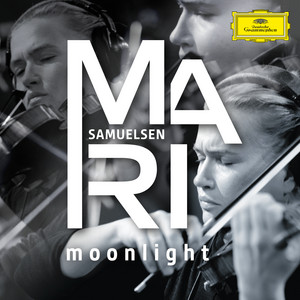 | Moonlight | Mari Samuelsen | D♭ Minor | 3 | 12A | 85 BPM | |
 | Parce Mihi Domine | Jan Garbarek, Cristobal de Morales, The Hilliard Ensemble | B♭ Major | 1 | 6B | 129 BPM | |
 | Orchestral Suite No. 3 in D Major, BWV 1068: II. Air "on the G String" | Johann Sebastian Bach, David Bell, Berliner Philharmoniker, Herbert von Karajan | D Major | 1 | 10B | 113 BPM | |
 | Fauré: Requiem, Op. 48: VII. In Paradisum | Gabriel Fauré, Paavo Järvi, Orchestre de Paris | D Major | 0 | 10B | 147 BPM | |
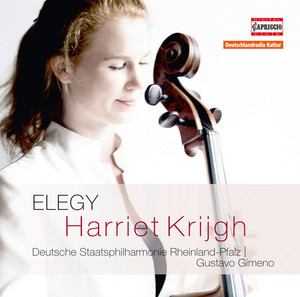 | From Jewish Life: I. Prayer (Arr. for Cello & Orchestra) | Ernest Bloch, Harriet Krijgh, Gustavo Gimeno, Deutsche Staatsphilharmonie Rheinland-Pfalz | F Minor | 1 | 4A | 91 BPM | |
| Enigma Variations, Op. 36: Var. 9. Adagio "Nimrod" | Edward Elgar, BBC Symphony Orchestra, Leonard Bernstein | E♭ Major | 0 | 5B | 79 BPM | |
 | Cançoneta for Violin and Orchestra | Joaquín Rodrigo, Agustín León Ara, Academy of St. Martin in the Fields, Sir Neville Marriner | A Major | 0 | 11B | 70 BPM | |
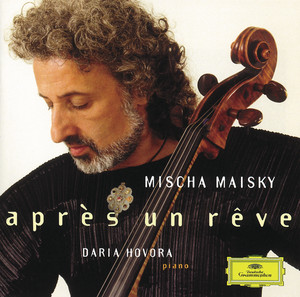 | Les chemins de l'amour, FP. 106 | Francis Poulenc, Mischa Maisky, Daria Hovora | E Major | 1 | 12B | 67 BPM |
- ISRC
- GBXUX1309604
- Label
- L-M Records/RCA Records