- BPM
- 83
- Key
- D♭ Major
- Camelot
- 3B
Verdi : Rigoletto : Act 1 "Partite? ... Crudele!" [Duca, Contessa, Rigoletto, Borsa, Chorus] by Giuseppe Verdi, Carlo Rizzi, Orchestra of Welsh National Opera Song Details
"Verdi : Rigoletto : Act 1 "Partite? ... Crudele!" [Duca, Contessa, Rigoletto, Borsa, Chorus]" by Giuseppe Verdi, Carlo Rizzi, Orchestra of Welsh National Opera had its release date on 1992. The duration of This song is about two minutes long, specifically at 2:15. This song does not appear to have any foul language. Verdi : Rigoletto : Act 1 "Partite? ... Crudele!" [Duca, Contessa, Rigoletto, Borsa, Chorus]'s duration is considered a little bit shorter than the average duration of a typical track. This song is part of Verdi : Rigoletto by Giuseppe Verdi, Leontina Vaduva, Jennifer Larmore, Richard Leech, Alexandru Agache, Samuel Ramey, Carlo Rizzi & Orchestra of Welsh National Opera, Carlo Rizzi, Orchestra of Welsh National Opera. The song's track number on the album is #4 out of 36 tracks. Based on our data, Germany was the country where this track was produced or recorded. Verdi : Rigoletto : Act 1 "Partite? ... Crudele!" [Duca, Contessa, Rigoletto, Borsa, Chorus] is unknown right now. In our opinion, the overall tone is not very danceable and projects negative sounds, such as being sad, depressed, or angry.
BPM and Tempo
Since Verdi : Rigoletto : Act 1 "Partite? ... Crudele!" [Duca, Contessa, Rigoletto, Borsa, Chorus] by Giuseppe Verdi, Carlo Rizzi, Orchestra of Welsh National Opera has a tempo of 83 beats per a minute, the tempo markings of this song would be Andante (at a walking pace). With Verdi : Rigoletto : Act 1 "Partite? ... Crudele!" [Duca, Contessa, Rigoletto, Borsa, Chorus] being at 83 BPM, the half-time would be 42 BPM with a double-time of 166 BPM.In addition, we consider the tempo speed to be pretty slow for this song. The time signature for this track is 4/4.
Music Key
This song is in the music key of D♭ Major. Or for those who are familiar with the camelot wheel, this song has a camelot key of 3B. So, the perfect camelot match for 3B would be either 3B or 4A. While, 4B can give you a low energy boost. For moderate energy boost, you would use 12B and a high energy boost can either be 5B or 10B. Though, if you want a low energy drop, you should looking for songs with either a camelot key of 3A or 2B will give you a low energy drop, 6B would be a moderate one, and 1B or 8B would be a high energy drop. Lastly, 12A allows you to change the mood.
Want to find the BPM and music key for other songs? Check out our BPM and Key Finder page!
- Popularity
- 0%
- Loudness
- -25.821 dB
- Acousticness
- 97%
- Danceability
- 21%
- Energy
- 3%
- Instrumentalness
- 1%
- Liveness
- 7%
- Loudness
- 57%
- Speechiness
- 6%
- Valence
- 4%
Recommendations
| Track | Artist | Key | Energy | Camelot | BPM | ||
|---|---|---|---|---|---|---|---|
 | Кармен, Act II: "Votre toast je peux vous le rendre" (Эскамильо, Фраскита, Мерседес, Кармен) | Жорж Бизе, Государственный академический камерный оркестр России, Константин Орбелян, Dmitri Hvorostovsky, Марнье Брекенридж, Виктория Смирнова, Анастасия Чикаева | B♭ Major | 3 | 6B | 175 BPM | |
 | The Four Seasons, Violin Concerto No. 2 in G Minor, RV 315 "L'estate": III. Tempo impetuoso d'estate | Antonio Vivaldi, Europa Galante, Fabio Biondi | F♯ Major | 6 | 2B | 85 BPM | |
 | Messa da Requiem: Confutatis | Giuseppe Verdi, Elena Filipova, Gloria Scalchi, Cesar Hernandez, Carlo Colombara, Hungarian State Opera Chorus, Hungarian State Opera Orchestra, Pier Giorgio Morandi | F♯ Major | 0 | 2B | 81 BPM | |
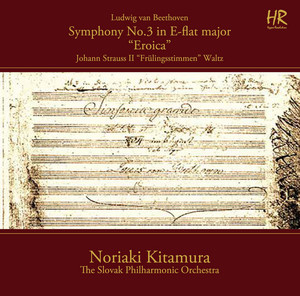 | Frühlingsstimmen, Op. 410 | Johann Strauss II, Slovak Philharmonic, Noriaki Kitamura | B♭ Major | 0 | 6B | 181 BPM | |
 | La traviata / Act II: Di Provenza il mar, il suol | Giuseppe Verdi, Dmitri Hvorostovsky, Rotterdam Philharmonic Orchestra, Valery Gergiev | A♭ Major | 1 | 4B | 77 BPM | |
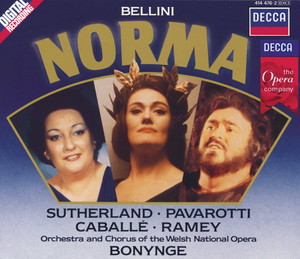 | Norma / Act 1: Casta Diva | Vincenzo Bellini, Dame Joan Sutherland, Samuel Ramey, Welsh National Opera Chorus, Welsh National Opera Orchestra, Richard Bonynge | F Major | 1 | 7B | 67 BPM | |
 | Thaïs: Meditation | Jules Massenet, Michel Schwalbé, Berliner Philharmoniker, Herbert von Karajan | E Minor | 1 | 9A | 95 BPM | |
 | Nabucco: Va, pensiero, "Chorus of Hebrew Slaves" | Giuseppe Verdi, Slovak Philharmonic Chorus, Slovak Radio Symphony Orchestra, Oliver von Dohnanyi | D♭ Major | 0 | 3B | 71 BPM | |
 | Kaiserwalzer, Op. 437 | Johann Strauss II, Wiener Philharmoniker, Karl Böhm | E♭ Major | 3 | 5B | 142 BPM | |
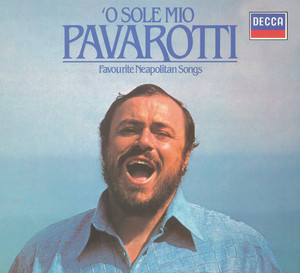 | 'A vucchella | Francesco Paolo Tosti, Luciano Pavarotti, Orchestra del Teatro Comunale di Bologna, Anton Guadagno | F Major | 1 | 7B | 81 BPM | |
 | Mozart: Le nozze di Figaro, K. 492, Act 2: "Voi che sapete" (Cherubino) | Wolfgang Amadeus Mozart, Marianne Crebassa, Marc Minkowski, Mozarteum Orchestra Salzburg | B♭ Major | 1 | 6B | 64 BPM | |
 | Carmina Burana: V. Ecce gratum | Carl Orff, Chor der Deutschen Oper Berlin, Orchester der Deutschen Oper Berlin, Eugen Jochum | B♭ Major | 4 | 6B | 139 BPM | |
 | Verdi: La Traviata, Act 3 Scene 4: No. 8, Aria "Addio del passato bei sogni ridenti" | Giuseppe Verdi, Maria Callas, Orquesta Sinfonica del Teatro Nacional de Santa Carlos, Lisboa, Franco Ghione, Orquestra Sinfónica do Teatro Nacional de São Carlos Lisboa | A Major | 1 | 11B | 76 BPM | |
 | Si, Mi Chiamano Mimì - La Boheme Atto I | Renata Tebaldi | D Major | 2 | 10B | 85 BPM | |
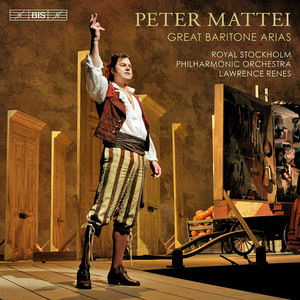 | Don Giovanni, K. 527, Act II: Canzonetta. Deh, vieni alla finestra | Wolfgang Amadeus Mozart, Peter Mattei, Royal Stockholm Philharmonic Orchestra, Lawrence Renes | D Major | 0 | 10B | 135 BPM | |
 | Pelléas et Mélisande, CD 93, Act III: Mes longs cheveux descendent | Claude Debussy, Francois Le Roux, Maria Ewing, Wiener Philharmoniker, Claudio Abbado | A Minor | 1 | 8A | 123 BPM | |
 | Bizet: Carmen, WD 31, Act 4: "Les voici ! Voici le quadrille !" (Chœur) | Georges Bizet, Michel Plasson, La Lauzeta, Les Éléments, Orchestre National Du Capitole De Toulouse | D♭ Minor | 2 | 12A | 93 BPM | |
 | Orpheus-Quadrille, Op. 236 | Johann Strauss II, Georges Prêtre, Wiener Philharmoniker | G Major | 6 | 9B | 109 BPM | |
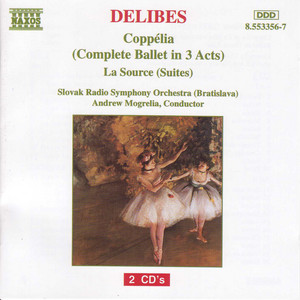 | Coppelia: Act I - Valse | Léo Delibes, Slovak Radio Symphony Orchestra, Andrew Mogrelia | E♭ Major | 0 | 5B | 89 BPM | |
 | La sonnambula, Act I: Come per me sereno | Vincenzo Bellini, Maria Callas, Orchestra Del Teatro Alla Scala, Milano, Antonino Votto | E♭ Major | 1 | 5B | 88 BPM | |
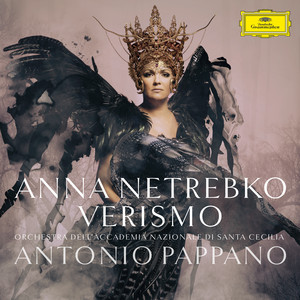 | Adriana Lecouvreur / Act 1: "Ecco: respiro appena ... Io son l'umile ancella" | Francesco Cilea, Anna Netrebko, Orchestra dell'Accademia Nazionale di Santa Cecilia, Antonio Pappano | A♭ Major | 1 | 4B | 82 BPM | |
 | Aida / Act 1: "Celeste Aida" | Giuseppe Verdi, Luciano Pavarotti, Vienna Volksoper Orchestra, Leone Magiera | A♭ Major | 1 | 4B | 89 BPM | |
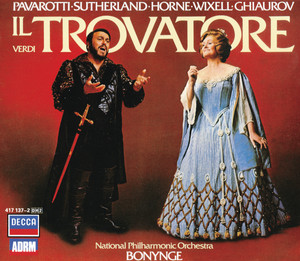 | Il Trovatore / Act 4: "Prima che d'altri vivere" | Giuseppe Verdi, Joan Sutherland, Luciano Pavarotti, Ingvar Wixell, Marilyn Horne, National Philharmonic Orchestra, Richard Bonynge | B♭ Minor | 4 | 3A | 90 BPM | |
 | Don Giovanni, K.527 / Act 2: "Don Giovanni, a cenar teco m'invitasti" | Wolfgang Amadeus Mozart, Robert Lloyd, Thomas Allen, Simone Alaimo, Ambrosian Opera Chorus, Academy of St. Martin in the Fields, Sir Neville Marriner | B♭ Major | 3 | 6B | 78 BPM | |
 | Mozart: Don Giovanni, K. 527, Act 2 Scene 15: "Don Giovanni, a cenar teco … Da qual tremore insolito" (Il Commendatore, Don Giovanni, Chorus, Leporello) | Wolfgang Amadeus Mozart, Riccardo Muti, Wiener Philharmoniker | B♭ Major | 2 | 6B | 75 BPM |
- ISRC
- DEA809360003
- Label
- L-M Records/RCA Records