- BPM
- 135
- Key
- B♭ Major
- Camelot
- 6B
St. John Easter: The Rider on a White Horse: Und dann sah ich (Baritone, Tenor, Chorus 1, Chorus 2, Soprano) by Sofia Gubaidulina, Julia Sukmanova, Corby Welch, Bernd Valentin, Nicholas Isherwood, Gächinger Kantorei Stuttgart, Musikhochschule Trossingen Kammerchor, Radio Sinfonieorchester Stuttgart des SWR, Helmuth Rilling Song Details
"St. John Easter: The Rider on a White Horse: Und dann sah ich (Baritone, Tenor, Chorus 1, Chorus 2, Soprano)" by Sofia Gubaidulina, Julia Sukmanova, Corby Welch, Bernd Valentin, Nicholas Isherwood, Gächinger Kantorei Stuttgart, Musikhochschule Trossingen Kammerchor, Radio Sinfonieorchester Stuttgart des SWR, Helmuth Rilling had its release date on January 1, 2007. This song is about six minutes long, preciously at 5:31, making this song fairly long compared to other songs. The track order of this song in Sofia Gubaidulina, Helmuth Rilling, Radio Sinfonieorchester Stuttgart des SWR's "Gubaidulina: St. John Passion (Sung in German)" album is number 5 out of 23. On top of that, Germany appears to be the country where this track was created. Based on our statistics, St. John Easter: The Rider on a White Horse: Und dann sah ich (Baritone, Tenor, Chorus 1, Chorus 2, Soprano)'s popularity is unknown right now. In our opinion, the overall tone is not very danceable and projects negative sounds, such as being sad, depressed, or angry.
BPM and Tempo
We consider the tempo marking of St. John Easter: The Rider on a White Horse: Und dann sah ich (Baritone, Tenor, Chorus 1, Chorus 2, Soprano) by Sofia Gubaidulina, Julia Sukmanova, Corby Welch, Bernd Valentin, Nicholas Isherwood, Gächinger Kantorei Stuttgart, Musikhochschule Trossingen Kammerchor, Radio Sinfonieorchester Stuttgart des SWR, Helmuth Rilling to be Allegro (fast, quick, and bright) because the track has a tempo of 135 BPM, a half-time of 68BPM, and a double-time of 270 BPM. Based on that, the speed of the song's tempo is fast. Activities such as, walking, can go well with this song. The time signature for this track is 3/4.
Music Key
This song has a musical key of B♭ Major. This also means that this song has a camelot key of 6B. So, the perfect camelot match for 6B would be either 6B or 7A. While, 7B can give you a low energy boost. For moderate energy boost, you would use 3B and a high energy boost can either be 8B or 1B. Though, if you want a low energy drop, you should looking for songs with either a camelot key of 6A or 5B will give you a low energy drop, 9B would be a moderate one, and 4B or 11B would be a high energy drop. Lastly, 3A allows you to change the mood.
Want to find the BPM and music key for other songs? Check out our BPM and Key Finder page!
- Popularity
- 0%
- Loudness
- -18.123 dB
- Acousticness
- 92%
- Danceability
- 30%
- Energy
- 34%
- Instrumentalness
- 0%
- Liveness
- 11%
- Loudness
- 70%
- Speechiness
- 12%
- Valence
- 4%
Recommendations
| Track | Artist | Key | Energy | Camelot | BPM | ||
|---|---|---|---|---|---|---|---|
 | Jūra, MKČ 102: II. Exposition, Secondary Theme | Mikalojus Konstantinas Čiurlionis, Lithuanian National Symphony Orchestra, Mirga Gražinytė-Tyla | A Minor | 0 | 8A | 85 BPM | |
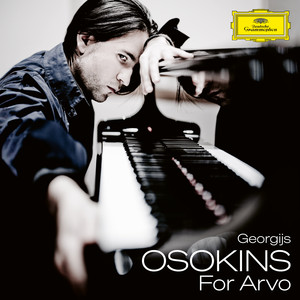 | 2 Sonatinas for Piano, Op. 1 No. 1: II. Larghetto | Georgijs Osokins, Arvo Pärt | B♭ Minor | 0 | 3A | 90 BPM | |
 | Ethereal Dance | Jarko Vento | D♭ Major | 6 | 3B | 110 BPM | |
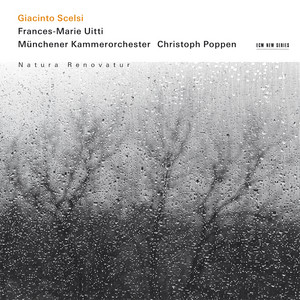 | 3 Latin Prayers for Solo Voice: Ave Maria for Cello Solo | Giacinto Scelsi, Frances-Marie Uitti | E Minor | 0 | 9A | 80 BPM | |
 | Paws in the Parlor | Chandler West | E Major | 0 | 12B | 84 BPM | |
 | Sonatas and Interludes for Prepared Piano: Sonata No. 2 | John Cage, Boris Berman | D♭ Major | 2 | 3B | 123 BPM | |
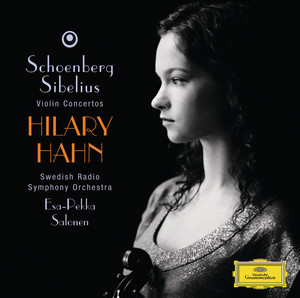 | Violin Concerto, Op. 36: 2. Andante grazioso | Arnold Schoenberg, Hilary Hahn, Swedish Radio Symphony Orchestra, Esa-Pekka Salonen | D Minor | 1 | 7A | 103 BPM | |
 | For Bunita Marcus (1985): page 4 | Morton Feldman, Marc-André Hamelin | E♭ Major | 0 | 5B | 73 BPM | |
 | Verklärte Nacht, Op. 4 - Version for String Sextet: I. Sehr langsam | Arnold Schoenberg, LaSalle Quartet, Donald McInnes, Jonathan Pegis | C Minor | 1 | 5A | 85 BPM | |
 | Seven Words: Woman, Behold Thy Son! - Behold, Thy Mother! | Sofia Gubaidulina, Basque National Orchestra, Iñaki Alberdi, Asier Polo, José Ramón Encinar | F♯ Major | 1 | 2B | 94 BPM | |
 | In Nomine (2001) for bass flute, english horn, clarinet, piano, vibraphone, violin, viola and Violoncello | Georg Friedrich Haas, Ensemble Recherche | G Minor | 0 | 6A | 127 BPM | |
 | 12 Nocturnes: No. 5, In den Morgen tanzen | Bent Sørensen, Katrine Gislinge | E Major | 0 | 12B | 84 BPM | |
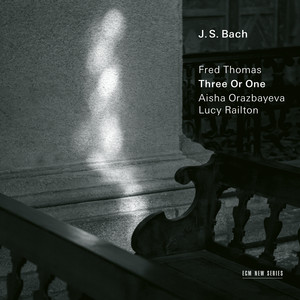 | Meine Seele erhebt den Herren, BWV 648 (Arr. Thomas for Piano Trio) | Johann Sebastian Bach, Fred Thomas, Aisha Orazbayeva, Lucy Railton | C Major | 0 | 8B | 72 BPM | |
 | Die Dreigroschenoper: Overture (Arr. for Double Bass, Piano & Accordion by Murray Grainger, Marianne Schofield & William Vann) | Kurt Weill, William Vann, Murray Grainger, Marianne Schofield | E Major | 0 | 12B | 84 BPM | |
 | Piano Quintet "Fantasia": II | Carl Vine, Goldner String Quartet, Piers Lane | E Major | 0 | 12B | 84 BPM | |
 | Lamentate: Pregando | Arvo Pärt, Alexei Lubimov, Andrey Boreyko, Radio-Sinfonieorchester Stuttgart | D♭ Minor | 0 | 12A | 68 BPM | |
 | Fugue in Four Keys on "The Shining Shore" | Charles Ives, Orchestra New England, James Sinclair | C Major | 1 | 8B | 60 BPM | |
| Lamentate: I. Minacciando | Arvo Pärt, Alexei Lubimov, Andrey Boreyko, Radio-Sinfonieorchester Stuttgart | C Major | 0 | 8B | 72 BPM | |
| Jūra, MKČ 102: V. Recapitulation | Mikalojus Konstantinas Čiurlionis, Lithuanian National Symphony Orchestra, Mirga Gražinytė-Tyla | A Minor | 0 | 8A | 85 BPM | |
 | Ten Preludes for Cello Solo (1974): 9. Pizzicato - Arco | Sofia Gubaidulina, Boris Pergamenschikow | D♭ Major | 0 | 3B | 66 BPM | |
 | Aria | Euchar Gravina, Stefan Calleja, London Symphony Orchestra, Miran Vaupotić | E Major | 0 | 12B | 84 BPM | |
 | Piano Trio No. 2, Op. 67: 1. Andante - Moderato - Poco più mosso | Dmitri Shostakovich, Vladimir Ashkenazy, Zsolt-Tihamér Visontay, Mats Lidström | C Minor | 2 | 5A | 125 BPM | |
 | The Viola in My Life I | Morton Feldman, Antoine Tamestit, Gürzenich Orchester Köln, Harry Ogg | D♭ Major | 1 | 3B | 134 BPM | |
| 12 Nocturnes: No. 4, Barcarola | Bent Sørensen, Katrine Gislinge | E Major | 0 | 12B | 84 BPM | |
 | String Quartet No. 3 in D Major, Op. 34: II. Scherzo. Allegro molto | Erich Wolfgang Korngold, Calidore String Quartet | E Major | 0 | 12B | 84 BPM |
- ISRC
- DEA550715350
- Label
- L-M Records/RCA Records