- BPM
- 140
- Key
- A Major
- Camelot
- 11B
Delius: Brigg Fair "An English Rhapsody": Variation XV by Frederick Delius, Sir Thomas Beecham, Royal Philharmonic Orchestra Song Details
"Delius: Brigg Fair "An English Rhapsody": Variation XV" by Frederick Delius, Sir Thomas Beecham, Royal Philharmonic Orchestra had its release date on February 7, 2011. With This song being less than a minute long, we are pretty confident that this song does not contain any foul language. That being said, this song is pretty short compared to other songs. There are a total of 88 in the song's album "Sir Thomas Beecham: The English Collection". In this album, this song's track order is #21. Furthermore, we believe that the track originated from United Kingdom. Based on our statistics, Delius: Brigg Fair "An English Rhapsody": Variation XV's popularity is unknown right now. In our opinion, the overall tone is not very danceable and projects negative sounds, such as being sad, depressed, or angry.
BPM and Tempo
With Delius: Brigg Fair "An English Rhapsody": Variation XV by Frederick Delius, Sir Thomas Beecham, Royal Philharmonic Orchestra having a BPM of 140 with a half-time of 70 BPM and a double-time of 280 BPM, we would consider this track to have a Allegro (fast, quick, and bright) tempo marking. Because of this, we believe that the song has an overall fast tempo. Looking at the BPM of this song, this song might go great with jogging or cycling. The time signature for this track is 1/4.
Music Key
A Major is the music key of this track. Or for those who are familiar with the camelot wheel, this song has a camelot key of 11B. So, the perfect camelot match for 11B would be either 11B or 12A. While, 12B can give you a low energy boost. For moderate energy boost, you would use 8B and a high energy boost can either be 1B or 6B. Though, if you want a low energy drop, you should looking for songs with either a camelot key of 11A or 10B will give you a low energy drop, 2B would be a moderate one, and 9B or 4B would be a high energy drop. Lastly, 8A allows you to change the mood.
Want to find the BPM and music key for other songs? Check out our BPM and Key Finder page!
- Popularity
- 0%
- Loudness
- -16.492 dB
- Acousticness
- 88%
- Danceability
- 16%
- Energy
- 12%
- Instrumentalness
- 92%
- Liveness
- 14%
- Loudness
- 73%
- Speechiness
- 4%
- Valence
- 4%
Recommendations
| Track | Artist | Key | Energy | Camelot | BPM | ||
|---|---|---|---|---|---|---|---|
 | 2 Pieces for Small Orchestra, RT VI/19: No. 1, On Hearing the First Cuckoo in Spring | Frederick Delius, John Rutter, Manchester Camerata | E Minor | 1 | 9A | 80 BPM | |
![Etudes symphoniques (Symphonic Etudes), Op. 13, Adagio and Allegro brillante: Variation 11 [arr. P.I. Tchaikovsky for orchestra] by Robert Schumann, Seattle Symphony Orchestra, Gerard Schwarz](https://i.scdn.co/image/ab67616d00001e029057c124b554163ef1edd618) | Etudes symphoniques (Symphonic Etudes), Op. 13, Adagio and Allegro brillante: Variation 11 [arr. P.I. Tchaikovsky for orchestra] | Robert Schumann, Seattle Symphony Orchestra, Gerard Schwarz | A Minor | 0 | 8A | 104 BPM | |
 | Delius: 2 Aquarelles: No. 2, Gaily, But Not Quick (Arr. Fenby for String Orchestra) | Frederick Delius, Sir Neville Marriner, Academy of St. Martin in the Fields | B♭ Major | 4 | 6B | 113 BPM | |
 | Abendlied, Op. 85, No. 12 (Arr. for String Orchestra by Johan Svendsen) | Robert Schumann, Lucerne Festival Strings, Daniel Dodds | B Major | 1 | 1B | 113 BPM | |
 | Stille Musik: III. Augenblicke der Serenade | Valentin Silvestrov | C Major | 0 | 8B | 86 BPM | |
 | Symphony No. 8 in G Minor, Op. 88, B. 163: III. Allegretto grazioso - Molto vivace | Antonín Dvořák, London Symphony Orchestra, Sir Colin Davis | G Major | 1 | 9B | 130 BPM | |
 | Violin Concerto No. 1 in G Minor, Op. 26: II. Adagio | Max Bruch, Itzhak Perlman, Bernard Haitink, Royal Concertgebouw Orchestra | E♭ Major | 1 | 5B | 87 BPM | |
 | Brook Green Suite, H. 190: I. Prelude. Allegretto | Gustav Holst, Richard Hickox, City of London Sinfonia | C Major | 1 | 8B | 100 BPM | |
 | Estancia, Op. 8a: II. Danza del trigo | Alberto Ginastera, Magdalena Barrera, Orquesta Ciudad De Granada, Josep Pons | C Major | 0 | 8B | 87 BPM | |
 | Piano Concerto No. 1 in F-Sharp Minor, Op. 1: II. Andante | Sergei Rachmaninoff, Vladimir Ashkenazy, Royal Concertgebouw Orchestra, Bernard Haitink | A Major | 0 | 11B | 69 BPM | |
 | Brook Green Suite: I. Prelude | Gustav Holst, English Sinfonia, Howard Griffiths | D♭ Major | 0 | 3B | 66 BPM | |
 | Mercure, Scene 1: La nuit | Erik Satie, Orchestre Symphonique et Lyrique de Nancy, Jerome Kaltenbach | C Major | 0 | 8B | 139 BPM | |
 | The Holy Boy | John Ireland, Richard Hickox, London Symphony Orchestra | G Minor | 0 | 6A | 101 BPM | |
 | L'Arlésienne Suite No. 2 (Arr. Guiraud): III. Menuet | Georges Bizet, Orchestre Symphonique de Montréal, Charles Dutoit | E♭ Major | 0 | 5B | 128 BPM | |
 | Phantasy Quintet: III. Alla Sarabanda: Lento | Ralph Vaughan Williams, Garfield Jackson, Maggini Quartet | E♭ Minor | 10 | 2A | 123 BPM | |
 | Nocturnes n°7 en mi majeur | Francis Poulenc, Alexandre Tharaud | E♭ Major | 1 | 5B | 87 BPM | |
 | Adoration (Version for Solo Violin and String Orchestra) | Florence Beatrice Price, Daniel Hope, Zürcher Kammerorchester | D Major | 1 | 10B | 80 BPM | |
 | Polovetsian Dances from Prince Igor: Introduzione | Alexander Borodin, George Szell, The Cleveland Orchestra | A Major | 1 | 11B | 83 BPM | |
 | Come, Sweet Death, BWV 478 (Arr. for 5 Cellos) | Sheku Kanneh-Mason, Hannah Roberts, Ben Davies, Desmond Neysmith, Max Ruisi | C Major | 0 | 8B | 122 BPM | |
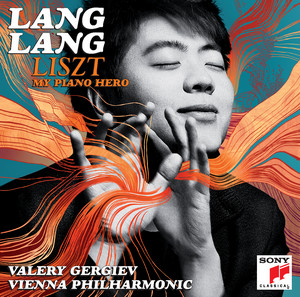 | Liebestraum No. 3 in A-Flat Major, S. 541 / 3 | Franz Liszt, Lang Lang | A♭ Major | 0 | 4B | 137 BPM | |
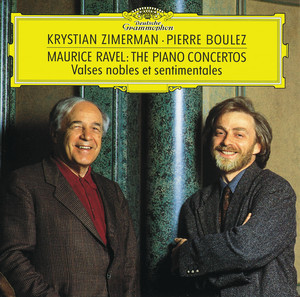 | Piano Concerto in G Major, M. 83: II. Adagio assai | Maurice Ravel, Krystian Zimerman, Cleveland Orchestra, Pierre Boulez | E Major | 0 | 12B | 74 BPM | |
 | Pelléas et Mélisande Suite, Op. 80: III. Sicilienne. Allegretto molto moderato | Gabriel Fauré, Berliner Philharmoniker, Daniel Barenboim | E♭ Major | 0 | 5B | 56 BPM | |
 | Warsaw Concerto | Richard Addinsell, Jean-Yves Thibaudet, BBC Symphony Orchestra, Hugh Wolff | B Major | 1 | 1B | 76 BPM | |
 | 3 Chorales, P. 167: No. 3, Andante (After J.S. Bach's BWV 645) | Ottorino Respighi, Seattle Symphony Orchestra, Gerard Schwarz | E♭ Major | 0 | 5B | 84 BPM | |
 | Bach: Adagio (After Violin Concerto No. 2, BWV 1042) | Johann Sebastian Bach, Gabriela Montero | F♯ Minor | 0 | 11A | 73 BPM |
- ISRC
- GBAYC1001646
- Label
- L-M Records/RCA Records