- BPM
- 137
- Key
- D Major
- Camelot
- 10B
Finale (Allegro Giusto) by Pyotr Ilyich Tchaikovsky, St. Lawrence String Quartet Song Details
Pyotr Ilyich Tchaikovsky, St. Lawrence String Quartet's 'Finale (Allegro Giusto)' had a release date set for January 1, 2001. Since This song is still less than 10 minute long, it is still considered a pretty long duration song compared to the average song length. This song does not appear to be explicit due to the lack of the "E" tag. There are a total of 8 in the song's album "Tchaikovsky: String Quartets Nos. 1 & 3". In this album, this song's track order is #4. Furthermore, we believe that the track originated from Canada. Based on our statistics, Finale (Allegro Giusto)'s popularity is not that popular right now. Although the tone can be danceable to some, this track does projects more of a negative sound rather than a postive one.
BPM and Tempo
With Finale (Allegro Giusto) by Pyotr Ilyich Tchaikovsky, St. Lawrence String Quartet having a BPM of 137 with a half-time of 68 BPM and a double-time of 274 BPM, we would consider this track to have a Allegro (fast, quick, and bright) tempo marking. Because of this, we believe that the song has an overall fast tempo. Looking at the BPM of this song, this song might go great with walking. The time signature for this track is 4/4.
Music Key
This song has a musical key of D Major. Or for those who are familiar with the camelot wheel, this song has a camelot key of 10B. So, the perfect camelot match for 10B would be either 10B or 11A. While, 11B can give you a low energy boost. For moderate energy boost, you would use 7B and a high energy boost can either be 12B or 5B. Though, if you want a low energy drop, you should looking for songs with either a camelot key of 10A or 9B will give you a low energy drop, 1B would be a moderate one, and 8B or 3B would be a high energy drop. Lastly, 7A allows you to change the mood.
Want to find the BPM and music key for other songs? Check out our BPM and Key Finder page!
- Popularity
- 3%
- Loudness
- -24.022 dB
- Acousticness
- 92%
- Danceability
- 41%
- Energy
- 7%
- Instrumentalness
- 68%
- Liveness
- 11%
- Loudness
- 60%
- Speechiness
- 4%
- Valence
- 22%
Recommendations
| Track | Artist | Key | Energy | Camelot | BPM | ||
|---|---|---|---|---|---|---|---|
 | The Moldau (Vltava), JB 1:112/2 | Bedřich Smetana, Leopold Stokowski | G Major | 2 | 9B | 98 BPM | |
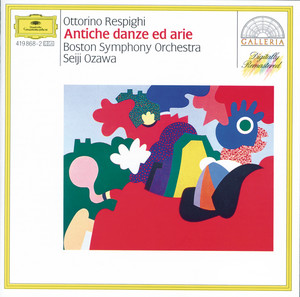 | Ancient Airs & Dances, Suite III, P. 172: III. Siciliana (Anonymous) | Ottorino Respighi, Boston Symphony Orchestra, Seiji Ozawa | C Minor | 2 | 5A | 109 BPM | |
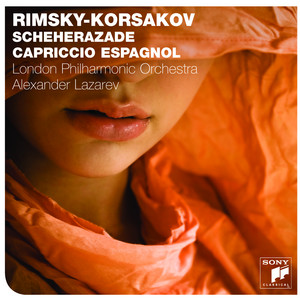 | Scheherazade: Calm at Sea | Nikolai Rimsky-Korsakov, Lars Hjalmar Joakim | E Major | 2 | 12B | 84 BPM | |
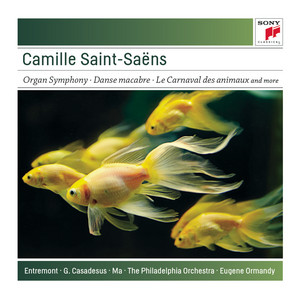 | Carnival of the Animals, R. 125: Introduction and Royal March of the Lion | Camille Saint-Saëns, Philippe Entremont, Gaby Casadesus, Yo-Yo Ma, Michel Cerruti, Michel Cals, Régis Pasquier, Yan Pascal Tortelier, Gabin Lauridon, Gerard Causse, Alain Marion, Michel Arrignon | G Major | 2 | 9B | 90 BPM | |
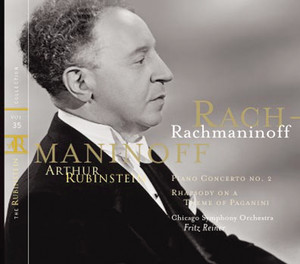 | Piano Concerto No. 2 in C Minor, Op. 18: I. Moderato | Sergei Rachmaninoff, Arthur Rubinstein, Fritz Reiner | C Minor | 1 | 5A | 71 BPM | |
 | The Planets, Op. 32: 4. Jupiter, the Bringer of Jollity | Gustav Holst, Berliner Philharmoniker, Herbert von Karajan | G Minor | 3 | 6A | 140 BPM | |
 | Piano Concerto No. 2 in F Major, Op. 102: II. Andante | Dmitri Shostakovich, Boris Giltburg, Royal Liverpool Philharmonic Orchestra, Vasily Petrenko | C Minor | 0 | 5A | 80 BPM | |
 | Zdes' khorosho ('How Fair This Spot'), Op. 21, No. 7 | Sergei Rachmaninoff, Pablo Ferrandez, Denis Kozhukhin | A Major | 0 | 11B | 87 BPM | |
 | Paquita: Variation 5: Allegro non troppo | Ludwig Minks, Alexander Tcherepnin, Czech Symphony Orchestra, Michaela Rózsa Růžičková | E Minor | 2 | 9A | 130 BPM | |
 | Vienna Blood - Waltz Op. 354 | Johann Strauss II, Hallé, Bryden Thomson | C Major | 0 | 8B | 178 BPM | |
 | Cello Sonata in G Minor, Op. 65: III. Largo | Frédéric Chopin, Emmanuelle Bertrand, Pascal Amoyel | B♭ Major | 0 | 6B | 89 BPM | |
 | Symphony No. 25 in G Minor, K. 183: I. Allegro con brio | Wolfgang Amadeus Mozart, Academy of St. Martin in the Fields, Sir Neville Marriner | G Minor | 2 | 6A | 80 BPM | |
 | Swan Lake, Op. 20, Act II: No. 13, Danses des cygnes: a. Valse – b. Moderato assai – c. Valse – d. Allegro moderato – e. Pas d'action. Andante – f. Valse – g. Coda. Allegro vivace | Pyotr Ilyich Tchaikovsky, Chantal Juillet, Guy Fouquet, Orchestre Symphonique de Montréal, Charles Dutoit | E Major | 0 | 12B | 127 BPM | |
 | Danse macabre, Op. 40 | Camille Saint-Saëns, Royal Stockholm Philharmonic Orchestra, James DePreist | G Minor | 1 | 6A | 102 BPM | |
 | Carnival of the Animals: Aquarium | Camille Saint-Saëns, Isata Kanneh-Mason, Konya Kanneh-Mason, Braimah Kanneh-Mason, Ayla Sahin, Timothy Ridout, Sheku Kanneh-Mason, Adam Walker, Alasdair Malloy | A Minor | 0 | 8A | 70 BPM | |
 | Cello Concerto No. 2 in D Minor, Op. 119: II. Allegro non troppo - Cadenza - Molto allegro | Camille Saint-Saëns, Gabriel Schwabe, Malmö Symphony Orchestra, Marc Soustrot | D Major | 1 | 10B | 92 BPM | |
 | Lyric Pieces, Book 5, Op. 54: Nocturne | Edvard Grieg, Alessio Bax | C Major | 0 | 8B | 72 BPM | |
 | Giselle, Act 1: Overture | Adolphe Adam, Tasmanian Symphony Orchestra, Nicolette Fraillon | E♭ Major | 1 | 5B | 88 BPM | |
 | Gold Und Silber (Gold And Silver), Op. 79 | Slovak Radio Symphony Orchestra, Franz Lehár | C Major | 1 | 8B | 81 BPM | |
 | Le roi s'amuse: Pavane | Léo Delibes, Slovak Philharmonic, Ondrej Lenard | B♭ Major | 0 | 6B | 91 BPM | |
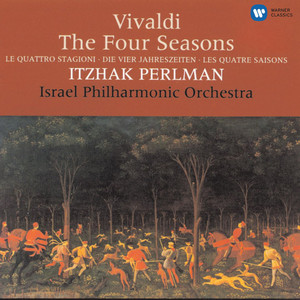 | Vivaldi: The Four Seasons, Violin Concerto in E Major, Op. 8 No. 1, RV 269 "Spring": III. Allegro | Antonio Vivaldi, Itzhak Perlman, Israel Philharmonic Orchestra | E Major | 1 | 12B | 101 BPM | |
 | Souvenir de Florence, Op. 70, TH 118: III. Allegro moderato - Live from Verbier Festival / 2013 | Pyotr Ilyich Tchaikovsky, Leonidas Kavakos, Lisa Batiashvili, Antoine Tamestit, Blythe Teh Engstroem, Gautier Capuçon, Stephan Koncz | A Minor | 2 | 8A | 87 BPM | |
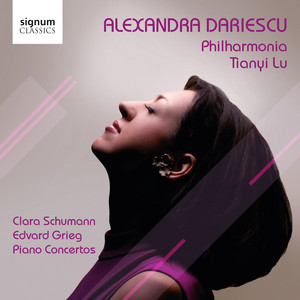 | Piano Concerto in A Minor, Op. 16: I. Allegro molto moderato - Radio Edit | Edvard Grieg, Alexandra Dariescu, Philharmonia Orchestra, Tianyi Lu | A Minor | 1 | 8A | 129 BPM | |
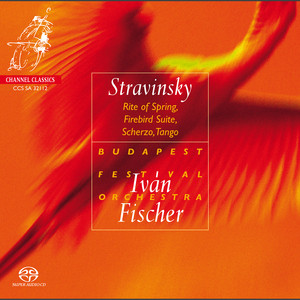 | L'oiseau de feu, K. 10. Suite 1919: V. Danse infernale du roi Kastchei | Igor Stravinsky, Budapest Festival Orchestra, Iván Fischer | C Major | 5 | 8B | 130 BPM | |
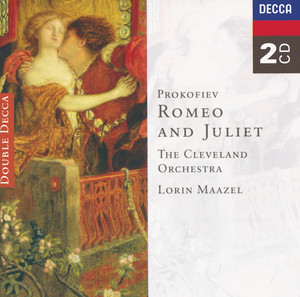 | Romeo and Juliet, Op. 64 - Act 1: Romeo | Sergei Prokofiev, Cleveland Orchestra, Lorin Maazel | C Major | 0 | 8B | 132 BPM |
- ISRC
- CAE150100245
- Label
- L-M Records/RCA Records