- BPM
- 72
- Key
- E Minor
- Camelot
- 9A
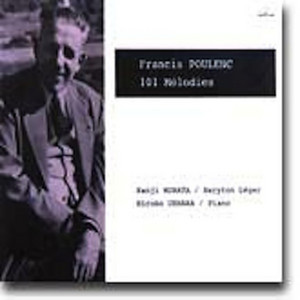
歌曲集「メタモルフォーズ」 II. おまえはこんな風なのだ by F. プーランク, 村田健司(バリトン・レジェ), 上原ひろ子(ピアノ) Song Details
"歌曲集「メタモルフォーズ」 II. おまえはこんな風なのだ" by F. プーランク, 村田健司(バリトン・レジェ), 上原ひろ子(ピアノ) had its release date on March 31, 1999. The duration of This song is about two minutes long, specifically at 2:01. This song does not appear to have any foul language. 歌曲集「メタモルフォーズ」 II. おまえはこんな風なのだ's duration is considered a little bit shorter than the average duration of a typical track. There is only one song in プーランク歌曲集全101曲, so we believe that "歌曲集「メタモルフォーズ」 II. おまえはこんな風なのだ" is a single. 歌曲集「メタモルフォーズ」 II. おまえはこんな風なのだ is unknown right now. In our opinion, the overall tone is not very danceable and projects negative sounds, such as being sad, depressed, or angry.
BPM and Tempo
The tempo marking of 歌曲集「メタモルフォーズ」 II. おまえはこんな風なのだ by F. プーランク, 村田健司(バリトン・レジェ), 上原ひろ子(ピアノ) is Adagio (slowly with great expression), since this song has a tempo of 72 BPM. With that information, we can conclude that the song has a slow tempo. The time signature for this track is 1/4.
Music Key
E Minor is the music key of this track. Because this track belongs in the E Minor key, the camelot key is 9A. So, the perfect camelot match for 9A would be either 9A or 8B. While, a low energy boost can consist of either 9B or 10A. For moderate energy boost, you would use 6A and a high energy boost can either be 11A or 4A. However, if you are looking for a low energy drop, finding a song with a camelot key of 8A would be a great choice. Where 12A would give you a moderate drop, and 7A or 2A would be a high energy drop. Lastly, 12B allows you to change the mood.
Want to find the BPM and music key for other songs? Check out our BPM and Key Finder page!
- Popularity
- 0%
- Loudness
- -24.982 dB
- Acousticness
- 100%
- Danceability
- 21%
- Energy
- 6%
- Instrumentalness
- 64%
- Liveness
- 8%
- Loudness
- 58%
- Speechiness
- 6%
- Valence
- 4%
Recommendations
| Track | Artist | Key | Energy | Camelot | BPM | ||
|---|---|---|---|---|---|---|---|
 | Träumerei, Op. 15 No. 7 | Robert Schumann, Michael Collins, Michael McHale | G Major | 1 | 9B | 99 BPM | |
 | Concertino da camera for Alto Saxophone and 11 Instruments: 1. Allegro con moto | Jacques Ibert, Eugene Rousseau, Orchestre de Chambre Paul Kuentz, Paul Kuentz | F Major | 4 | 7B | 119 BPM | |
 | Suite for 13 Wind Instruments in B flat major, Op. 4: I. Praeludium | Richard Strauss, François Leleux | B♭ Major | 0 | 6B | 127 BPM | |
 | Oboe Concerto, H. 353: III. Poco allegro | Bohuslav Martinů, Stefan Schilli, Symphonieorchester des Bayerischen Rundfunks, Mariss Jansons | D Minor | 2 | 7A | 109 BPM | |
 | ホルンとトランペットとトロンボーンのためのソナタ Ⅱ. Andante | F. プーランク, 東京メトロポリタン・ブラス・トリオ, 高橋敦(トランペット), 西條貴人(ホルン), 小田桐寛之(トロンボーン) | B♭ Minor | 0 | 3A | 70 BPM | |
 | 常動曲 Ⅲ.アレルト(機敏に) | F. プーランク, 工藤重典(フルート), 福田 進一(ギター) | E Major | 1 | 12B | 107 BPM | |
 | Clustered Sounds | Valen Rosset | A Minor | 2 | 8A | 73 BPM | |
 | Viola Concerto in D Major: I. Allegro | Franz Anton Hoffmeister, Andra Dārziņa, Urban Camerata | C Major | 1 | 8B | 135 BPM | |
 | Hummel: Viola Sonata in E-Flat Major, Op. 5 No. 3: II. Adagio cantabile | Johann Nepomuk Hummel, Gérard Caussé, François-René Duchâble, Françoise Garcin | B♭ Major | 0 | 6B | 82 BPM | |
 | Jūra, MKČ 102: II. Exposition, Secondary Theme | Mikalojus Konstantinas Čiurlionis, Lithuanian National Symphony Orchestra, Mirga Gražinytė-Tyla | A Minor | 0 | 8A | 85 BPM | |
 | Poulenc: Clarinet Sonata, FP 184: II. Romanza | Francis Poulenc, Sabine Meyer | G Minor | 0 | 6A | 67 BPM | |
 | Horn Concerto in D: 1. Allegro moderato | František Xaver Pokorný, Hermann Baumann, Academy of St. Martin in the Fields, Iona Brown | D Major | 1 | 10B | 77 BPM | |
 | Introduzione e 6 Variazioni Brillanti, Op. 23 (REINVENTED for Solo Flute by LUCA ASTOLFONI FOSSI):III. Variazione I | Ernst Krähmer, Claudio Ferrarini | A Minor | 2 | 8A | 73 BPM | |
 | Panteón | Juan Pablo Fernández Ramos | D Major | 0 | 10B | 128 BPM | |
 | Andante et rondo, Op. 25: No. 2, Rondo | Franz Doppler, Karl Doppler, Wolfgang Schulz, Matthias Schulz, Ferenc Bognar | C Major | 1 | 8B | 115 BPM | |
 | Sonate pour basson, Op. 168: I. Allegretto moderato | Camille Saint-Saëns, Marc Trenel, Pascal Godart | G Major | 1 | 9B | 67 BPM | |
| Introduzione e 6 Variazioni Brillanti, Op. 23 (REINVENTED for Solo Flute by LUCA ASTOLFONI FOSSI): IV. Variazione II | Ernst Krähmer, Claudio Ferrarini | A Minor | 2 | 8A | 73 BPM | |
 | Dutilleux: Sonatina for Flute and Piano: II. Andante espressivo - | Henri Dutilleux, Emmanuel Pahud, Eric Le Sage | B♭ Minor | 1 | 3A | 88 BPM | |
 | Morceau de Concert, Op. 94 for Horn and Orchestra: 2. Allegro non troppo | Camille Saint-Saëns, Hermann Baumann, Gewandhausorchester, Kurt Masur | F Major | 1 | 7B | 122 BPM | |
 | Sonatina for Horn and Piano Op.56 - II. Minuet: Andantino | Ben Goldscheider, Huw Watkins | A Major | 1 | 11B | 112 BPM | |
 | マズルカ | F. プーランク, 藤森亮一(チェロ), カール=アンドレアス・コリー(ピアノ) | C Major | 0 | 8B | 63 BPM | |
 | Clarinet Concerto No. 1 in C Minor, Op. 26: II. Adagio | Louis Spohr, Karl Leister, Radio Sinfonieorchester Stuttgart des SWR, Rafael Frühbeck de Burgos | A♭ Major | 0 | 4B | 73 BPM | |
 | Concertino in E flat, J109 (Op. 26): III: Rondo (Allegretto) | Carl Maria von Weber, Sabine Meyer, Herbert Blomstedt, Staatskapelle Dresden | G Minor | 0 | 6A | 68 BPM | |
 | 歌曲集「2つの詩」 I. アンナの庭 | F. プーランク, 村田健司(バリトン・レジェ), 上原ひろ子(ピアノ) | E Minor | 1 | 9A | 72 BPM | |
 | String Quartet in D Major, Op. 64 No. 5 "The Lark": II. Adagio cantabile | Joseph Haydn, Hagen Quartett | A Minor | 2 | 8A | 73 BPM |
- ISRC
- JPF699900259
- Label
- L-M Records/RCA Records