- BPM
- 80
- Key
- C Major
- Camelot
- 8B
Étude V by Hans Sitt, Jonathan Prado Song Details
On June 24, 2024, the song "Étude V" was released by Hans Sitt, Jonathan Prado. With This song being less than two minutes long, at 1:28, we are fairly confident that this song is not explicit and is safe for all ages. Based on the duration of this song, this song duration is much smaller than the average song duration. There are a total of 10 in the song's album "Sitt Op. 32 (Estudios de 1-20)". In this album, this song's track order is #5. Étude V is not that popular right now. The overall tone is very danceable, especially with its high energy, which produces more of a euphoric, cheerful, or happy vibe.
BPM and Tempo
With Étude V by Hans Sitt, Jonathan Prado having a BPM of 80 with a half-time of 40 BPM and a double-time of 160 BPM, we would consider this track to have a Andante (at a walking pace) tempo marking. Because of this, we believe that the song has an overall slow tempo. The time signature for this track is 4/4.
Music Key
This song is in the music key of C Major. Or for those who are familiar with the camelot wheel, this song has a camelot key of 8B. So, the perfect camelot match for 8B would be either 8B or 9A. While, 9B can give you a low energy boost. For moderate energy boost, you would use 5B and a high energy boost can either be 10B or 3B. Though, if you want a low energy drop, you should looking for songs with either a camelot key of 8A or 7B will give you a low energy drop, 11B would be a moderate one, and 6B or 1B would be a high energy drop. Lastly, 5A allows you to change the mood.
Want to find the BPM and music key for other songs? Check out our BPM and Key Finder page!
- Popularity
- 1%
- Loudness
- -7.747 dB
- Acousticness
- 92%
- Danceability
- 65%
- Energy
- 50%
- Instrumentalness
- 0%
- Liveness
- 9%
- Loudness
- 87%
- Speechiness
- 5%
- Valence
- 82%
Recommendations
| Track | Artist | Key | Energy | Camelot | BPM | ||
|---|---|---|---|---|---|---|---|
 | 12 Romances, Op.21 No.7: How fair this spot | Sergei Rachmaninoff, John-Henry Crawford, Victor Santiago Asuncion | F♯ Minor | 0 | 11A | 89 BPM | |
 | 4 Lieder, Op. 27: 4. Morgen! | Richard Strauss, Harriet Krijgh, Magda Amara | G Major | 0 | 9B | 175 BPM | |
 | Sonata for Violin and Piano: II. Largo sostenuto | Nino Rota, Alessio Bidoli, Bruno Canino | B♭ Major | 2 | 6B | 36 BPM | |
 | Piano Trio No. 2 in C Minor, Op. 66, MWV Q 33: II. Andante espressivo | Felix Mendelssohn, Julia Fischer, Jonathan Gilad, Daniel Müller-Schott | E♭ Major | 0 | 5B | 81 BPM | |
 | String Quartet No. 12 in F Major, Op. 96, B. 179 "American": IV. Finale. Vivace ma non troppo | Antonín Dvořák, Merel Quartet | A♭ Major | 1 | 4B | 143 BPM | |
 | 3 Melodies, Op. 7: No. 1, Après un rêve (Transc. for Cello by Camille Thomas) | Gabriel Fauré, Camille Thomas, Julien Libeer | E♭ Major | 1 | 5B | 81 BPM | |
 | Kodály: Duo for Violin and Cello, Op. 7: II. Adagio (Live at Saratoga Performing Arts Centre, 1998) | Zoltán Kodály, Truls Mørk, Chantal Juillet | A♭ Major | 1 | 4B | 143 BPM | |
 | Rachmaninov: 14 Romances, Op. 34: No. 14, Vocalise (Transcr. Strauss & Rizikov for Cello and Piano) | Sergei Rachmaninoff, Lisa Strauss, Anastasia Rizikov | E♭ Major | 1 | 5B | 108 BPM | |
 | Sea-Murmurs (Arr. J. Heifetz for Cello & Piano) | Mario Castelnuovo-Tedesco, Brinton Averil Smith, Evelyn Chen | F Minor | 1 | 4A | 93 BPM | |
 | Cello Sonata in G Minor, Op. 65, B. 160: III. Largo | Frédéric Chopin, Truls Mørk, Louis Lortie | B♭ Major | 0 | 6B | 97 BPM | |
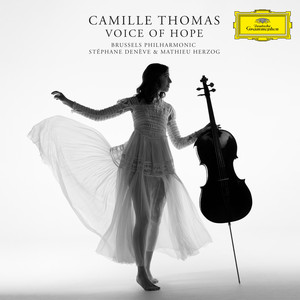 | "Kol Nidrei" Adagio for Cello and Orchestra, Op. 47: II. Un poco più animato | Max Bruch, Camille Thomas, Brussels Philharmonic, Mathieu Herzog | D Major | 1 | 10B | 92 BPM | |
 | String Sextet in B-Flat Major, Op. 18: II. Andante, ma moderato | Johannes Brahms, Leipziger Streichquartett, Hartmut Rohde, Michael Sanderling | C Major | 1 | 8B | 178 BPM | |
 | Sonate pour Arpeggione et Piano en La Mineur, D. 821: III. Allegretto | Franz Schubert, Jean-Guihen Queyras, Alexandre Tharaud | E Major | 1 | 12B | 125 BPM | |
 | Samson et Dalila: Mon coeur s'ouvre à ta voix | 宮田 大, ジュリアン・ジェルネ | D♭ Major | 1 | 3B | 135 BPM | |
 | Love Theme: Kmotr | Prague Cello Quartet | D Minor | 1 | 7A | 67 BPM | |
 | Violin Sonata in D Minor, Op. 36: I. Allegretto | Gabriel Pierné, Maria Milstein, Nathalia Milstein | D♭ Major | 2 | 3B | 90 BPM | |
 | Sicilienne for Cello & Piano, Op. 78 | Axel Salmona, Tatsiana Zakharava-Dahan | G Minor | 1 | 6A | 134 BPM | |
 | Vieuxtemps: Violin Concerto No. 4 in D Minor, Op. 31: II. Adagio religioso | Henri Vieuxtemps, Alexander Markov, Lawrence Renes, Monte-Carlo Philharmonic Orchestra | B♭ Major | 1 | 6B | 98 BPM | |
 | 3 Romances, Op. 22: No. 1, Andante molto | Clara Schumann, Natalia Lomeiko, Dinara Klinton | D Major | 1 | 10B | 101 BPM | |
 | The Lark Ascending: II. Allegretto tranquillo, quasi andante | Ralph Vaughan Williams, Hyeyoon Park, Benjamin Grosvenor | D Major | 1 | 10B | 88 BPM | |
 | 3 Romances for Violin and Piano, Op. 22: I. Andante Molto | Clara Schumann, Alexandra Dariescu, Tomo Keller | A♭ Major | 1 | 4B | 143 BPM | |
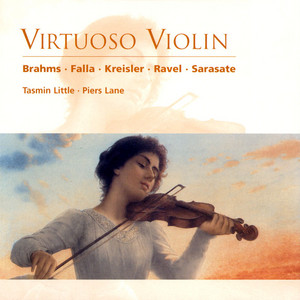 | Baal shem: 2. Nigun | Ernest Bloch, Tasmin Little, Piers Lane | G Minor | 2 | 6A | 87 BPM | |
 | Piano Quartet in E-Flat Major, Op. 47: II. Scherzo (Molto vivace) | Robert Schumann, Alexander Melnikov, Jerusalem Quartet | A♭ Major | 1 | 4B | 82 BPM | |
 | Du bist die Ruh, D 776 | Nils Mönkemeyer | E♭ Major | 0 | 5B | 68 BPM | |
 | Nin: 20 Cantos Populares Españoles: No. 6, Granadina, Chant D'Espagne Pour Violoncelle Et Piano (Arr. Kochanski for Cello and Piano) | Joaquin Nin, Paul Tortelier, John Newmark | D Major | 1 | 10B | 84 BPM |
- ISRC
- QZNWY2482674
- Label
- L-M Records/RCA Records