- BPM
- 51
- Key
- E♭ Major
- Camelot
- 5B
Die Walküre: Schläfst du, Gast? by Richard Wagner, Metropolitan Opera Orchestra, Erich Leinsdorf, Lotte Lehmann, Lauritz Melchior Song Details
"Die Walküre: Schläfst du, Gast?" by Richard Wagner, Metropolitan Opera Orchestra, Erich Leinsdorf, Lotte Lehmann, Lauritz Melchior had its release date on October 1, 2021. With This song being less than a minute long, we are pretty confident that this song does not contain any foul language. That being said, this song is pretty short compared to other songs. The song is number 15 out of 69 in Die Walküre by Richard Wagner, Lotte Lehmann, Marjorie Lawrence, Lauritz Melchior, Friedrich Schorr, Kertin Thorborg, Emanuel List, Winifred Heidt, Doris Doe, Maxine Stellmann, Thelma Votpka, Dorothee Manski, Irene Jessner, Lucielle Browning, Helen Olheim, Metropolitan Opera Orchestra, Erich Leinsdorf, Milton Cross, Serge Koussevitzky. Going off of the ISRC code of this track, we detected that the origin of this track is from United States. Die Walküre: Schläfst du, Gast? is unknown right now. In our opinion, the overall tone is not very danceable and projects negative sounds, such as being sad, depressed, or angry.
BPM and Tempo
The tempo marking of Die Walküre: Schläfst du, Gast? by Richard Wagner, Metropolitan Opera Orchestra, Erich Leinsdorf, Lotte Lehmann, Lauritz Melchior is Lento (slowly), since this song has a tempo of 51 BPM. With that information, we can conclude that the song has a slow tempo. The time signature for this track is 4/4.
Music Key
This song has a musical key of E♭ Major. This also means that this song has a camelot key of 5B. So, the perfect camelot match for 5B would be either 5B or 6A. While, 6B can give you a low energy boost. For moderate energy boost, you would use 2B and a high energy boost can either be 7B or 12B. Though, if you want a low energy drop, you should looking for songs with either a camelot key of 5A or 4B will give you a low energy drop, 8B would be a moderate one, and 3B or 10B would be a high energy drop. Lastly, 2A allows you to change the mood.
Want to find the BPM and music key for other songs? Check out our BPM and Key Finder page!
- Popularity
- 0%
- Loudness
- -13.781 dB
- Acousticness
- 98%
- Danceability
- 30%
- Energy
- 17%
- Instrumentalness
- 0%
- Liveness
- 9%
- Loudness
- 77%
- Speechiness
- 7%
- Valence
- 15%
Recommendations
| Track | Artist | Key | Energy | Camelot | BPM | ||
|---|---|---|---|---|---|---|---|
 | Symphony No. 9 in E Minor, Op. 95 "From the New World": III. Scherzo. Molto vivace | Antonín Dvořák, New York Philharmonic, Alan Gilbert | C Major | 1 | 8B | 121 BPM | |
 | Don Giovanni, K. 527, Atto II Scena 15: "Don Giovanni, a cenar teco" | Wolfgang Amadeus Mozart, Alessandro Guerzoni, Johannes Weisser, Lorenzo Regazzo, RIAS Kammerchor, Freiburger Barockorchester, René Jacobs | B♭ Major | 4 | 6B | 101 BPM | |
 | Symphony No. 1 in D Major "Titan": IIIa. Feierlich und gemessen, ohne zu schleppen | Gustav Mahler, Leonard Bernstein, New York Philharmonic | D Minor | 0 | 7A | 77 BPM | |
 | Symphonie fantastique, Op. 14: Marche au supplice (Allegro non troppo) | Hector Berlioz, Swedish Radio Symphony Orchestra, Daniel Harding | B♭ Major | 2 | 6B | 147 BPM | |
 | Humperdinck : Hänsel und Gretel : Overture to Act 1 | Engelbert Humperdinck, Donald Runnicles, Bavarian Radio Symphony Orchestra | C Major | 0 | 8B | 92 BPM | |
 | Cavalleria rusticana: Pt. I: O Lola (Turiddu) | Pietro Mascagni, Maria Callas, Giuseppe Di Stefano, Rolando Panerai, Anna Maria Canali, Ebe Ticozzi, Vittore Veneziani, Milan La Scala Chorus, Orchestra Del Teatro Alla Scala, Milano, Tullio Serafin | F Major | 1 | 7B | 173 BPM | |
 | Toccata | Johann Sebastian Bach, Symphonica Orchestra, Leopold Stokowski | D Major | 2 | 10B | 130 BPM | |
 | Mendelssohn: A Midsummer Night's Dream, Op. 61, MWV M13: No. 7, Nocturne | Felix Mendelssohn, Nikolaus Harnoncourt, Chamber Orchestra of Europe | C Major | 2 | 8B | 90 BPM | |
 | Parsifal, Act I: Enthüllet den Gral! – Nehmet hin meinen Leib | Richard Wagner, Victor von Halem, Berliner Philharmoniker, Herbert von Karajan, Chor der Deutschen Oper Berlin | D Minor | 2 | 7A | 82 BPM | |
 | Das Rheingold, Scene 4: Rheingold! Rheingold! Reines Gold! | Richard Wagner, Helen Donath, Edda Moser, Anna Reynolds, Gerhard Stolze, Dietrich Fischer-Dieskau, Berliner Philharmoniker, Herbert von Karajan | D♭ Major | 2 | 3B | 110 BPM | |
 | Das Rheingold, Scene 2/3: Auf, Loge, hinab mit mir! – Hehe! Hehe! - 2012 Remaster | Richard Wagner, George London, Set Svanholm, Eberhard Wächter, Waldemar Kmentt, Kirsten Flagstad, Gustav Neidlinger, Paul Kuentz, Wiener Philharmoniker, Sir Georg Solti | D Minor | 2 | 7A | 82 BPM | |
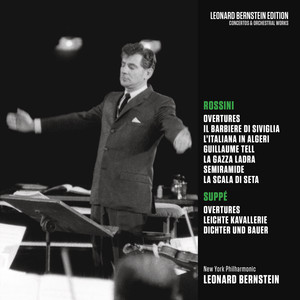 | Overture "Poet and Peasant" Ouverture "Dichter und Bauer" - Instrumental | Franz von Suppé, New York Philharmonic, Leonard Bernstein | D Major | 2 | 10B | 161 BPM | |
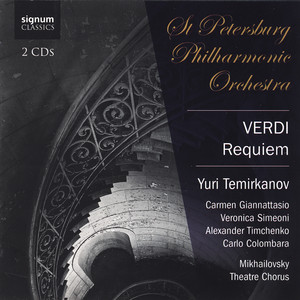 | Confutatis | Giuseppe Verdi, Carmen Giannattasio, Veronica Simeoni, Alxander Timchenko, Carlo Colombara, Yuri Temirkanov, St. Petersburg Philharmonic Orchestra | B Major | 1 | 1B | 82 BPM | |
 | Academic Festival Overture, Op. 80 | Johannes Brahms, Gewandhausorchester Leipzig, Riccardo Chailly | C Major | 2 | 8B | 77 BPM | |
 | Glück: I. Andante | Siegfried Wagner, Rundfunk-Sinfonieorchester Frankfurt, Dimitrij Kitajenko | A Minor | 0 | 8A | 86 BPM | |
 | Carmina Burana / 2. In Taberna: "Olim lacus colueram" | Carl Orff, Gerhard Stolze, Orchester der Deutschen Oper Berlin, Eugen Jochum, Chor der Deutschen Oper Berlin | G Major | 1 | 9B | 136 BPM | |
| Carmina Burana: V. Ecce gratum | Carl Orff, Chor der Deutschen Oper Berlin, Orchester der Deutschen Oper Berlin, Eugen Jochum | B♭ Major | 4 | 6B | 139 BPM | |
| Symphony No. 9 in E Minor, Op. 95 "From the New World": I. Adagio — Allegro molto | Antonín Dvořák, New York Philharmonic, Alan Gilbert | E Minor | 1 | 9A | 125 BPM | |
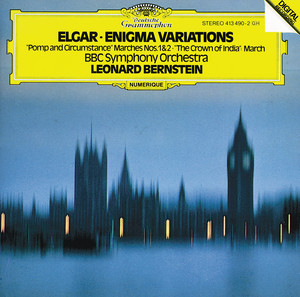 | The Crown of India, Op. 66: March of the Mogul Emperors | Edward Elgar, BBC Symphony Orchestra, Leonard Bernstein | B Minor | 4 | 10A | 90 BPM | |
| Das Rheingold, WWV 86A / Erste Szene: "Nur wer der Minne Macht entsagt" | Richard Wagner, Helen Donath, Edda Moser, Anna Reynolds, Berliner Philharmoniker, Herbert von Karajan | D Major | 1 | 10B | 86 BPM | |
 | Egmont, Op. 84: Overture | Ludwig van Beethoven, Madeleine Pierard, Claus Obalski, New Zealand Symphony Orchestra, James Judd | F Minor | 1 | 4A | 173 BPM | |
 | Danse macabre, Op. 40 | Camille Saint-Saëns, Royal Concertgebouw Orchestra, Charles Münch | D Major | 2 | 10B | 81 BPM | |
 | Gayane Suite No. 2: VI. Sabre Dance | Aram Khachaturian, St. Petersburg State Symphony Orchestra, Andre Anichanov | E♭ Major | 8 | 5B | 91 BPM | |
 | Symphonie fantastique, Op. 14, H 48: 5d. Songe d'une nuit du Sabbat - Dies irae et Ronde du Sabbat ensemble | Hector Berlioz, Chicago Symphony Orchestra, Claudio Abbado | B♭ Major | 1 | 6B | 153 BPM | |
 | Requiem, Op. 5 (Grande Messe des Morts): 7. Domine Jesu Christe | Hector Berlioz, The Cleveland Orchestra Chorus, The Cleveland Orchestra, Lorin Maazel | G Minor | 0 | 6A | 84 BPM |
- ISRC
- USB8U2010792
- Label
- L-M Records/RCA Records