- BPM
- 76
- Key
- D Major
- Camelot
- 10B
Abends will ich schlafen gehen by Engelbert Humperdinck, André Rieu, Johann Strauss Orchestra Song Details
"Abends will ich schlafen gehen" by Engelbert Humperdinck, André Rieu, Johann Strauss Orchestra had its release date on January 1, 2005. The duration of This song is about 3 minutes long, at 3:27. Based on our data, This song appears to be safe for all ages and is not considered explicit. This track is about the average length of a typical track. This song is part of Weihnachten rund um die Welt by André Rieu. The song's track number on the album is #12 out of 16 tracks. Based on our data, Germany was the country where this track was produced or recorded. Abends will ich schlafen gehen is not that popular right now. In our opinion, the overall tone is not very danceable and projects negative sounds, such as being sad, depressed, or angry.
BPM and Tempo
Since Abends will ich schlafen gehen by Engelbert Humperdinck, André Rieu, Johann Strauss Orchestra has a tempo of 76 beats per a minute, the tempo markings of this song would be Adagio (slowly with great expression). With Abends will ich schlafen gehen being at 76 BPM, the half-time would be 38 BPM with a double-time of 152 BPM.In addition, we consider the tempo speed to be pretty slow for this song. The time signature for this track is 3/4.
Music Key
D Major is the music key of this track. Or for those who are familiar with the camelot wheel, this song has a camelot key of 10B. So, the perfect camelot match for 10B would be either 10B or 11A. While, 11B can give you a low energy boost. For moderate energy boost, you would use 7B and a high energy boost can either be 12B or 5B. Though, if you want a low energy drop, you should looking for songs with either a camelot key of 10A or 9B will give you a low energy drop, 1B would be a moderate one, and 8B or 3B would be a high energy drop. Lastly, 7A allows you to change the mood.
Want to find the BPM and music key for other songs? Check out our BPM and Key Finder page!
- Popularity
- 14%
- Loudness
- -9.805 dB
- Acousticness
- 92%
- Danceability
- 9%
- Energy
- 36%
- Instrumentalness
- 31%
- Liveness
- 11%
- Loudness
- 84%
- Speechiness
- 4%
- Valence
- 4%
Recommendations
| Track | Artist | Key | Energy | Camelot | BPM | ||
|---|---|---|---|---|---|---|---|
 | Simon Boccanegra / Prologue: "A te l'estremo addio" - "Il lacerato spirito" | Giuseppe Verdi, Nicolai Ghiaurov, Orchestra Del Teatro Alla Scala, Milano, Claudio Abbado, Coro Del Teatro Alla Scala Di Milano, Romano Gandolfi | D Major | 1 | 10B | 93 BPM | |
 | Orff: Carmina Burana, Pt. 3 "Blanziflor et Helena": Ave formosissima | Carl Orff, Sir Simon Rattle, Rundfunkchor Berlin, Berliner Philharmoniker | E Minor | 2 | 9A | 99 BPM | |
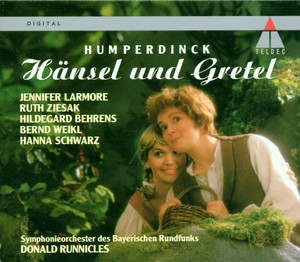 | Humperdinck : Hänsel und Gretel : Overture to Act 3 | Engelbert Humperdinck, Donald Runnicles, Bavarian Radio Symphony Orchestra | F Major | 1 | 7B | 100 BPM | |
 | Die Fledermaus / Act 1: Nr.1 Introduktion: "Täubchen, das entflattert ist" - Edit | Johann Strauss II, Hilde Gueden, Erika Köth, Giuseppe Zampieri, Wiener Philharmoniker, Herbert von Karajan | C Major | 0 | 8B | 66 BPM | |
 | La Giaconda, Act 2, The Rosary: Sailors' Song "Ho! He! Ho! He!" (Sailors, Boys, Barnaba, Pilot) - "Recitative and Barcarolle "Pescator, affonda l'esca" [Barnaba, Pilot, Sailors, Boys] | Amilcare Ponchielli, Angelo Nardinocchi, Massimiliano Travagliati, Coro di Voci Bianche del Teatro “Giuseppe Verdi” di Salerno, Silvana Noschese, Coro del Teatro dell'Opera di Salerno, Luigi Petrozziello, Orchestra Filarmonica Salernitana “Giuseppe Verdi”, Yishai Steckler | F Major | 2 | 7B | 99 BPM | |
 | Paulus: I. Teil: Nr. 6 Aria S "Jerusalem, die du tödtest die Propheten" | Felix Mendelssohn, Melanie Diener, Philippe Herreweghe | C Minor | 0 | 5A | 69 BPM | |
 | Das Mirakel, EHWV 151, Act I: Megildis' Longing | Engelbert Humperdinck, Rundfunkchor Berlin, Rundfunk-Sinfonieorchester Berlin, Steffen Tast, Sophie Klussmann, Josette Micheler | G Minor | 0 | 6A | 173 BPM | |
 | Die Fledermaus, Act II: Entr'acte und Chor. Ein Souper uns heute winkt (Chorus) | Johann Strauss II, Friedrich Haider, WDR Rundfunkchor Köln, WDR Rundfunkorchester Köln | F Major | 4 | 7B | 117 BPM | |
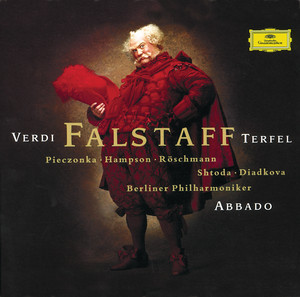 | Falstaff / Act I: "Falstaff!" - "Olà!" - "Sir John Falstaff!" | Giuseppe Verdi, Enrico Facini, Bryn Terfel, Anthony Mee, Anatolij Kotscherga, Berliner Philharmoniker, Claudio Abbado | C Major | 3 | 8B | 68 BPM | |
 | Gounod: Faust, Act 5: Ballet "La nuit de Walpurgis": II. Adagio | Charles Gounod, Herbert von Karajan, Berliner Philharmoniker | A Major | 8 | 11B | 145 BPM | |
 | Messa da Requiem for Soloists, Chorus and Orchestra: II. Dies Irae: Tuba mirum spargens sonum - Mors stupebit | Giuseppe Verdi, Leonard Bernstein, London Symphony Chorus, London Symphony Orchestra, Ruggero Raimondi | B♭ Major | 2 | 6B | 67 BPM | |
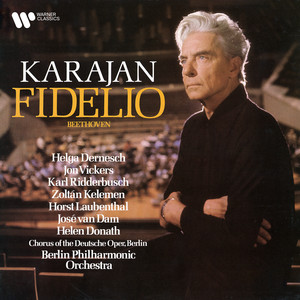 | Beethoven: Fidelio, Op. 72, Act 1: Quartett. "Mir ist so wunderbar" (Marzelline, Leonore, Jaquino, Rocco) | Ludwig van Beethoven, Berliner Philharmoniker, Herbert von Karajan, Helen Donath, Helga Dernesch, Horst Laubenthal, Karl Ridderbusch | G Major | 1 | 9B | 74 BPM | |
 | Königskinder: "Verdorben! Gestorben!..Ihr Kindlein, sie sind gefunden" | Engelbert Humperdinck, Matthias Goerne, Children's Choir From Adolf Fredrik's Music School, Swedish Radio Symphony Orchestra, Manfred Honeck | E♭ Major | 1 | 5B | 132 BPM | |
 | Wesendonck Lieder: Träume | Richard Wagner, Jonas Kaufmann, Orchester der Deutschen Oper Berlin, Donald Runnicles | A♭ Major | 1 | 4B | 72 BPM | |
 | German Requiem, Op. 45: Selig sind, die da Leid tragen | Johannes Brahms, London Symphony Orchestra, Valery Gergiev, London Symphony Chorus | E♭ Major | 0 | 5B | 98 BPM | |
 | Kapitel 10 - Hänsel und Gretel | Oper für die Kleinsten, Engelbert Humperdinck, Marina Mehlinger, Manja Kloss, Luca Zamperoni, Hans Henrik Wöhler | D♭ Minor | 2 | 12A | 83 BPM | |
 | Brahms: Ein deutsches Requiem, Op. 45: IV. Wie lieblich sind deine Wohnungen | Johannes Brahms, Herbert von Karajan, Wiener Singverein, Berliner Philharmoniker | E♭ Major | 1 | 5B | 79 BPM | |
| Humperdinck : Hänsel und Gretel : Act 3 "Mir ist so wohl, ich weiss nicht wie!" [Gretel, Hänsel] | Engelbert Humperdinck, Donald Runnicles, Bavarian Radio Symphony Orchestra | A♭ Major | 0 | 4B | 116 BPM | |
 | Messa di Gloria: Gloria in excelsis | Giacomo Puccini, Gunnar Lundberg, Antonello Palombi, Hungarian Radio Chorus, Hungarian Operetta Orchestra, Pier Giorgio Morandi | B♭ Minor | 0 | 3A | 87 BPM | |
| German Requiem, Op. 45: Selig sind die Toten | Johannes Brahms, London Symphony Orchestra, London Symphony Chorus, Valery Gergiev | E♭ Major | 0 | 5B | 98 BPM | |
 | Peter Grimes, Op. 33 / Prologue: "Peter Grimes!" | Benjamin Britten, David Kelly, Owen Brannigan, Sir Peter Pears, Orchestra of the Royal Opera House, Covent Garden | G Major | 1 | 9B | 104 BPM | |
 | Gounod: Messe solennelle de Sainte Cécile: VII. Agnus Dei | Charles Gounod, Georges Prêtre, Barbara Hendricks, Choeur de Radio France, Laurence Dale, Nouvel Orchestre Philharmonique de Radio France | B♭ Major | 2 | 6B | 96 BPM | |
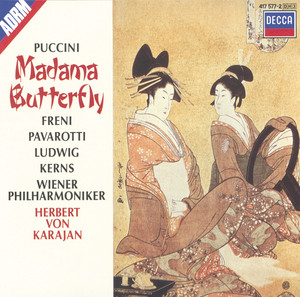 | Madama Butterfly / Act 2: Come una mosca prigionera | Giacomo Puccini, Christa Ludwig, Mirella Freni, Wiener Philharmoniker, Herbert von Karajan | B♭ Minor | 1 | 3A | 137 BPM | |
 | Oberon, J.306: Ouvertüre | Carl Maria von Weber, Bavarian Radio Symphony Orchestra, Rafael Kubelík | D Major | 1 | 10B | 131 BPM | |
 | Puccini: Turandot, Act 1: "O giovinetto! Grazia! Grazia!" (Coro, Calaf) | Giacomo Puccini, Antonio Pappano, Coro dell'Accademia Nazionale Di Santa Cecilia, Jonas Kaufmann, Orchestra dell'Accademia Nazionale di Santa Cecilia | E Major | 0 | 12B | 135 BPM |
- ISRC
- DEUM70502995
- Label
- L-M Records/RCA Records