- BPM
- 73
- Key
- C Minor
- Camelot
- 5A
Symphony No. 6 in E Minor: I. Allegro by Ralph Vaughan Williams, Bryden Thomson, London Symphony Orchestra Song Details
"Symphony No. 6 in E Minor: I. Allegro" by Ralph Vaughan Williams, Bryden Thomson, London Symphony Orchestra had its release date on August 1, 1989. Since This song is still less than 10 minute long, it is still considered a pretty long duration song compared to the average song length. This song does not appear to be explicit due to the lack of the "E" tag. This song is part of Vaughan Williams: Complete Symphonies by Ralph Vaughan Williams, Bryden Thomson, London Symphony Orchestra, Yvonne Kenny, Catherine Bott, Brian Rayner Cook, Roderick elms, London Symphony Chorus. The song's track number on the album is #5 out of 37 tracks. Based on our data, United Kingdom was the country where this track was produced or recorded. Symphony No. 6 in E Minor: I. Allegro is unknown right now. In our opinion, the overall tone is not very danceable and projects negative sounds, such as being sad, depressed, or angry.
BPM and Tempo
Since Symphony No. 6 in E Minor: I. Allegro by Ralph Vaughan Williams, Bryden Thomson, London Symphony Orchestra has a tempo of 73 beats per a minute, the tempo markings of this song would be Adagio (slowly with great expression). With Symphony No. 6 in E Minor: I. Allegro being at 73 BPM, the half-time would be 36 BPM with a double-time of 146 BPM.In addition, we consider the tempo speed to be pretty slow for this song. The time signature for this track is 4/4.
Music Key
This song has a musical key of C Minor. Which also means that the camelot key for this song is 5A. So, the perfect camelot match for 5A would be either 5A or 4B. While, a low energy boost can consist of either 5B or 6A. For moderate energy boost, you would use 2A and a high energy boost can either be 7A or 12A. However, if you are looking for a low energy drop, finding a song with a camelot key of 4A would be a great choice. Where 8A would give you a moderate drop, and 3A or 10A would be a high energy drop. Lastly, 8B allows you to change the mood.
Want to find the BPM and music key for other songs? Check out our BPM and Key Finder page!
- Popularity
- 0%
- Loudness
- -19.432 dB
- Acousticness
- 95%
- Danceability
- 7%
- Energy
- 7%
- Instrumentalness
- 87%
- Liveness
- 20%
- Loudness
- 68%
- Speechiness
- 4%
- Valence
- 5%
Recommendations
| Track | Artist | Key | Energy | Camelot | BPM | ||
|---|---|---|---|---|---|---|---|
 | Florida Suite: IV. At Night | Frederick Delius, English Northern Philharmonia, David Lloyd-Jones | C Major | 1 | 8B | 74 BPM | |
 | Fauré: Pavane, Op. 50 | Gabriel Fauré, New Philharmonia Orchestra/Sir David Willcocks/Gareth Morris, Gareth Morris, Sir David Willcocks, New Philharmonia Orchestra | F♯ Minor | 0 | 11A | 130 BPM | |
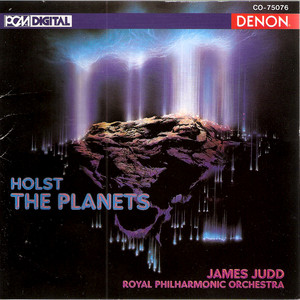 | The Planets, Op. 32: II. Venus, The Bringer Of Peace | Gustav Holst, James Judd, Royal Philharmonic Orchestra | B♭ Minor | 0 | 3A | 65 BPM | |
 | String Quartet No. 1 in D Major, Op. 11, TH 111: II. Andante cantabile (Version for String Orchestra) | Pyotr Ilyich Tchaikovsky, Leonard Bernstein, New York Philharmonic | B♭ Major | 1 | 6B | 93 BPM | |
 | Scottish Fantasy for Violin and Orchestra, Op. 46: IV. Finale: Allegro guerriero | Max Bruch, Joshua Bell, Academy of St. Martin in the Fields | E♭ Major | 2 | 5B | 97 BPM | |
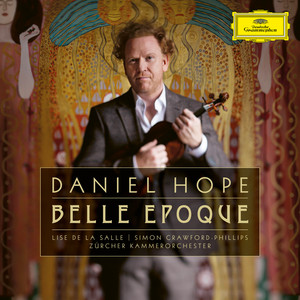 | Notturno for Strings and Harp | Arnold Schoenberg, Daniel Hope, Zürcher Kammerorchester, Jane Berthe | A♭ Major | 1 | 4B | 75 BPM | |
 | Vespers opus 37: Nunc dimittis | Sergei Rachmaninoff, Sonia Wieder-Atherton, Sinfonia Varsovia, Christophe Mangou | E Minor | 1 | 9A | 98 BPM | |
 | The House of Life: No. 2, Silent Noon | Ralph Vaughan Williams, Anthony Rolfe Johnson, Graham Johnson, Simon Keenlyside, Duke Quartet | F Major | 3 | 7B | 150 BPM | |
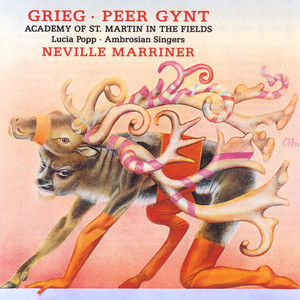 | Grieg: Peer Gynt, Op. 23, Act 4: No. 13, Prelude. Morning Mood | Edvard Grieg, Sir Neville Marriner, Academy of St. Martin in the Fields | E Major | 0 | 12B | 137 BPM | |
 | Gypsy Melodies, Op. 55, B. 104: IV. Songs My Mother Taught Me (Adapt. for Cello and Orchestra) | Antonín Dvořák, Camille Thomas, Brussels Philharmonic, Mathieu Herzog | C Minor | 1 | 5A | 100 BPM | |
 | Gypsy Melodies, Op. 55, B. 104: IV. Songs My Mother Taught Me (Arr. Soltani For Solo Cello and Cello Ensemble) | Antonín Dvořák, Kian Soltani, Staatskapelle Berlin, Cellists | D Major | 1 | 10B | 125 BPM | |
 | 5 Mystical Songs: IV. The Call | Ralph Vaughan Williams, George Herbert, Riga Cathedral Boys Choir, Kristina Stobæus, Aivars Kalejs, Janis Erenstreits | A♭ Minor | 1 | 1A | 81 BPM | |
 | The Swan of Tuonela, Op. 22 No. 2 | Jean Sibelius, Thomas Søndergård, BBC National Orchestra Of Wales | A Minor | 2 | 8A | 143 BPM | |
 | Carnival of the Animals, R. 125: XIII. The Swan | Camille Saint-Saëns, Marian Lapsansky, Peter Toperczer, Slovak Radio Symphony Orchestra, Ondrej Lenard | G Major | 0 | 9B | 79 BPM | |
 | Les Beautés Du Diable | François Dompierre, Angèle Dubeau | E Minor | 1 | 9A | 132 BPM | |
 | English Suite: Meditation | Paul Lewis, Royal Northern Sinfonia, David Lloyd-Jones | A Minor | 0 | 8A | 61 BPM | |
 | Mascagni: Cavalleria rusticana: Intermezzo | Pietro Mascagni, Riccardo Muti, Philharmonia Orchestra | F Major | 1 | 7B | 85 BPM | |
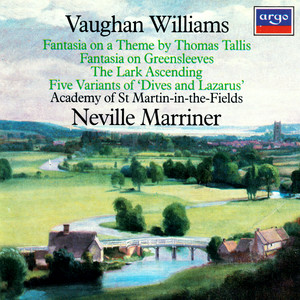 | Five Variants of "Dives and Lazarus" | Ralph Vaughan Williams, Iona Brown, Kenneth Heath, Skaila Kanga, Academy of St. Martin in the Fields, Sir Neville Marriner | B Minor | 1 | 10A | 87 BPM | |
 | 5 Pieces for Violin and Piano: I. Elegia. Andante larghetto | Valentin Silvestrov, Duo Gazzana | E♭ Major | 0 | 5B | 74 BPM | |
 | St. Paul's Suite, Op. 29 No. 2: IV. Finale, "the Dargason" | Gustav Holst, English Sinfonia, Howard Griffiths | D♭ Major | 0 | 3B | 66 BPM | |
 | Walton: Henry V: Passacaglia "The Death of Falstaff" | William Walton, Douglas Boyd, Chamber Orchestra of Europe | E Minor | 0 | 9A | 86 BPM | |
 | Prince Igor: Polovtsian Dances (Version for Chorus) | Alexander Borodin, Kiev Chamber Choir, Ukraine National Radio Symphony Orchestra, Theodore Kuchar | A Major | 2 | 11B | 110 BPM | |
 | Slow Dance | Ralph Vaughan Williams, English Northern Philharmonia, David Lloyd-Jones | E Minor | 1 | 9A | 98 BPM | |
 | Dvorák: Legends for Orchestra, Op. 59, No. 6 | Antonín Dvořák, San Francisco Symphony, Michael Tilson Thomas | D♭ Major | 0 | 3B | 77 BPM | |
 | Vaughan Williams: Fantasia on Greensleeves | Ralph Vaughan Williams, Andrew Davis, BBC Symphony Orchestra | C Minor | 0 | 5A | 74 BPM |
- ISRC
- GBLWD9114001
- Label
- L-M Records/RCA Records