- BPM
- 80
- Key
- D Minor
- Camelot
- 7A
Yamaji by Yamato Ensemble Song Details
Yamato Ensemble's ' "Yamaji" was released on its scheduled release date, January 1, 1993. Since This song is still less than 10 minute long, it is still considered a pretty long duration song compared to the average song length. This song does not appear to be explicit due to the lack of the "E" tag. There are a total of 5 in the song's album "The Art of the Japanese Bamboo Flute and Koto". In this album, this song's track order is #5. Furthermore, we believe that the track originated from United Kingdom. Yamaji is below average in popularity right now. Based on the vibe, this track doesn't seem to be that danceable, however its valence properties can make this some somewhat danceable.
BPM and Tempo
With Yamaji by Yamato Ensemble having a BPM of 80 with a half-time of 40 BPM and a double-time of 160 BPM, we would consider this track to have a Andante (at a walking pace) tempo marking. Because of this, we believe that the song has an overall slow tempo. The time signature for this track is 4/4.
Music Key
The music key of this track is D Minor. Which also means that the camelot key for this song is 7A. So, the perfect camelot match for 7A would be either 7A or 6B. While, a low energy boost can consist of either 7B or 8A. For moderate energy boost, you would use 4A and a high energy boost can either be 9A or 2A. However, if you are looking for a low energy drop, finding a song with a camelot key of 6A would be a great choice. Where 10A would give you a moderate drop, and 5A or 12A would be a high energy drop. Lastly, 10B allows you to change the mood.
Want to find the BPM and music key for other songs? Check out our BPM and Key Finder page!
- Popularity
- 31%
- Loudness
- -24.688 dB
- Acousticness
- 99%
- Danceability
- 30%
- Energy
- 5%
- Instrumentalness
- 2%
- Liveness
- 12%
- Loudness
- 59%
- Speechiness
- 6%
- Valence
- 48%
Recommendations
| Track | Artist | Key | Energy | Camelot | BPM | ||
|---|---|---|---|---|---|---|---|
 | Fields | Oleksandr Griegov | E Major | 4 | 12B | 120 BPM | |
 | A Lullaby of Takeda (Takeda No Komoriuta) | Mizuyo Komiya | G Minor | 1 | 6A | 118 BPM | |
 | 津軽たんと節 | Shinobu Kawashima | G Minor | 9 | 6A | 120 BPM | |
 | Fuubutsushi | Chasing Mirrors | A♭ Major | 2 | 4B | 82 BPM | |
 | Akikaze No Kyoku (Melody of the Autumn Wind) | Aiko Hasegawa | G Major | 6 | 9B | 83 BPM | |
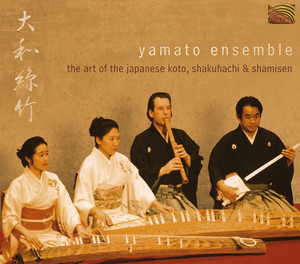 | Futatsu no den-en-shi: No. 2, Pastoral | Yamato Ensemble | G Minor | 3 | 6A | 141 BPM | |
 | After the Rain | The Tokyo Gagaku Ensemble | G Minor | 2 | 6A | 131 BPM | |
 | Ancient Japan | Jaya Satria | D Major | 1 | 10B | 135 BPM | |
 | Daha (Pounding Waves) | Alcvin Takegawa Ramos | F♯ Major | 0 | 2B | 85 BPM | |
 | Kumoi Jishi | Traditional, Richard Stagg | A Minor | 0 | 8A | 87 BPM | |
 | Estampes: I. Pagodes | LEO | F♯ Major | 1 | 2B | 71 BPM | |
 | Kuroda Bushi | Matsu Take Ensemble | D Major | 1 | 10B | 107 BPM | |
 | Last Samurai | Celestial Aeon Project | C Major | 0 | 8B | 148 BPM | |
 | Tancho-Bayashi | Nihon Daiko, Hideaki Hashimoto | A♭ Major | 6 | 4B | 145 BPM | |
 | Butterfly Wings | Rosalind Richards | C Minor | 3 | 5A | 120 BPM | |
 | 盤渉調音取 | 宮内庁楽部 | F♯ Major | 0 | 2B | 68 BPM | |
 | 山谷(尺八) | Japan Traditional Music Group | C Major | 1 | 8B | 134 BPM | |
 | The Great Wave Washes The Beach | Liu Fang | B♭ Major | 1 | 6B | 152 BPM | |
| Altar | Oleksandr Griegov | D Minor | 2 | 7A | 120 BPM | |
 | 鯵ヶ沢甚句 | Yoshida Brothers | F Major | 3 | 7B | 171 BPM | |
 | Defune | Hiroe Yonekawa, Megumi Yonekawa, Chikatoyo Tsujimoto, Toshiko Yonekawa, Masumi Yonekawa, Goro Yamoguchi | G Minor | 2 | 6A | 91 BPM | |
 | Dawn In Kyōto | Osaka-Sunset | C Major | 2 | 8B | 92 BPM | |
 | MEBAE | Mizuyo Komiya | G Minor | 1 | 6A | 113 BPM | |
 | Akatsuki | Kenio Fuke | C Minor | 2 | 5A | 69 BPM | |
 | The Autumn Moon in the Palace of a Han Emperor | Liu Fang | D Major | 0 | 10B | 77 BPM |
- ISRC
- GBCKG0500919
- Label
- L-M Records/RCA Records